





Blue Enamel Glass Jar
A blue enamel glass jar brings vibrant colour to a dressing table or shelf, combining bright glass bodies with metal and enamel lids.
Blue Enamel Glass Jar
When someone searches for a blue enamel glass jar, they are looking at small decorative containers and dressing table pieces that pair coloured glass with ornate metal and enamel covers. The selection here spans vanity jars, dressing table jars, apothecary jars, lidded bowls, and scent bottles from the nineteenth and twentieth centuries.
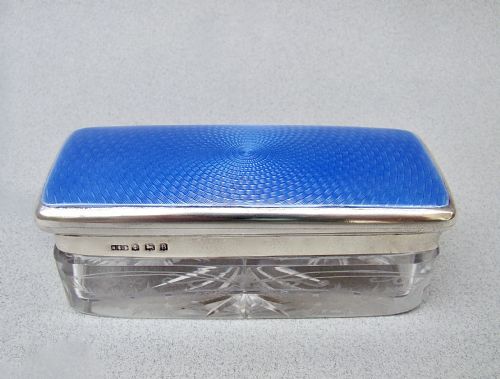
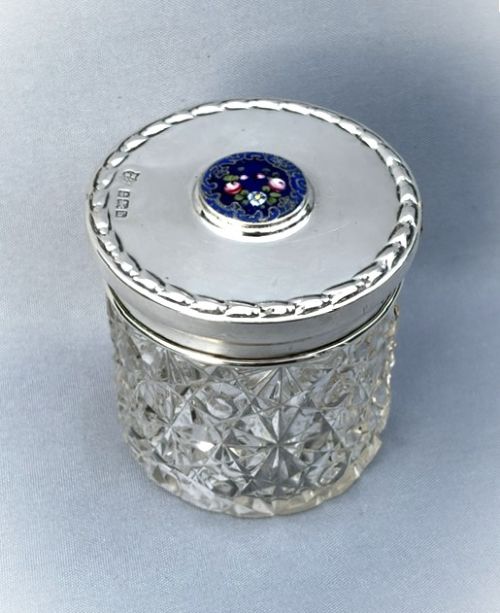
Most pieces date from the Victorian, Edwardian, and Art Deco periods, encompassing English and French designs. Buyers frequently encounter items that combine deep blue or turquoise glass with sterling silver mounts and intricate guilloche enamel lids.
Forms range from small trinket boxes to large apothecary jars and bulb vases, showing how glassmakers and silversmiths collaborated across different eras. These containers served functional roles for cosmetics and medicines while acting as decorative objects.
How they were made
Glass bodies were formed using techniques like cut glass, opaline production, and Bristol blue glass colouring to achieve distinct shades of blue and turquoise. Silversmiths then fitted these vessels with sterling silver collars, mounts, and lids.
Enamel work, particularly guilloche, was applied to silver lids using engine-turned metal patterns beneath translucent coloured layers. Brass and cork components also appear in mountings and stoppers across nineteenth and twentieth-century examples.
Blue Enamel Glass Jar Retail Price Guide 2026
Typical asking prices for blue enamel glass jar among the pieces listed under this phrase on Sellingantiques today, from the lower quarter to the upper quarter. They describe what is for sale here now, not the wider market.
Materials recorded across the selection include Bristol blue glass, opaline glass, cut glass, porcelain, brass, and cork alongside sterling silver.
What varies in quality
Quality in these pieces depends on the precision of the glass cutting and the depth of the enamel work on the lid. Finely executed guilloche patterns under translucent enamel show greater craftsmanship than plain enamel surfaces.
The integration between the silver mount and the glass body distinguishes finer examples, alongside clear hallmarks indicating maker and year. Heavier cut glass vessels and substantial sterling silver mounts generally separate standard production from superior items.
Henry Clifford Davis·George Tye
The Blue Enamel Glass Jar Glossary
- Guilloche enamel
- A decorative technique where a precise geometric pattern is engraved into metal before translucent enamel is applied over it. This allows the underlying design to show through the colour.
- Bristol blue glass
- A deep, vibrant cobalt blue glass traditionally associated with the city of Bristol during the eighteenth and nineteenth centuries. It became widely used for decorative and apothecary vessels.
- Opaline glass
- A type of semi-opaque glass popular in the nineteenth century, often tinted in pale blue or white shades. It provides a smooth, porcelain-like finish.
- Sterling silver
- An alloy of silver containing 92.95 percent pure silver and 7.05 percent other metals, typically copper. It forms the standard material for the lids and collars on better vanity jars.
- Apothecary jar
- A large vessel originally used by pharmacists to store herbs, medicines, or chemicals. Antique versions often feature bold coloured glass and clear labelling.
Blue Enamel Glass Jar: Frequently Asked Questions
What were blue enamel glass jars used for?
These jars originally held cosmetics, creams, pins, and small trinkets on dressing tables and vanity sets. Larger examples functioned as apothecary containers or decorative vessels in period interiors.
Over time, they transitioned from practical dressing room accessories to decorative display pieces collected for their vibrant glass and silver lids.
How do I date a blue enamel glass jar?
Dating relies on hallmarks stamped on the silver mounts, style markers like Art Deco geometric patterns, and manufacturing techniques of the glass body. Victorian and Edwardian pieces often feature floral motifs, whereas 1920s examples display sharp lines.
Matching the silver hallmarks with maker records provides the exact year of manufacture for pieces fitted with metal lids.
Are the lids usually silver?
Many dressing table and trinket jars feature sterling silver lids, frequently decorated with enamel or guilloche work. Some pieces incorporate brass mounts or simple glass stoppers depending on the period and form.
English and French examples from the early twentieth century commonly pair silver with blue glass bodies.
How should I display these jars at home?
These jars suit placement on dressing tables, mantelpieces, or inside glass-fronted cabinets where light can pass through the coloured glass. Grouping different shapes, such as scent bottles and vanity jars together, highlights the range of blues.
Keeping them away from direct, harsh sunlight protects the enamel work and maintains the vibrancy of the glass.