




Blue Coastal Art Print
These blue coastal art print selections bring the sea indoors through historic watercolours, maritime paintings and vintage posters.
Blue Coastal Art Print
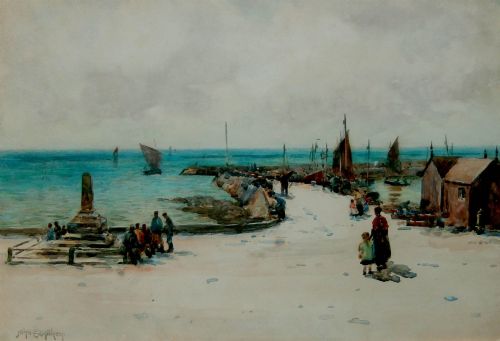
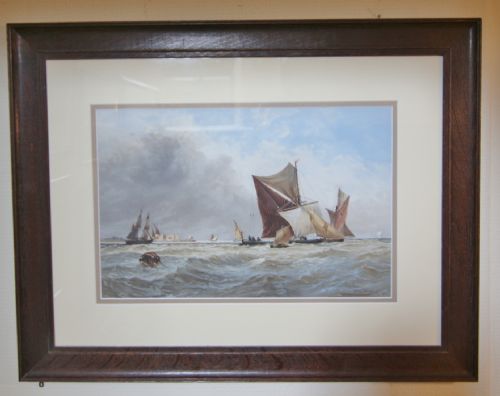
When searching for a blue coastal art print, collectors encounter historic paintings, watercolours and posters that capture harbours, ships and marine views. The selection spans the nineteenth century through to the mid-twentieth century, offering genuine period character for domestic display.
Most examples on this page date from the Victorian era up to the nineteen-forties, covering British Impressionism, maritime scenes and early lithograph posters. Works range from intimate round watercolours of fishing boats to large framed seascapes.
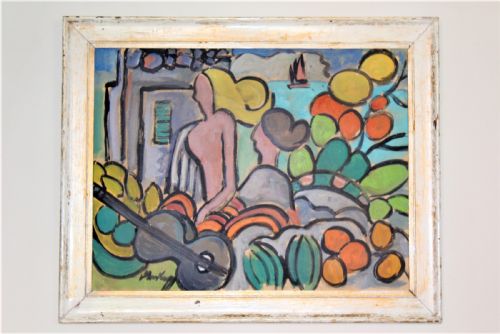
Makers and artists represented include named painters such as John E. Aitken, Thomas Bush Hardy, George F Pennington, Frank Wood and Markey Robinson. Alongside these works on paper, the inventory occasionally includes related items like period furniture associated with literary figures.
How they were made
These works rely on traditional media including watercolour, ink and oil paint applied to paper or canvas to capture marine lighting and coastal tones. Lithograph posters utilise early printing techniques on paper for vibrant wall art.
Framing materials reflect the period of each piece, featuring wood, oak, painted wood and gilt moulding designed to protect and display the artwork. Glass covers many of the watercolours and prints to preserve the paper beneath.
One unexpected item bridges marine art and literature by offering a settee linked to Daphne Du Maurier.
What varies in quality
The strength of composition and brushwork distinguishes accomplished marine paintings from simpler decorative items. Master watercolours capture the shifting light of the North Sea or Medway with assured washes, whereas lesser pieces lack atmosphere.
The handling of framing materials also marks the tier of a piece, with original gilt or oak frames showing superior craftsmanship compared to later replacements. Condition of the underlying paper or canvas dictates the overall preservation of the image.
John E. Aitken·TB Hardy·George F Pennington·Frank Wood·Markey Robinson
The Blue Coastal Art Print Glossary
- Watercolour
- A painting method where fine pigment is suspended in water-based solution on paper. This medium allows for translucent washes that suit coastal skies and water.
- Lithograph
- A print produced from a flat stone or metal plate treated to repel ink except where desired. This technique enabled affordable, colourful poster production in the early twentieth century.
- Marine painting
- Artwork depicting ships, seascapes or coastal life. This genre flourished in British art throughout the nineteenth and twentieth centuries.
- Gilt
- A thin layer of gold leaf applied to wood or metal framing. This finish adds a reflective border to traditional artwork.
- Woodblock print
- An image created by carving a design into wood, applying ink, and transferring it to paper. This method produces graphic lines typical of early twentieth-century landscapes.
Blue Coastal Art Print: Frequently Asked Questions
How do I identify a Victorian coastal watercolour?
Victorian watercolours often depict shipping scenes, fishing boats or dramatic cliffs with muted blue and grey tones characteristic of nineteenth-century maritime art. Look for period framing and paper types appropriate to the era.
Signatures or pencilled titles on the reverse frequently provide clues to the artist and specific coastal location, helping to date the work accurately.
What is the difference between a poster and a painting?
Paintings are unique, hand-created works utilising watercolour, oil or ink on paper or canvas, bearing the direct brushstrokes of the artist. Posters are mass-produced lithographs intended for public display or travel advertising.
Collectors value paintings for their individual artistic execution, whereas posters offer bold graphic design and social history from the early twentieth century.
How should I frame and hang antique paper art?
Works on paper require conservation-grade mounting under glass to protect them from ultraviolet light and humidity. Acid-free backing boards prevent the paper from yellowing over time.
Hang these pieces away from direct sunlight and damp environments to preserve the delicate pigments of nineteenth and twentieth-century watercolours.
Are these coastal prints original period items?
The listings on this page comprise genuine antique and vintage pieces dating from the Victorian period through to the nineteen-forties. Each item originates from its stated historical era.
Materials such as aged paper, period ink and traditional wood frames confirm the authentic age of these works.