




Blue China Service
A blue china service brings hand-painted cobalt and crisp transfer-printing to the table, offering a rich lineage of historical dining.
Blue China Service
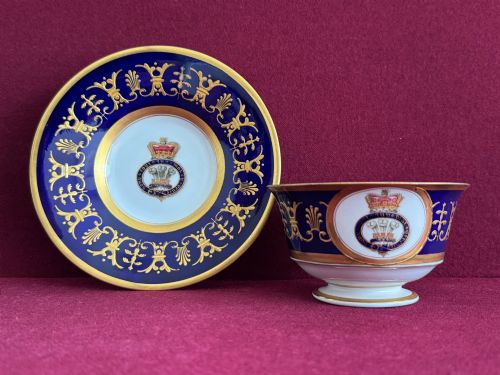
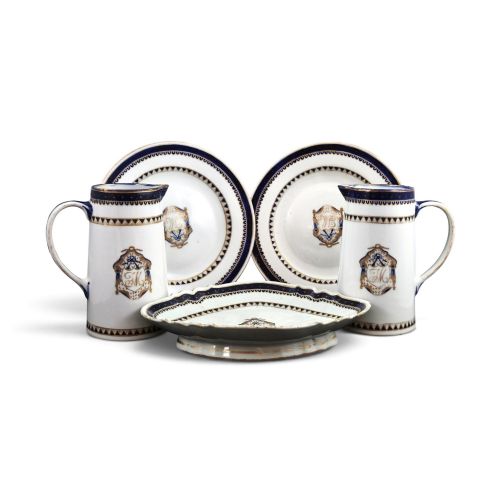
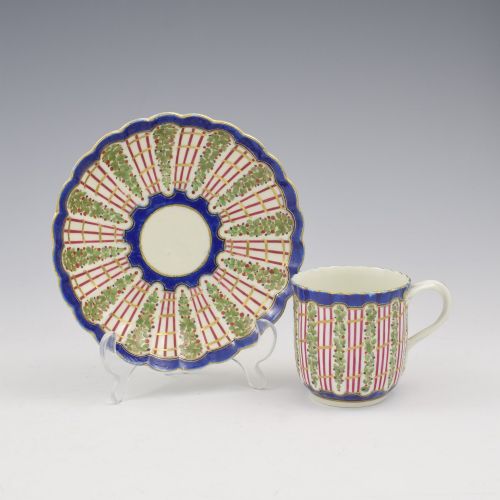
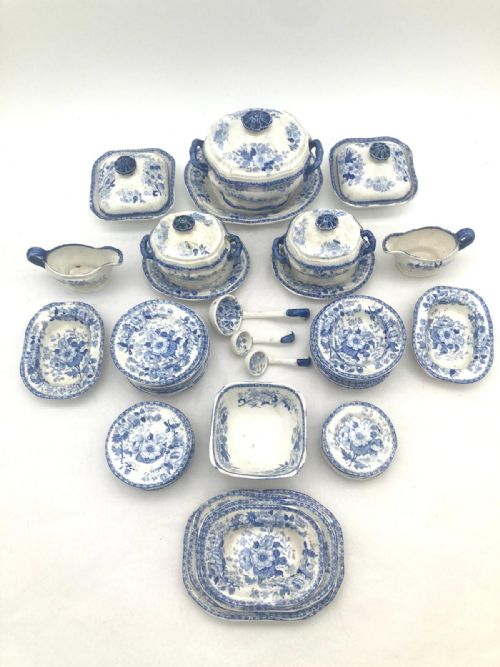
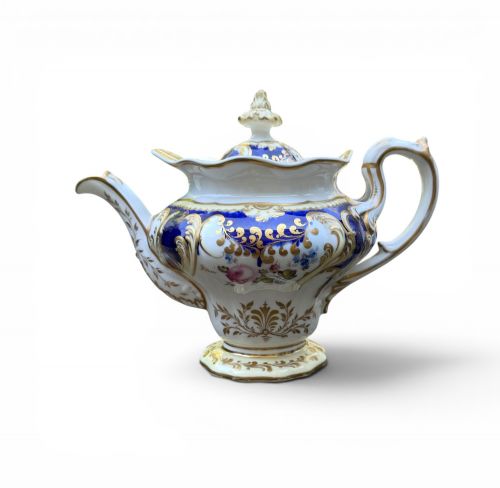
A blue china service encompasses everything from large 19th-century earthenware dinner sets to delicate 18th-century porcelain tea wares decorated in cobalt blue. Buyers looking at this page will encounter diverse configurations, including comprehensive dinner sets, dessert services, and smaller child's sets.
The material composition spans traditional bone china, earthenware, and soft-paste porcelain, reflecting centuries of changing British ceramic manufacturing. Pieces range from early Georgian Worcester bowls to expansive Victorian Staffordshire and Davenport productions.
Forms vary from practical tableware like sauceboats and dinner plates to decorative cabinet pieces and miniature tea sets. The common thread is the predominant use of blue decoration, whether applied through hand-painting or transfer-printing.
Materials and manufacture
Makers utilised refined ceramic pastes, combining clay, bone ash, and ground stone to form bodies like bone china and soft-paste porcelain. These bodies were shaped on a potter's wheel or pressed into moulds before initial firing.
Decoration relied heavily on cobalt oxide for blue pigments, applied either by hand with fine brushes or transferred onto the biscuit ware via paper prints. Glazes were then applied to seal the surface before a final high-temperature kiln firing.
Blue China Service Retail Price Guide 2026
Typical asking prices for blue china service among the pieces listed under this phrase on Sellingantiques today, from the lower quarter to the upper quarter. They describe what is for sale here now, not the wider market.
The documented styles span Georgian, Victorian, Regency Chinoiserie, and Chinese Export, recorded through centuries of English ceramic production.
Assessing quality and execution
The distinction between standard utility wares and top-tier pieces rests on the crispness of the blue pigment and the precision of the brushwork or transfer. Superior sets display deep, even cobalt tones without bleeding into the surrounding glaze.
Forming quality also dictates value, seen in the thinness and translucency of the porcelain body and the neatness of the foot rims. Finer services maintain uniformity across large numbers of plates or cups, showing careful handling throughout the manufacturing process.
Davenport·Staffordshire·Worcester·Barr and Barr·Royal Crown Derby·Minton·Prattware·Coalport·Wedgwood·Masons Ironstone·Copeland Spode·Sutherland
The Blue China Service Glossary
- Soft-Paste Porcelain
- An early ceramic composition made from glass frit and white clay, fired at lower temperatures than hard-paste porcelain. It often exhibits a warm, creamy translucency.
- Transfer-Printing
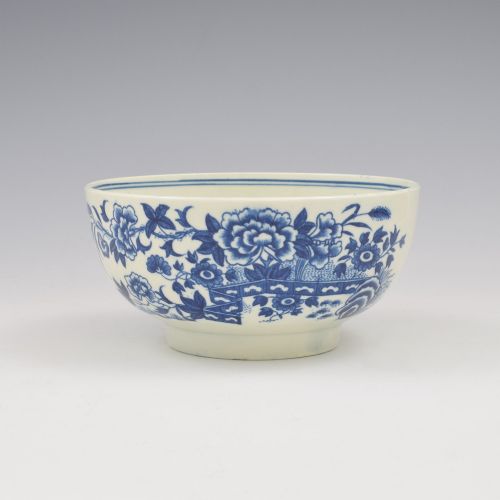
- A mechanical decoration method where a design is engraved on a copper plate, inked with cobalt blue, and transferred to the ceramic surface via tissue paper.
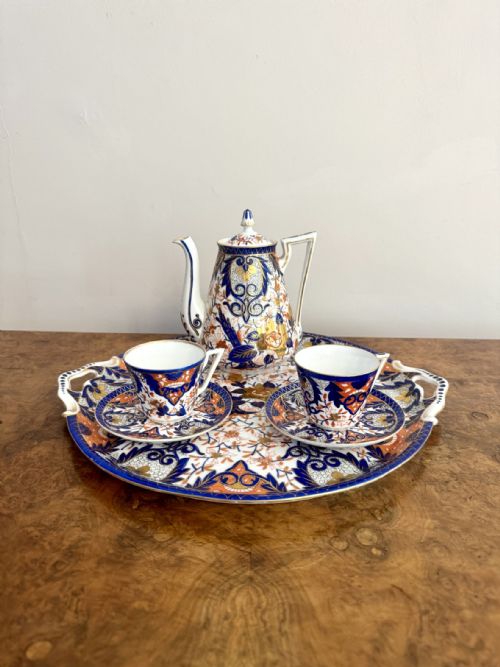
- Imari Japan Pattern
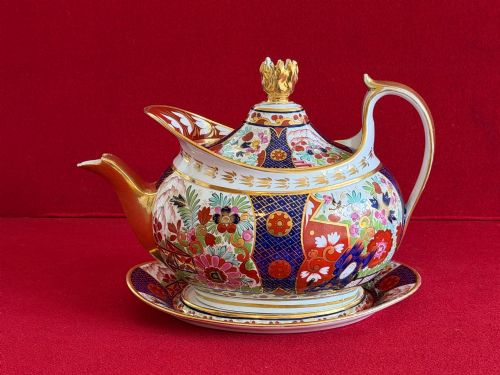
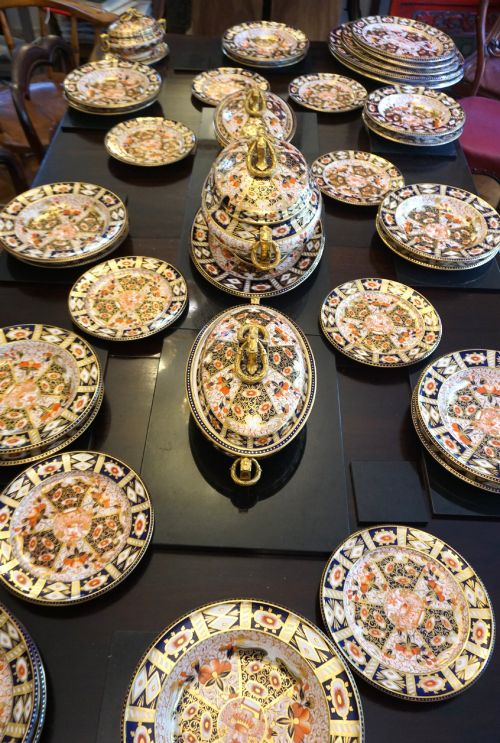
- A decorative style inspired by Japanese export wares, combining underglaze blue with iron red, gold leaf, and enamel highlights. It appears frequently on 19th-century tea and dinner sets.
- Flow Blue
- A Staffordshire printing technique where lime or ammonia chloride was introduced to the kiln to deliberately blur the cobalt blue design into the glaze.
- Biscuit Ware
- Unglazed ceramic pottery that has undergone its initial firing in the kiln and is ready for painting or glazing.
Blue China Service: Frequently Asked Questions
What is a blue china service?
A blue china service is a coordinated collection of ceramic tableware decorated primarily in shades of blue, ranging from complete dinner sets to smaller tea and dessert assemblages.
These sets were produced across the 18th, 19th, and early 20th centuries by major English potteries using various techniques like hand-painting and transfer-printing.
How were these services used originally?
These sets served functional roles in formal dining, afternoon tea rituals, and dessert courses for wealthy households. Large dinner services accommodated multiple courses, while smaller sets managed specific beverages or children's dining.
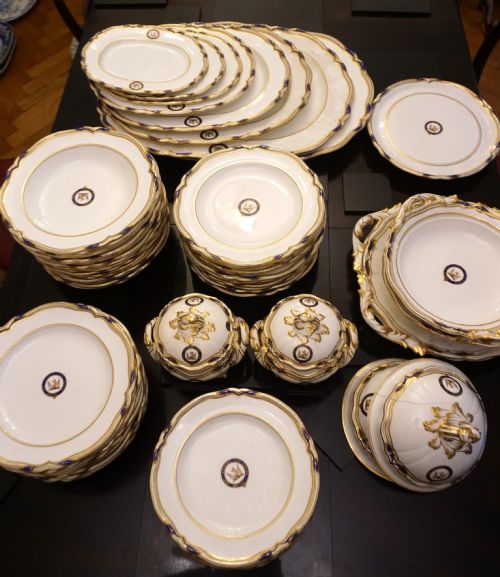
Many services were commissioned for specific estates or prominent figures, bearing personalized crests or monograms.
How do I care for antique blue china?
Antique blue china requires gentle hand-washing in lukewarm water with mild detergent to preserve the fragile glazes and delicate gold leaf highlights. Avoid dishwashers and harsh scrubbers entirely.
Store pieces with felt dividers between plates to prevent rim chipping, and keep them away from direct, prolonged sunlight.
How do I date an antique blue china service?
Dating relies on maker's marks, impressed registration diamonds, and stylistic cues such as paste composition and glazing characteristics. Transfer-printed patterns often match specific historical registration years.
Comparing the form and weight of the ceramic body to known factory periods helps narrow the manufacturing window.