




Blue Ceramic Desk Accessory
A blue ceramic desk accessory brings colour and period character to a writing table, offering practical utility through inkwells, inkstands, brush pots and quill holders.
Blue Ceramic Desk Accessory
A blue ceramic desk accessory covers an array of nineteenth-century and earlier writing equipment, most commonly porcelain and earthenware inkwells, inkstands, and quill holders. These practical desktop pieces served the daily task of writing with quill or pen before the widespread use of fountain pens.
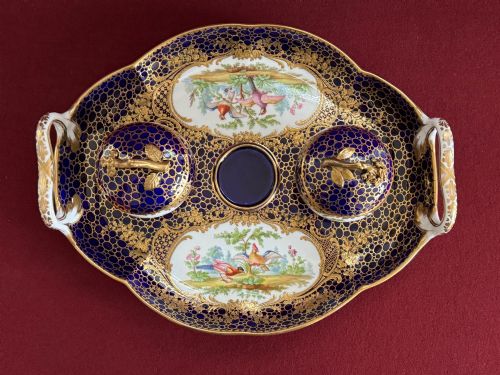
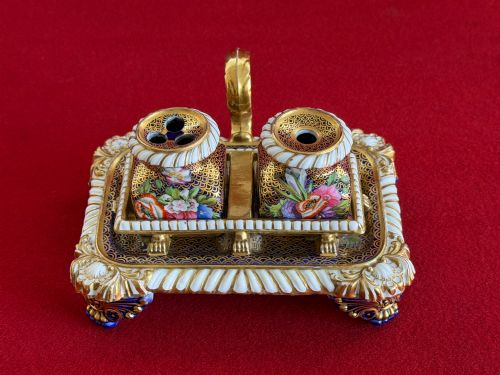
The selection on this page relies heavily on Victorian Staffordshire figures alongside Regency porcelain inkstands and Continental pieces like Dutch Delft and French faience. Pieces range from figural greyhounds and dalmatians with ink holders to classical scholar's brush pots and patterned inkstands.
Buyers will encounter both British factory production from makers such as Minton and Spode alongside imported Asian porcelain and European tin-glazed earthenware. Dating spans from the late seventeenth century through to the early twentieth century, showing diverse regional styles.
How they were made
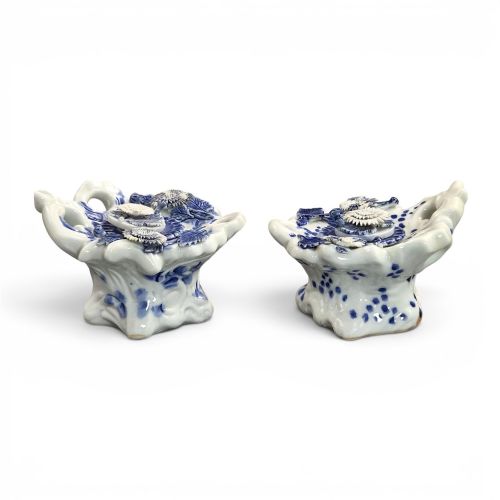
Potters shaped these items from ceramic, earthenware, and porcelain bodies, frequently applying tin glaze or cobalt blue decoration to the surface before firing. Many pieces combine the ceramic body with metal mounts, such as brass stands, or intricate gold leaf highlights applied over the glaze.
Figural pieces like the Staffordshire animal inkwells and quill holders required skilled moulding and hand-painting to capture realistic details on dogs and baskets. Factories like Minton and Spode utilised refined porcelain pastes painted with specific numbered patterns and cobalt pigments.
Blue Ceramic Desk Accessory Retail Price Guide 2026
Typical asking prices for blue ceramic desk accessory among the pieces listed under this phrase on Sellingantiques today, from the lower quarter to the upper quarter. They describe what is for sale here now, not the wider market.
Victorian desk ornaments frequently featured alert greyhounds and dalmatian dogs standing guard over the ink.
What varies in quality
Quality rests upon the crispness of the moulded form, the depth and clarity of the cobalt blue glaze, and the preservation of any hand-painted details or gold leaf highlights. Finer pieces demonstrate superior ceramic body refinement and more sophisticated artistic composition in decorative scenes.
The integrity of the original components also determines desirability, particularly where fitted brass stands, matched lids, or quill holders remain intact alongside the main ceramic vessel. Maker attribution and well-documented factory patterns further separate standard production from exceptional examples.
Minton·Spode·Minton Hollins
The Blue Ceramic Desk Accessory Glossary
- Inkstand
- A complete desk stand typically holding one or more inkwells, sanders for drying ink, and pen trays. These portable writing ensembles sat centrally on a desk.
- Faience
- Tin-glazed earthenware produced in Europe, particularly associated with French and Dutch workshops. The opaque white glaze provided a smooth ground for blue painted decoration.
- Staffordshire
- A major English pottery region known for producing earthenware figures and animals. Many nineteenth-century desk accessories originated from these potteries.
- Quill Holder
- A ceramic support designed to hold feathered writing quills when not in use. They often appeared alongside inkwells or incorporated into figural desk pieces.
Blue Ceramic Desk Accessory: Frequently Asked Questions
What is a blue ceramic desk accessory used for?
These items were designed to hold writing materials such as ink, sand, and quills for correspondence and daily administration.
Today they function as decorative desktop objects that bring historic character and colour to a study or workspace.
How do I date a blue ceramic inkwell?
Dating relies on identifying the ceramic paste, the manufacturing style, factory marks, and the specific decorative motifs typical of periods like the Regency or Victorian eras.
Comparing the glaze characteristics and any pattern numbers recorded by factories also helps narrow down the decade of production.
Are these desk accessories made of porcelain or earthenware?
The evidence shows a mix of materials, including refined porcelain, standard earthenware, and tin-glazed faience from various European and Asian traditions.
British factories like Spode and Minton favoured porcelain bodies, while Staffordshire makers and Dutch workshops frequently used earthenware.
How should I clean my antique inkwell?
Careful dusting with a soft, dry cloth is usually sufficient to maintain the glazed ceramic surface without causing damage.
Harsh cleaning agents and excessive moisture must be avoided, particularly where gold leaf or delicate hand-painted cobalt glaze is present.