






Blue Bedroom Storage
Blue bedroom storage brings together painted pine, oak, and wood chests, wardrobes, and ottomans spanning the eighteenth and nineteenth centuries.
Blue Bedroom Storage
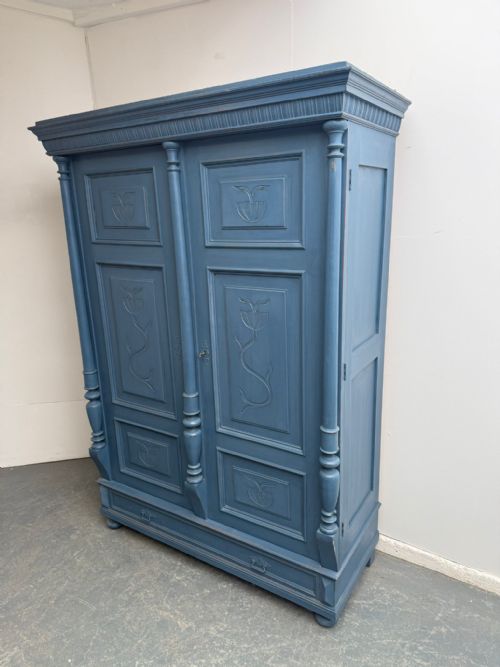
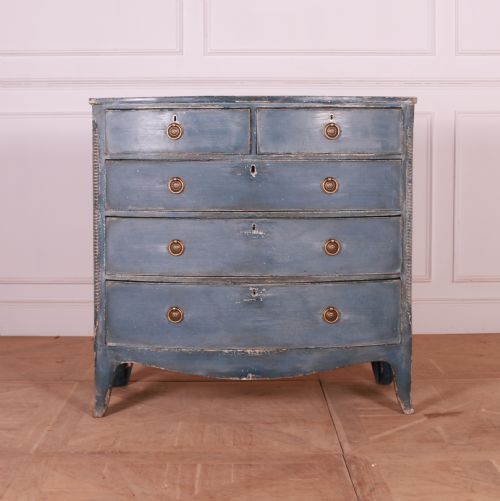
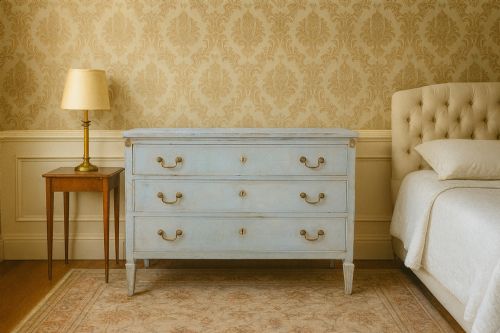
Blue bedroom storage encompasses painted chests of drawers, wardrobes, armoires, and blanket boxes originating from English, Victorian, Gustavian, French, Hungarian, and Italian traditions. These items serve as functional furniture finished in various shades of blue paint, ranging from soft continental tones to deeper Victorian hues.
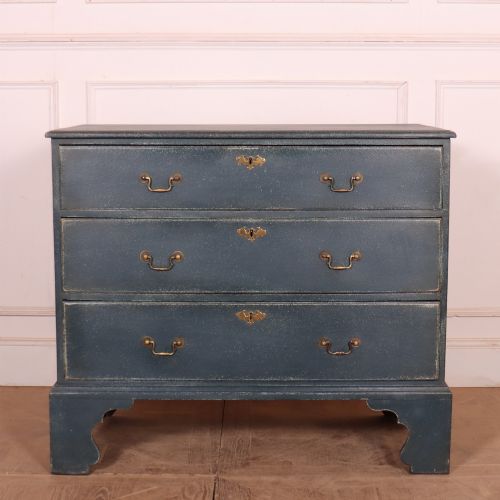
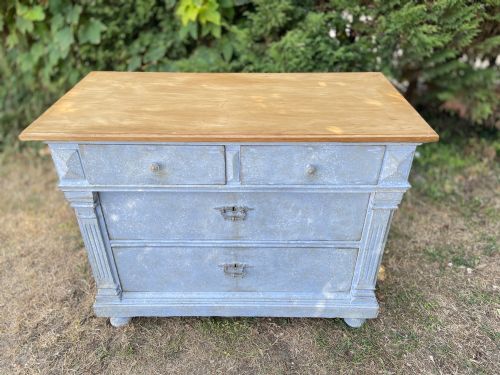
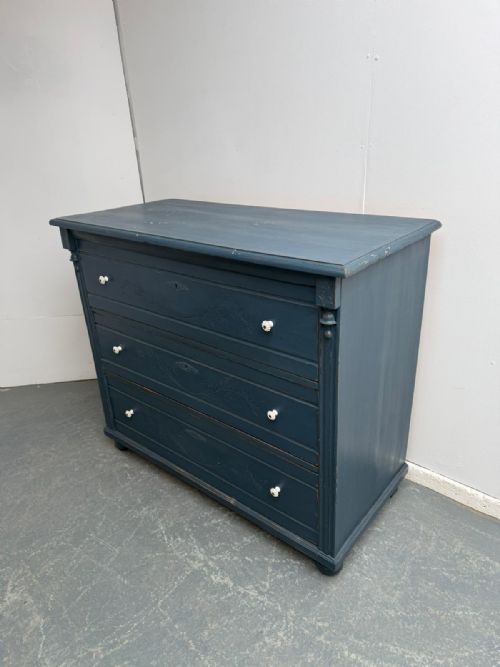
A buyer searching this phrase is most likely to encounter nineteenth-century and Victorian painted chests of drawers alongside continental commodes and occasional wardrobes. The selection leans heavily towards robust wooden construction treated with historic painted surfaces rather than plain timber finishes.
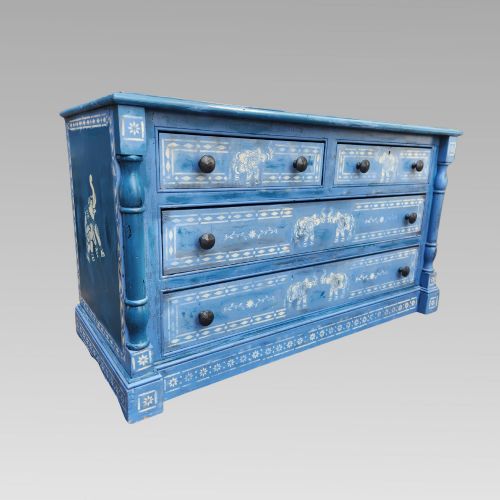
Forms vary from classic English two-over-three drawer configurations to Swedish Baroque Revival commodes, diamond-point commodes, and upholstered ottomans. Each piece combines practical storage capacity with distinct regional stylistic details characteristic of its period.
How they were made
Makers constructed these storage pieces primarily using solid pine, oak, and other woods, shaped into sturdy chests, wardrobes, and blanket boxes. Structural joinery relied on traditional carpentry methods suited to heavy daily use in bedrooms and hallways.
Surfaces were finished with layers of paint, often applied over decades and subject to natural patination. Decorative elements included carved details, upholstered sections, and brass or metal hardware such as handles and escutcheons.
Blue Bedroom Storage Retail Price Guide 2026
Typical asking prices for blue bedroom storage among the pieces listed under this phrase on Sellingantiques today, from the lower quarter to the upper quarter. They describe what is for sale here now, not the wider market.
Listings include items spanning the eighteenth century, the Victorian era, and the nineteenth century, constructed from pine, oak, and painted wood.
What varies in quality
Quality in these painted storage items is defined by the integrity of the timber carcass and the character of the surviving paint surface. Pieces that retain an appealing, undisturbed historic painted finish stand apart from those with later or unsympathetic repainting.
Construction refinement also sets examples apart, distinguishing simple vernacular pieces from ambitious revival commodes featuring carved mouldings, panelled doors, or distinctive architectural forms like concave shapes and diamond points.
The Blue Bedroom Storage Glossary
- Commode
- A low chest of drawers or cabinet, often of continental European origin. These pieces frequently feature decorative painted finishes and multiple drawer tiers.
- Gustavian
- The Swedish neoclassical style spanning the late eighteenth and early nineteenth centuries. It typically incorporates restrained classical motifs and pale painted surfaces.
- Ottoman
- A padded, upholstered seat or box without a back, used for seating and storage. In bedroom settings, these often lift to reveal a compartment for textiles.
- Baroque Revival
- An eclectic nineteenth-century style drawing inspiration from seventeenth-century Baroque forms. It is characterised by exuberant carving and substantial proportions.
- Wardrobe
- A tall cupboard designed for hanging clothes. Antique versions often feature single or double doors and architectural cornices.
Blue Bedroom Storage: Frequently Asked Questions
What periods do these storage pieces come from?
The pieces span from the mid-eighteenth century through the nineteenth century, encompassing Georgian, Victorian, and various continental European periods.
Dates recorded in the listings range from the seventeen-fifties up to the late Victorian era, reflecting diverse regional cabinet-making traditions.
Are these pieces painted originally?
Many examples feature historic painted surfaces, including traditional blue pigments applied during the eighteenth and nineteenth centuries.
Continental pieces often show Gustavian or folk paintwork, while English examples commonly display period painted finishes over pine and oak carcases.
What timber was used for these items?
Makers most frequently utilised pine and oak for the structural carcases and drawer linings of these chests and wardrobes.
Other woods appear beneath painted layers, selected for their stability and local availability in English, Swedish, Italian, and Hungarian workshops.
How do I distinguish regional styles?
Regional styles reveal themselves through specific decorative vocabulary, such as Swedish neoclassical symmetry, Hungarian folk carvings, or Italian commode proportions.
English pieces tend toward functional proportions, whereas continental pieces often incorporate distinct revival mouldings and shaped drawer fronts.