


Blue Bedroom Chair
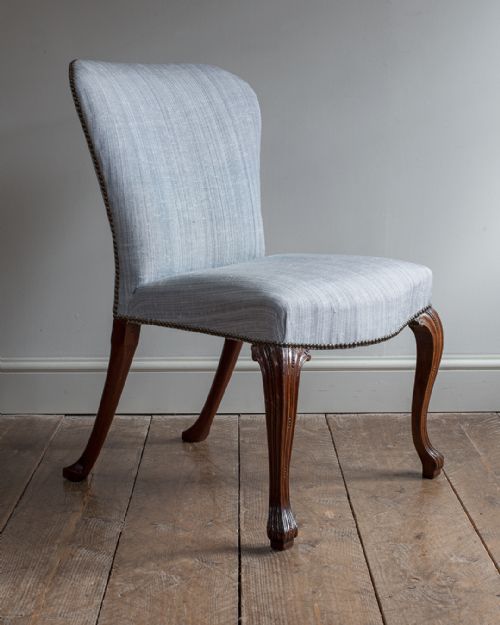
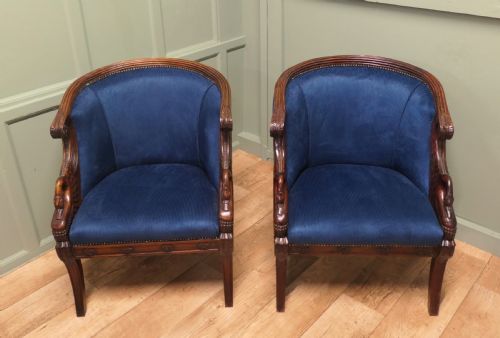
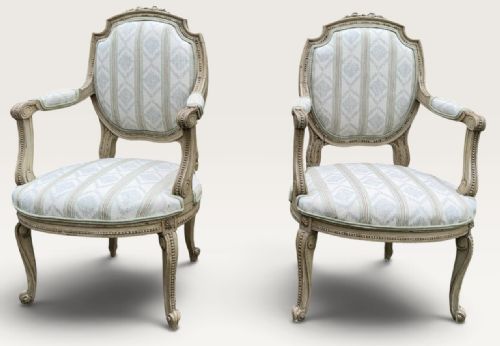
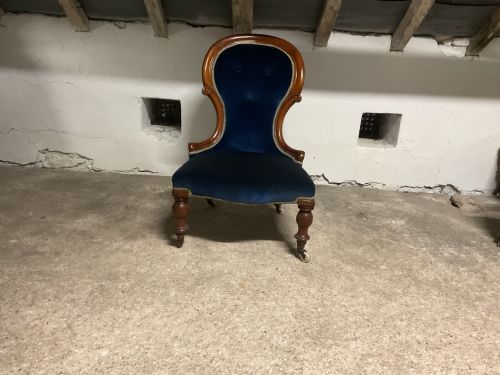
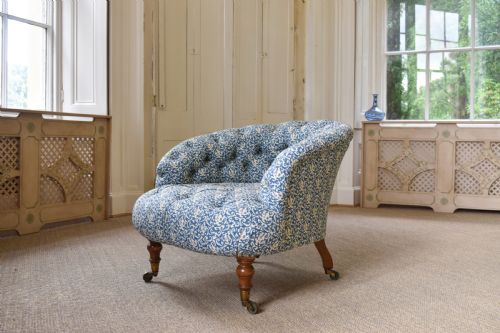
A blue bedroom chair brings a touch of private luxury to a dressing room or parlour, offering a low-slung perch designed for comfort and ease.
Blue Bedroom Chair
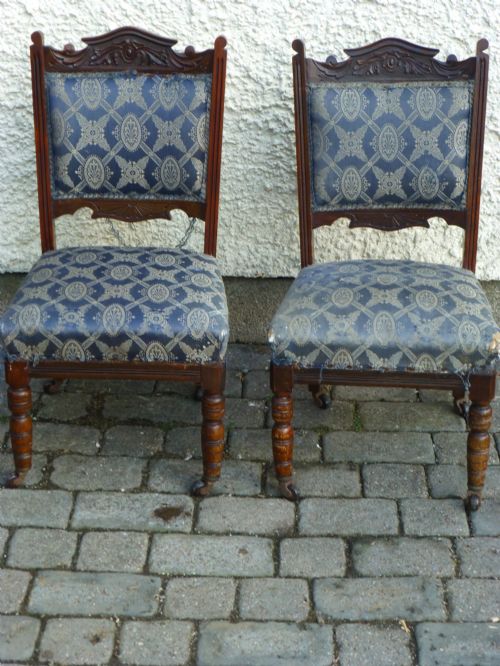
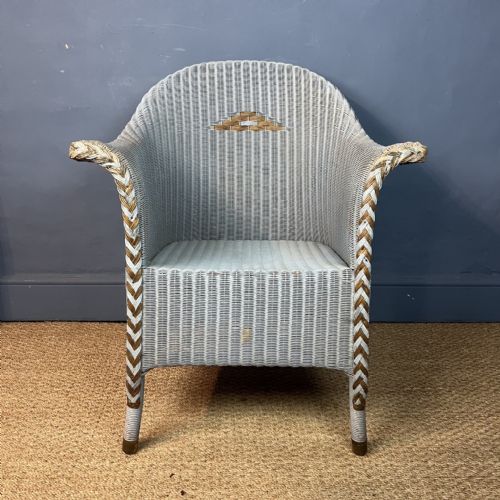
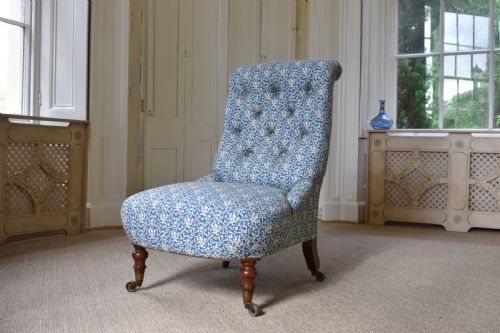
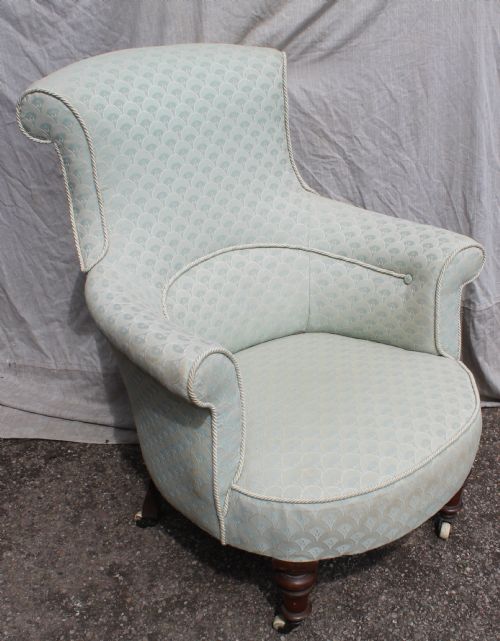
A blue bedroom chair encompasses a variety of intimate seating forms designed for private chambers, including nursing chairs, slipper chairs, and low armchairs. The selection spans the nineteenth century, the Victorian and Edwardian eras, through to the early twentieth century.
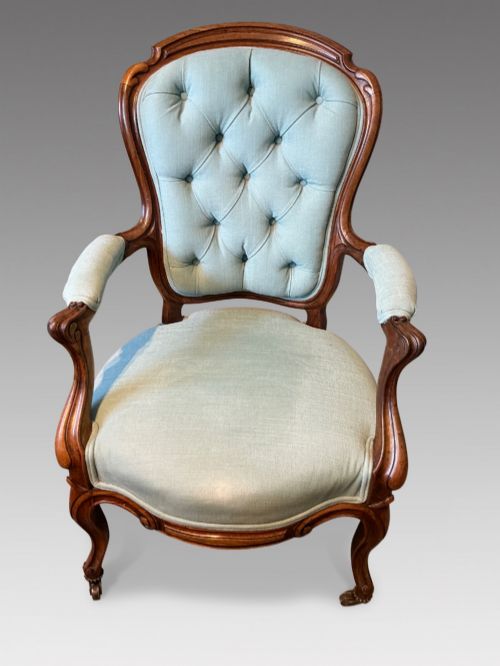
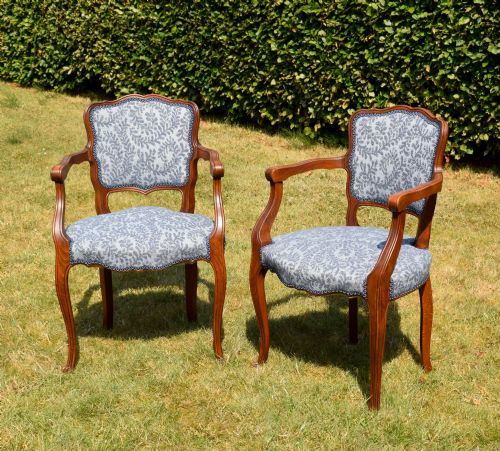
Makers utilised woods such as mahogany, walnut, rosewood, and timber to form frames in styles ranging from Victorian and Edwardian to Regency, Louis XV, and Art Deco. These pieces appear upholstered in various textiles, including velvet and fabric.
Buyers will most frequently find Victorian and Edwardian examples on this page, often featuring low seats suited to bedroom use and dressing tasks.
Materials and construction
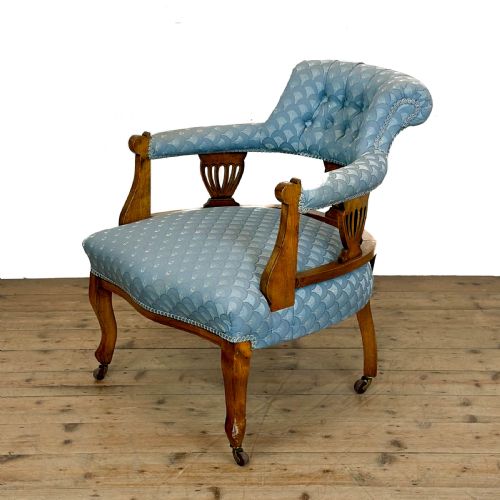
Carpenters constructed the supportive frames of these seats using hardwoods like mahogany, walnut, and rosewood, alongside iron and timber. Carved details and turned front legs, sometimes mounted with castors, reveal the joinery and cabinet-making skills of the period.
Upholstery techniques involved traditional stuffing and springs covered in textiles such as velvet, needlepoint, and striped fabric. Button backing and decorative piping completed the finish on many of these chamber seats.
The listings feature pieces spanning the 1820s Regency period through to 1931, constructed from mahogany, walnut, rosewood, brass, and iron.
Assessing the work
The distinction between standard examples and finer pieces lies in the crispness of the wood carving and the integrity of the frame construction. Solid mahogany and walnut frames with detailed hand-carved ornamentation outlast simpler timber builds.
Original details, such as retained paint finishes or quality upholstery materials like blue velvet and precise buttoning, elevate the standing of an individual chair.
Howard and Sons
The Blue Bedroom Chair Glossary
- Nursing chair
- A low-seated chair traditionally designed to allow a mother to feed an infant comfortably. These pieces typically feature an upright back and low seat height.
- Slipper chair
- An upholstered chair with a low profile, originally designed for dressing rooms to assist with putting on footwear. They often stand close to the floor.
- Tub armchair
- A comfortable chair characterised by a continuous curved back and arms that form a single enclosed shape. This form offers a cocooning seat.
- Giltwood
- Wood that has been treated with a thin layer of gold leaf or gilt. This finish appears on decorative frames in revival styles.
Blue Bedroom Chair: Frequently Asked Questions
Where should I place a blue bedroom chair?
These low seats suit dressing rooms, bedrooms, and corners where space is limited. Their modest height makes them practical for functional daily use.
They also function well in sitting rooms as occasional accent seating alongside larger armchairs.
How do I identify a Victorian bedroom chair?
Victorian examples often display turned wooden legs, buttoned upholstery, and rich timbers like rosewood or walnut. They lean towards comfortable, padded forms intended for private chambers.
Look for design details typical of the mid to late nineteenth century, such as carved walnut frames and ceramic castors.
What is the difference between a slipper chair and a nursing chair?
Slipper chairs sit extremely close to the floor and were historically used in dressing areas. Their compact scale allowed women to dress without obstruction.
Nursing chairs usually feature a slightly higher seat and an upright back designed to support someone holding a child.
Can I use these chairs in a modern interior?
The compact proportions of these antique seats allow them to integrate easily into contemporary rooms. Many pieces feature updated fabrics that bridge historic frames with modern palettes.
Their varied styles, from Edwardian inlaid mahogany to Art Deco velvet designs, complement modern living spaces.