



Blue Aquamarine Necklace
A blue aquamarine necklace brings together cool, pale beryl and precious metals to form a piece with enduring style.
Blue Aquamarine Necklace
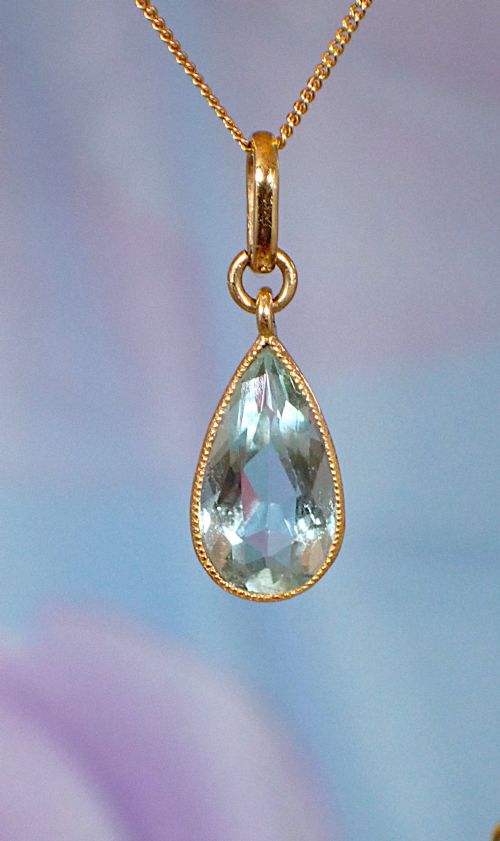
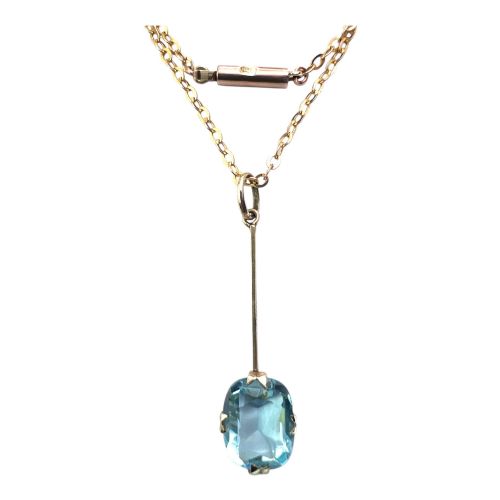
A blue aquamarine necklace centres on the characteristic sea-blue beryl crystal, set as a pendant or drop on a fine chain. These pieces range from delicate Edwardian mounts to substantial mid-century designs.
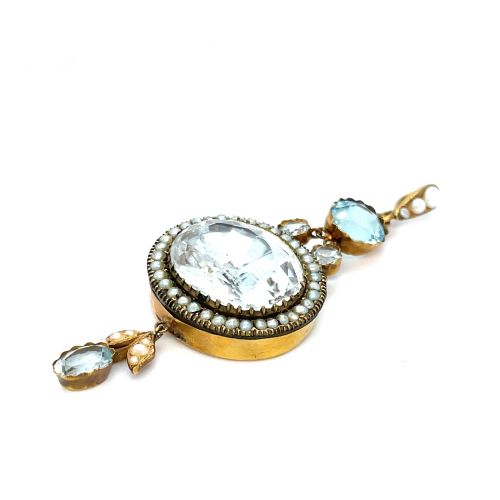
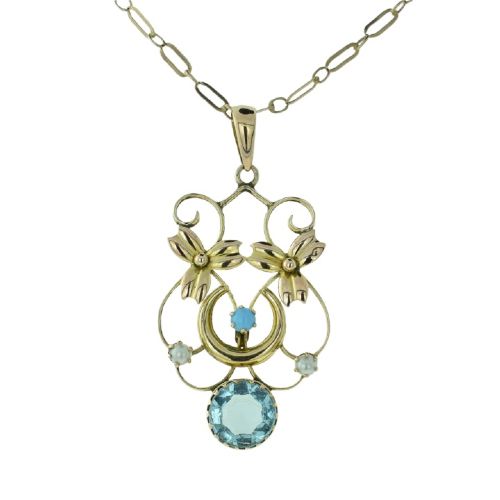
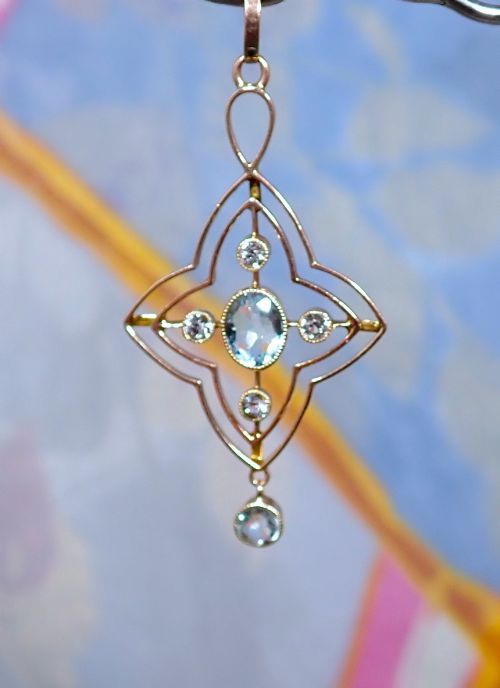
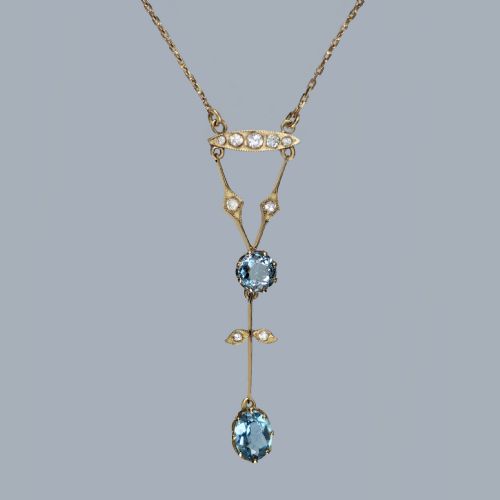
The version most commonly met on this page is the Edwardian gold pendant, frequently paired with seed pearls or small diamonds. These early forms display slender geometry and openwork mounts.
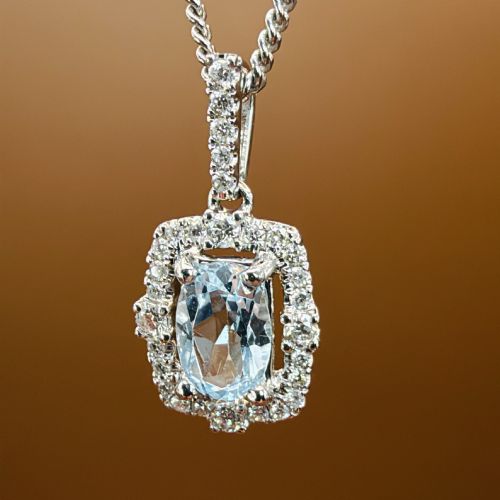
Later examples from the Art Deco and retro periods introduce platinum and heavier yellow or white gold settings. These often incorporate larger feature stones alongside targeted diamond accents.
Materials and construction
Makers utilised gold in various purities, alongside platinum and white gold, to support the aquamarine centrepieces. Seed pearls and diamonds frequently accompany the main beryl in cluster and drop configurations.
Stone cutting techniques vary from old oval cuts to stepped geometric facets, held by delicate claws or bezel settings. Openwork metalwork defines the lighter Edwardian frames, while later pieces employ solid platinum or heavy gold casting.
Some Edwardian pieces pack so many seed pearls into a single pendant that they practically hum with Victorian nostalgia.
Quality differences
The depth of colour and clarity of the aquamarine crystal set the baseline for a piece, alongside the weight and purity of the gold or platinum mount. Stones with vivid saturation and clean interiors stand apart from paler, included examples.
The finesse of the metalwork and the integration of supporting diamonds or pearls dictate the standard of execution. Intricate piercing and secure, even stone setting indicate superior workshop production.
C'est Laudier
The Blue Aquamarine Necklace Glossary
- Aquamarine
- A blue to bluish-green variety of beryl, named for its sea-water hue. It forms the primary gemstone in these necklaces.
- Seed pearl
- A very small, natural or cultured pearl used in delicate clusters and borders. These tiny pearls are typical of Edwardian jewellery.
- Platinum
- A dense, durable white metal utilised for fine Edwardian and Art Deco mounts. It permits slender settings that hold stones securely.
- Drop pendant
- A suspended ornament that hangs below the main chain line. These pieces move independently as the wearer moves.
Blue Aquamarine Necklace: Frequently Asked Questions
How do I date my necklace?
Examine the metal purity marks, the cut of the stones, and the overall mount style to determine the era. Edwardian pieces often feature delicate 9ct or 15ct yellow gold openwork, while later items shift towards platinum and white gold.
Compare the setting techniques against known periods like Art Deco or the mid-century. Subtle clues in the chain attachment and clasp construction also aid dating.
Can I wear this every day?
Aquamarine is a durable beryl suitable for regular wear, though older settings require careful handling. Edwardian seed pearls and delicate gold chains need protection from heavy impacts.
Store the necklace separately to avoid scratches from harder gemstones. Clean the piece gently with warm soapy water and a soft brush.
What is foil backing?
Foil backing places a reflective metallic sheet behind a gemstone to enhance its brilliance and colour. This technique appears in older Victorian pieces on this page.
Keep foil-backed stones away from water and moisture to prevent the backing from tarnishing. Professional cleaning is essential for these fragile settings.
How are aquamarines set?
Stones are held using claws, bezels, or flush settings depending on the period and design. Edwardian drops often use delicate millegrain borders alongside small claw settings.
Heavier mid-century pendants employ robust bezels to secure substantial beryl crystals. Each method reflects the technical standards of the workshop.