
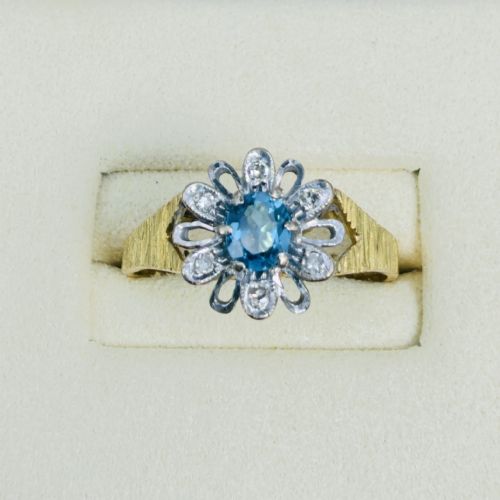


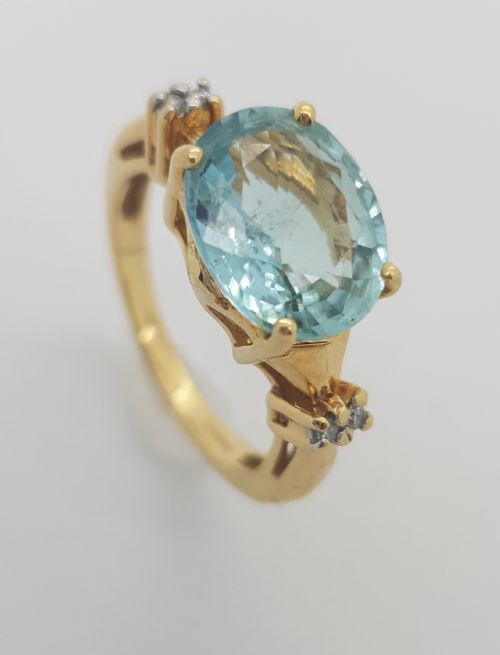
Blue Aquamarine Gold Ring
A blue aquamarine gold ring brings cool ocean colour and warm precious metal together in wearable forms spanning the nineteenth century to the mid-century modern era.
Blue Aquamarine Gold Ring
A blue aquamarine gold ring sits on the hand as either a delicate everyday band or a substantial statement piece. The search phrase covers diverse forms, from clean solitaires to elaborate cocktail rings.
The pieces on this page appear in styles such as Art Deco, Art Nouveau, Retro, and Mid-Century. Surviving examples reflect changing tastes across the nineteenth century and subsequent decades.
Most pieces meet the buyer as vintage or antique creations, utilising various gold karats alongside pale to deep blue beryl stones. Cluster arrangements, flower motifs, and geometric lines define the visual vocabulary.
How they were made
Goldsmiths set aquamarine stones into 18ct white gold, 18ct yellow gold, and standard gold settings. Diamond accents frequently accompany the central beryl, secured by claw, bezel, or flush mountings.
Craftsmen shaped precious metals through casting and hand-working to achieve structural designs like the tank cocktail ring or twist ring. Marquise, oval, and emerald cuts dominate the gemstone shaping.
One reclining woman enjoys an Art Nouveau metal lounge inside an antique ring.
What varies in quality
The depth of the beryl colour and the carat weight dictate much of the presence on the hand. Large central stones paired with old cut diamonds command attention through sheer scale.
Design complexity separates simpler solitaires from elaborate figural or multi-stone cluster works. Metal weight and the precision of the stone setting complete the picture.
The Blue Aquamarine Gold Ring Glossary
- Aquamarine
- A blue to bluish-green variety of beryl used as the primary gemstone in these pieces. Its name derives from seawater, reflecting its characteristic pale clarity.
- Cocktail Ring
- A large, prominent ring designed to draw the eye during evening wear. These pieces often feature oversized central stones surrounded by diamonds.
- Art Deco
- A design style spanning the 1920s and 1930s characterised by geometric symmetry and clean lines. White gold settings frequently showcase this aesthetic.
- Retro
- A bold jewellery style from the 1940s and 1950s that utilises heavy yellow gold and sculptural forms. Tank rings emerge directly from this period.
Blue Aquamarine Gold Ring: Frequently Asked Questions
How do I clean my aquamarine ring?
Wash the piece gently in warm soapy water using a soft brush behind the setting to remove accumulated oils. Avoid harsh chemical dips that might affect the surrounding metal.
Dry the ring thoroughly with a soft cloth before storing it separately from harder gems to prevent surface scratching.
Are these rings suitable for daily wear?
Aquamarine measures relatively hard on the Mohs scale, making it durable enough for regular use when set securely in gold. Cocktail rings with very high settings require more care against accidental knocks.
Checking the claws periodically ensures the central stone remains firmly anchored within its mounting.
How can I tell the period of a ring?
Stylistic cues such as geometric platinum or white gold work point toward the Art Deco era, while heavy yellow gold volumetric shapes signal the Retro period. Maker marks and metal stamps inside the band offer further chronological clues.
Comparing the cut of accompanying diamonds, such as old cuts versus modern brilliants, helps narrow down the decade of manufacture.