



Blue Aquamarine Gold Jewellery
Blue aquamarine gold jewellery brings together pale blue beryl and warm precious metal, offering refined antique design suited for everyday wear.

Blue Aquamarine Gold Jewellery
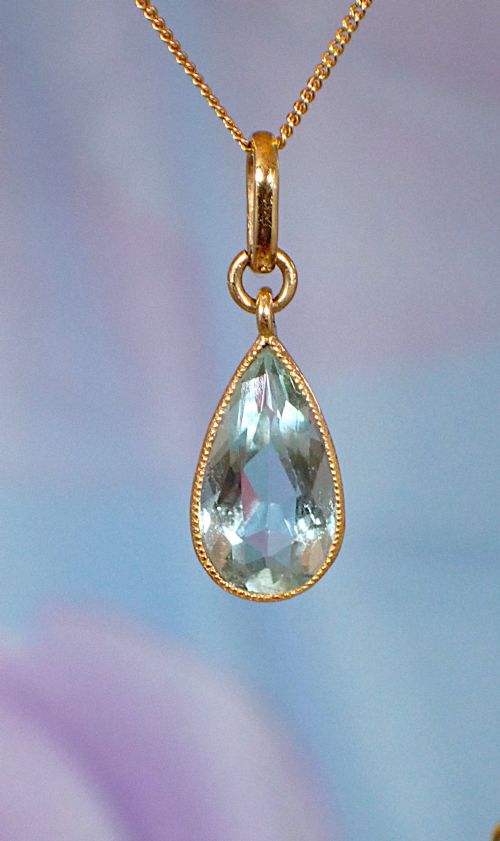
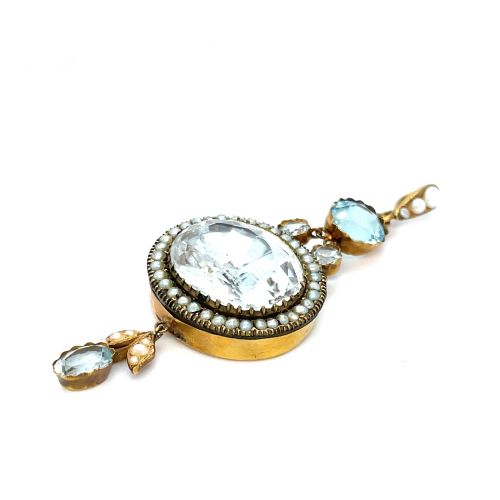
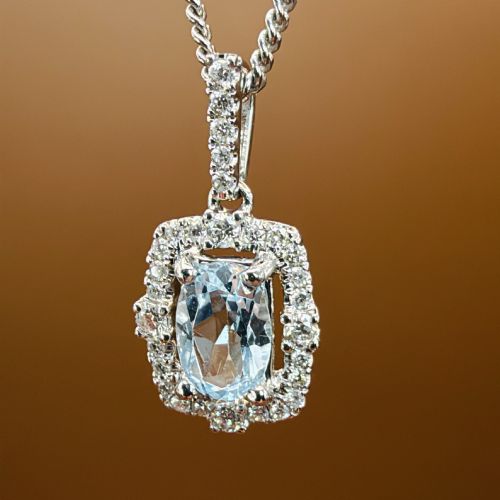
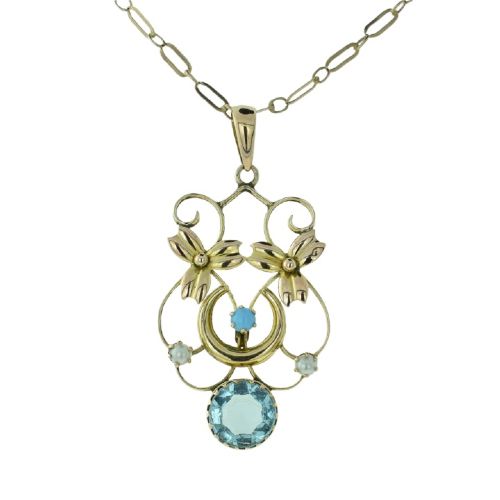
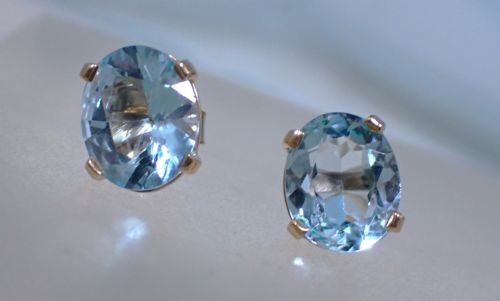
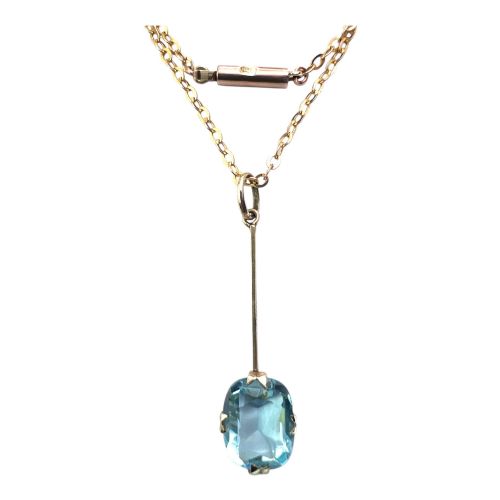
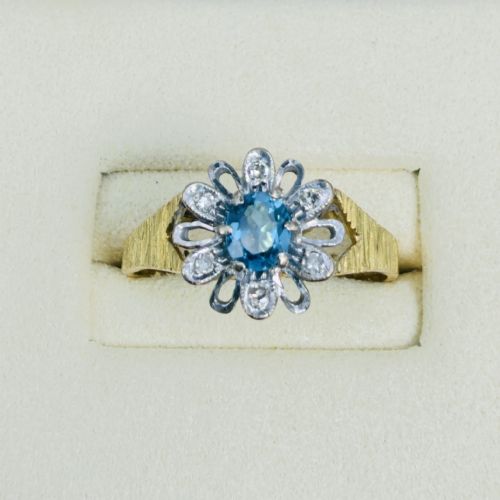
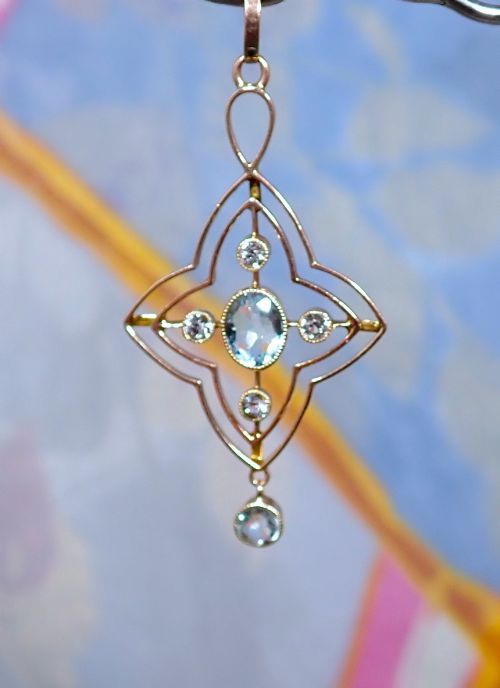
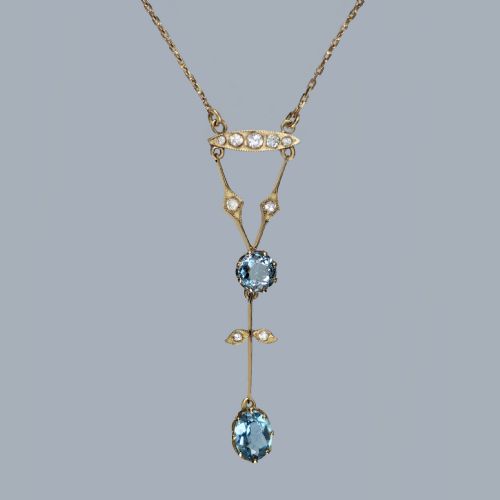
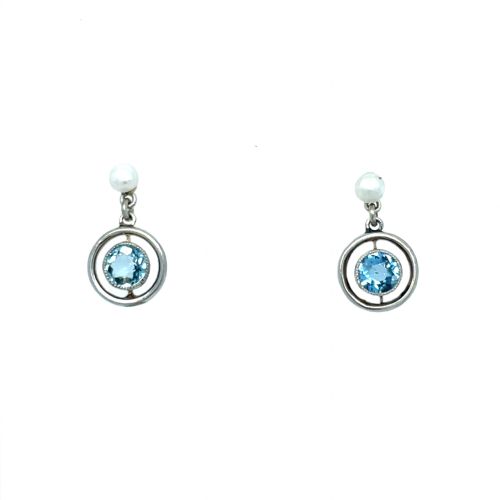
Blue aquamarine gold jewellery spans rings, pendants, earrings, brooches and bracelets originating from the Victorian period through to the mid-twentieth century. Pieces on this page predominantly showcase Edwardian openwork settings and mid-century cocktail designs.
The selection ranges from delicate seed pearl and aquamarine drop necklaces to substantial gemstone cocktail rings set in yellow or white gold.
Materials and construction
Goldsmiths utilised varying purities of gold, including 9ct, 15ct, 18ct and 22ct yellow, rose and white gold, alongside platinum for specific Edwardian and Art Deco mounts. Aquamarines are paired with diamonds, seed pearls, sapphires and rock crystal.
Stones are secured in claw settings, bezels or delicate millegrain edges, often supported by intricate openwork wire frames typical of the Edwardian and Art Nouveau periods.
Object forms span bar brooches, drop earrings, cluster pendants, and cocktail rings.
Assessing quality
Quality rests upon the saturation and clarity of the central aquamarine stone, alongside the precision of the metalwork in settings such as millegrain borders and filigree. Substantial gemstone carats paired with well-matched accent diamonds elevate a piece.
The integrity of the original mount, minimal wear to the gold prongs, and balanced proportions between stone and metal determine the standing of individual rings and pendants.
C'est Laudier
The Blue Aquamarine Gold Jewellery Glossary
- Millegrain
- A decorative jewellery technique involving a line of tiny raised metal beads along the edge of a setting. This finish softens the transition between metal and stone in Edwardian pieces.
- Beryl
- The mineral family to which aquamarine belongs. It provides the natural blue-green coloration found in these antique stones.
- Foil back
- A historical technique where a thin sheet of reflective metal is placed behind a gemstone to enhance its brilliance. This method appears in Victorian pendants on this page.
- Openwork
- Metalwork designed with open spaces rather than solid backing. It allows light to pass through the aquamarine and reduces the weight of the mount.
Blue Aquamarine Gold Jewellery: Frequently Asked Questions
How do I care for antique aquamarine jewellery?
Clean your pieces gently using warm soapy water and a soft brush, avoiding harsh ultrasonic cleaners that might damage softer accompanying stones like pearls.
Store items separately in lined boxes to prevent the gold settings and aquamarines from scratching against each other.
Can I wear an antique aquamarine ring daily?
Aquamarine measures quite high on the hardness scale, making it durable enough for regular wear when secured in a sturdy gold or platinum setting.
Consider removing rings during heavy manual work or gardening to protect delicate claws and older metalwork from undue strain.
How do I distinguish Edwardian from mid-century pieces?
Edwardian designs typically feature delicate yellow or rose gold openwork, millegrain edges, and pairing with seed pearls or small old-cut diamonds.
Mid-century pieces often showcase larger emerald-cut aquamarines mounted in substantial white gold or yellow gold cocktail rings and drop earrings.
What does foil back mean on a pendant?
A foil back is a thin metallic layer placed behind a stone to boost its light reflection and perceived depth in older jewellery.
This method was common in Victorian pieces before modern gemstone cutting techniques became standard practice.