



Blue Aquamarine Engagement Ring
A blue aquamarine engagement ring brings cool, transparent colour and diamond sparkle, shaped by mid-century and Art Deco design.
Blue Aquamarine Engagement Ring
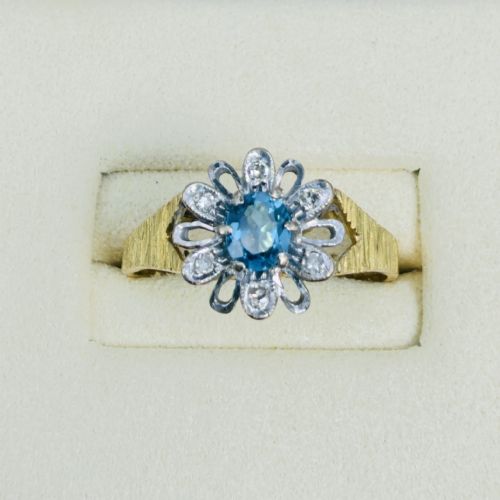
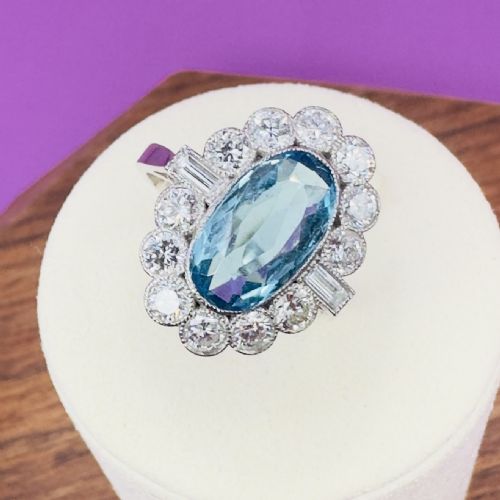
A blue aquamarine engagement ring spans periods from the 1920s to the 1960s, capturing decades of changing tastes in precious jewellery. The selection ranges from geometric Art Deco platinum creations to fluid mid-century cluster and twist designs.
Buyers most frequently meet cluster rings and oval or emerald-cut stones set alongside diamonds in platinum or gold. These configurations showcase the pale blue beryl against contrasting geometric diamond work or polished precious metal bands.
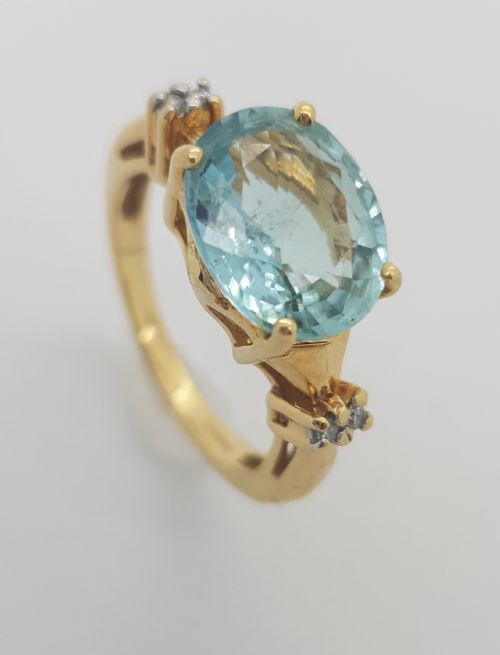
Originating across the early and mid-twentieth century, these rings reflect distinct aesthetic shifts from the sharp lines of the 1930s to the softer floral and twist motifs of the 1950s and 1960s.
How they were made
Goldsmiths and platinumsmiths mount aquamarines in platinum, white gold, and 18ct yellow gold, often combining the cool white metals with brilliant or baguette cut diamonds. Metal choices shift from the platinum settings of the Art Deco period to the warm yellow and white gold combinations of the 1950s and 1960s.
Stones are shaped into elongated oval, emerald, and traditional cuts, secured in cluster, flower, trilogy, and twist configurations. Fine handiwork defines the era, with settings designed to maximise light passing through the central beryl.
Materials recorded across the selection include platinum, 18ct yellow gold, 18ct white gold, aquamarine, diamond, blue spinel, and onyx.
What varies in quality
The clarity and saturation of the central aquamarine determine visual impact, alongside the proportion and cut of the surrounding diamonds. Subtleties in gemstone saturation separate standard commercial stones from deeply saturated specimens.
The precision of metalwork and prong setting integrity shape the durability and refinement of each ring. Heavier platinum mountings from the 1930s offer a different structural weight compared to lighter 18ct gold bands from the post-war decades.
The Blue Aquamarine Engagement Ring Glossary
- Aquamarine
- A blue to greenish-blue variety of beryl used as the primary gemstone in these rings. Its crystalline structure allows for large, clear faceted cuts.
- Cluster Ring
- A ring style featuring a central gemstone encircled by a group of smaller stones, typically diamonds. This arrangement maximises overall finger coverage and brilliance.
- Art Deco
- A design style spanning the 1920s and 1930s characterised by geometric symmetry, stylised motifs, and platinum settings. It favours sharp lines and architectural structures.
- Trilogy Ring
- A setting comprising three principal gemstones arranged in a row, representing past, present, and future. In these pieces, an emerald-cut aquamarine typically takes the centre position.
- Baguette Cut
- A step-cut diamond shape with rectangular facets and straight parallel sides. It provides linear contrast to rounded central aquamarines.
Blue Aquamarine Engagement Ring: Frequently Asked Questions
Are these rings durable for daily wear?
Aquamarine measures seven point five to eight on the Mohs hardness scale, making it suitable for everyday wear when set securely. Platinum and gold mountings provide robust daily support for the centre stone.
Regular inspection of the claws and settings helps maintain the security of both the aquamarine and the surrounding diamonds over decades of use.
How do I identify an Art Deco ring?
Art Deco rings from the 1920s and 1930s typically utilise platinum and feature geometric shapes, symmetrical layouts, and step-cut diamonds. The metalwork often incorporates fine millegrain detailing along the edges.
In contrast, later mid-century pieces from the 1950s and 1960s tend to introduce yellow gold, organic twist forms, and softer floral cluster silhouettes.
What is the difference between platinum and white gold?
Platinum is a naturally white, dense, and durable precious metal that retains its colour without plating. It forms strong, thin claws that securely hold baguette and brilliant cut diamonds.
White gold is an alloy of yellow gold mixed with white metals to achieve a similar pale appearance. It provides a bright mounting option across 18ct white gold vintage settings.
What cuts of aquamarine are available?
Available cuts include emerald cut, elongated oval cut, and traditional faceted shapes tailored to the specific period style. Step cuts like the emerald cut emphasise transparency and depth of colour.
Brilliant and oval cluster configurations maximise light reflection through the table of the stone, interacting with surrounding diamond accents.