








Blue and White Imari Pottery
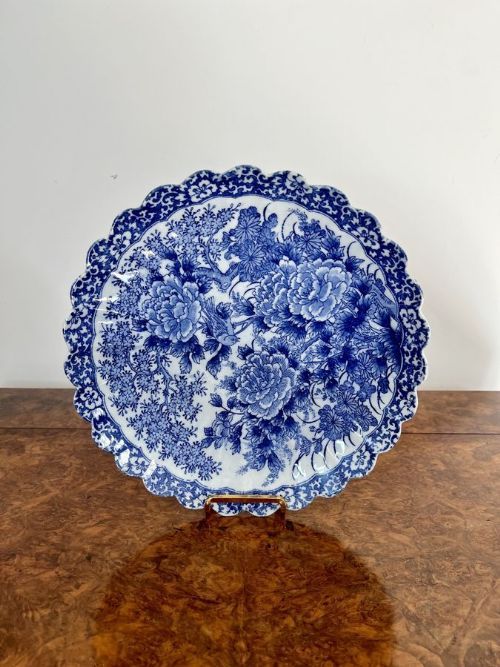
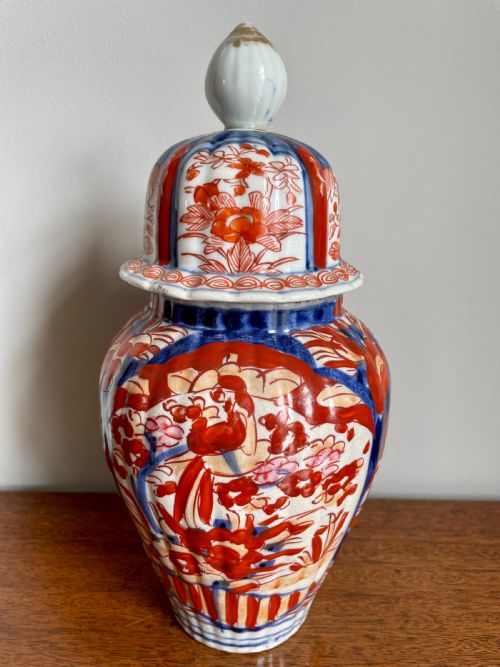
Blue and white imari pottery brings together rich Japanese origins and nineteenth century European responses in bold decorative vessels.
Blue and White Imari Pottery
Blue and white imari pottery spans centuries of craftsmanship, connecting Japanese Arita export wares with nineteenth century English interpretations in ironstone and porcelain. Buyers searching for blue and white imari pottery encounter a diverse selection of decorative plates, chargers, and pedestal bowls.
The objects on this page range from early Japanese Edo and Meiji period porcelain to Victorian ironstone pieces produced by makers such as Minton, Spode, and Mason's. Japanese Arita imari chargers and vases sit alongside English transferware and pottery jugs bearing similar decorative inspirations.
How they were made
Makers utilised high-firing ceramic materials including porcelain, ironstone, and stoneware to form the foundation of these vessels. Cobalt pigment and glaze provide the characteristic deep blue underglaze decoration seen across the majority of these plates and vases.
Enamel colours and gilding were frequently added over the glaze to enrich the finished appearance of Japanese imari wares and Victorian adaptations. Potters shaped these pieces into robust functional forms like pedestal bowls and hydra jugs, alongside purely decorative plates and chargers.
Blue and White Imari Pottery Retail Price Guide 2026
Typical asking prices for blue and white imari pottery among the pieces listed under this phrase on Sellingantiques today, from the lower quarter to the upper quarter. They describe what is for sale here now, not the wider market.
Materials represented across the inventory include traditional porcelain, ironstone, stoneware, cobalt glaze, and surface gilding.
What varies in quality
The strength of the cobalt pigment and the precision of the underglaze painting dictate the visual impact of each piece. Crisp detailing in the floral and bamboo motifs separates standard production items from finer studio output.
The preservation of overglaze enamel and gilding influences the overall desirability of nineteenth century porcelain and ironstone. Weight, potting uniformity, and the clarity of the glaze also mark the distinction between everyday domestic pottery and exhibition pieces.
Minton·Spode·John Ridgway·Mason's
The Blue and White Imari Pottery Glossary
- Imari
- A style of Japanese porcelain originating from the town of Arita, exported in large quantities to Europe and widely imitated by Western potteries. It typically employs a palette of deep cobalt blue alongside contrasting iron red and gold.
- Ironstone
- A dense, durable type of heavy earthenware patented in the nineteenth century by English manufacturers as a resilient alternative to porcelain. It takes underglaze transfer printing and enamelling exceptionally well.
- Charger
- A large decorative plate intended primarily for display on a wall or sideboard rather than for service at the dining table. These substantial pieces often showcase the most ambitious painting.
- Transferware
- A ceramic decoration technique where a design is engraved on a copper plate, inked with pigment, and transferred onto paper before being pressed onto the unglazed ceramic body. This method allowed for consistent, intricate patterns.
- Hydra jug
- A specific nineteenth century pitcher form featuring a distinct serpentine handle and moulded spout, frequently produced in ironstone for domestic utility.
Blue and White Imari Pottery: Frequently Asked Questions
How do I care for blue and white imari pottery?
Wash these ceramic and porcelain pieces by hand using warm water and a mild detergent. Avoid soaking items with delicate overglaze enamels or gilding.
Keep them away from direct sunlight and sudden temperature changes to protect the glaze and body from stress.
Are these pieces safe for food use?
Many antique ironstone and porcelain vessels were designed for domestic utility and dining purposes during the nineteenth century. However, older glazes can sometimes be sensitive to acidic foods.
Display remains the primary use for antique decorative chargers, plates, and vases found on this page.
How do I distinguish Japanese imari from English copies?
Japanese Arita pieces typically utilise true porcelain bodies with distinctive foot rings and underglaze cobalt painting originating in East Asia. English interpretations often employ ironstone or heavy stoneware with maker marks stamped into the base.
Examining the weight, paste texture, and potting characteristics helps clarify the geographic origin of each item.
What is the difference between porcelain and ironstone?
Porcelain is a vitrified, translucent ceramic fired at very high temperatures using fine white clay. It offers a ringing tone when tapped and a smooth, glass-like body.
Ironstone is an opaque, heavy earthenware developed to mimic porcelain while providing superior strength and resistance to chipping.