

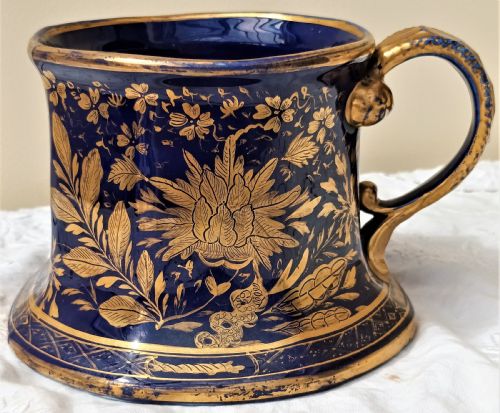


Blue and Gold Cup
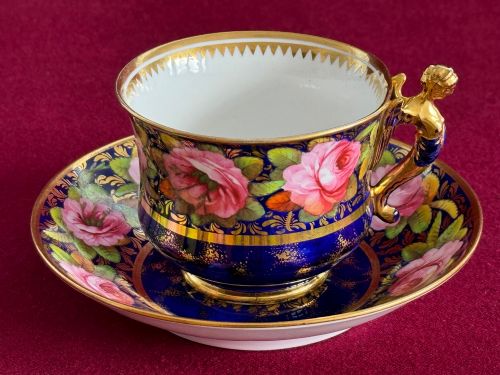
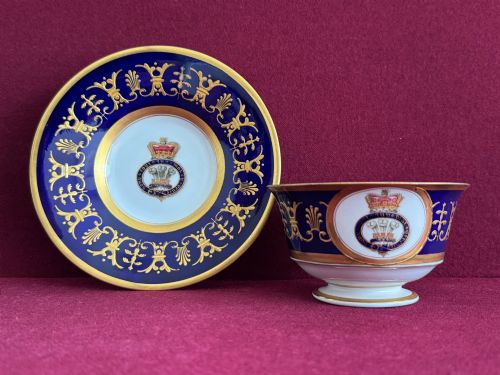
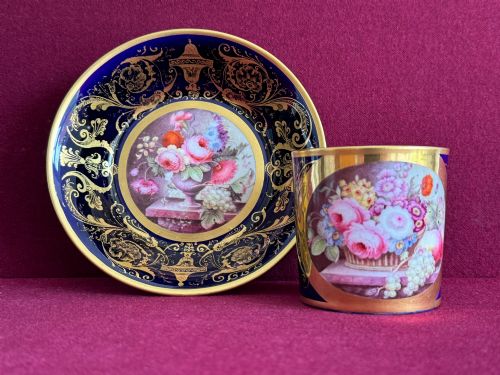
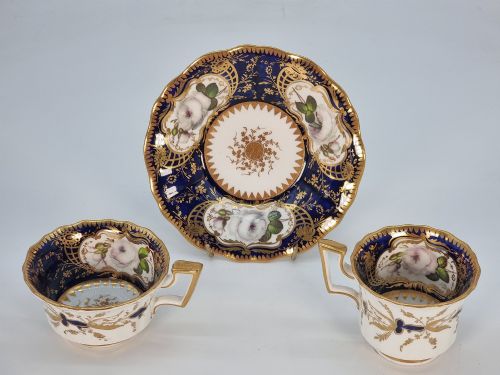
A blue and gold cup brings together rich cobalt glazing and metallic lustre on porcelain, bone china, or ironstone, offering a striking display piece for the collector.
Blue and Gold Cup
When you search for a blue and gold cup, you encounter an array of drinking vessels spanning the Georgian, Regency, Victorian, and later periods. These range from teacups and saucers and coffee cans to chocolate cups with covers and stands, alongside larger mugs and tankards.
The most common examples on this page date from the late eighteenth and early nineteenth centuries, featuring works from English factories such as Worcester, Coalport, Spode, and Minton. Continental makers also appear, notably Royal Vienna and pieces decorated in Munich.
Forms vary from delicate tea bowls and saucers to substantial ironstone mugs and elaborate chocolate services. Each piece employs the high-contrast palette of deep blue tones paired with gold leaf or gilding.
How they were made
Makers utilised porcelain, bone china, soft-paste porcelain, and ironstone as the foundation bodies for these vessels, shaping them on the wheel or casting them in moulds. Glaze was then applied and fired to create a smooth, vitreous surface.
Decoration relied on hand-painted cobalt blues and enamel colours, complemented by applied gold leaf or gilding. Firing fixed the metallic lustre and enamel onto the glazed ceramic body, often requiring multiple kiln runs.
Blue and Gold Cup Retail Price Guide 2026
Typical asking prices for blue and gold cup among the pieces listed under this phrase on Sellingantiques today, from the lower quarter to the upper quarter. They describe what is for sale here now, not the wider market.
Object types range from tea bowls and coffee cans to chocolate cups with covers and stands, alongside large mugs and tankards.
What varies in quality
The precision and detail of the hand-painted decoration set the finest examples apart from standard production. Superior pieces exhibit intricate enamel work, allegorical scenes, or nuanced gilding applied by skilled hands.
The sophistication of the ceramic body also dictates standing, with translucent soft-paste porcelain or early bone china representing more ambitious manufacturing than heavy ironstone mugs. Completeness, such as retaining original covers and stands on chocolate cups, elevates an item's status.
Chelsea Derby Porcelain·Spode Porcelain·Barr and Barr Worcester·Minton Porcelain·Coalport John Rose·Grainger's Worcester·Royal Vienna·Royal Worcester
The Blue and Gold Cup Glossary
- Coffee can
- A straight-sided cylindrical porcelain cup used for drinking coffee in the eighteenth and nineteenth centuries, frequently found paired with a matching saucer.
- Chocolate cup
- A two-handled vessel designed specifically for drinking chocolate, often supplied with a cover and a stand to retain heat.
- Ironstone
- A heavy, durable type of earthenware patented in the nineteenth century that mimics porcelain in strength and utility.
- Gilding
- The application of gold leaf or powdered gold suspended in a medium to ceramic surfaces for decorative accent.
- Soft-paste porcelain
- An artificial ceramic paste fired at lower temperatures than true hard-paste porcelain, producing a warm glaze texture.
Blue and Gold Cup: Frequently Asked Questions
How do I date a blue and gold cup?
Dating relies on identifying factory marks on the base, stylistic indicators such as Regency Neoclassical forms, and the composition of the ceramic body. Soft-paste porcelain and hand-potted shapes generally point to the eighteenth century, whilst ironstone and bone china suggest the nineteenth.
Changes in gilding techniques and pattern numbers also help narrow down the decade of production. Comparing handle shapes and saucer depths with documented factory patterns provides further chronological certainty.
Can I use these cups for drinking?
Most antique cups of this age are collected as cabinet pieces or decorative ceramics rather than for daily dining use. The age of the glaze, potential wear to the gold leaf, and fragile handles mean washing them in modern dishwashers is unsuitable.
If utilised, hand washing in tepid water without harsh detergents protects the enamel and gilding from degradation. Collectors typically display them in cabinets or on open shelves away from direct sunlight.
Why do some cups have covers and stands?
Chocolate cups were historically manufactured with matching covers and stands to keep rich hot chocolate warm and to catch any drips from the heavy liquid. The stand functioned as a small plate for biscuits or to hold the cover when drinking.
Finding a chocolate cup that retains its original cover and stand is unusual due to centuries of potential separation and breakage. These tripartite sets represent complete archival examples of period dining habits.