



Blown Glass Rummers
Blown glass rummers are robust traditional drinking vessels prized for their heavy bowls and sturdy stems, offering a tangible connection to historical tavern and domestic life.
Blown Glass Rummers
When you search for blown glass rummers, you are looking at sturdy historical drinking vessels designed for robust everyday use rather than delicate sipping. These pieces span the Georgian era and the nineteenth century, reflecting utilitarian forms that developed across British and European drinking culture.
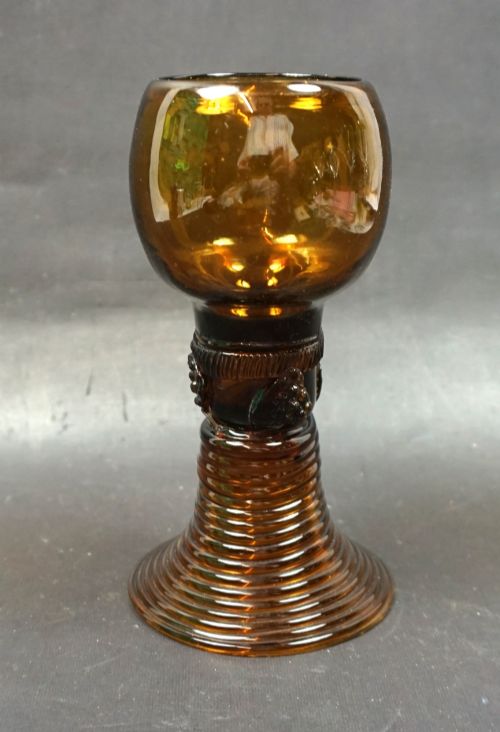
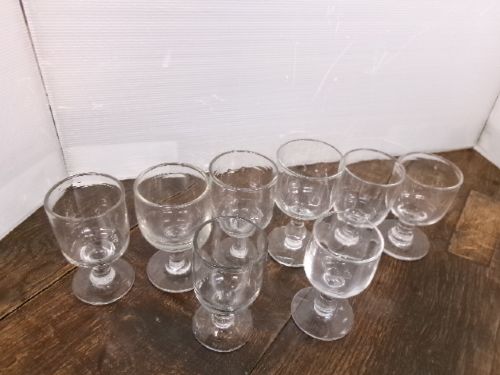
The versions you are most likely to meet on this page include chunky pan rummers, small tavern glasses, and coloured roemers originating from German and English traditions. They combine generous capacities with substantial bases suited to heavy toasts and communal gatherings.
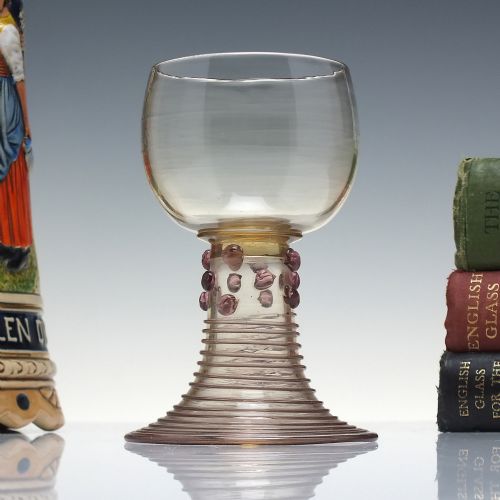
Forms range from simple late eighteenth-century export glasses to elaborate wine roemers featuring hollow stems and coiled feet. Each piece demonstrates the heavy lead glass and hand-blown techniques typical of the period production seen here.
How they were made
Makers utilised hand-blown lead glass to create these thick-walled vessels, shaping the molten material while hot to achieve distinctive heavy bowls and sturdy feet. The glass was manipulated by hand, resulting in characteristic weight and tactile irregularities.
Coloured glass was achieved through the addition of metallic oxides during the melting process, producing rich tones of green, amber, turquoise, and amethyst. Etched decoration was sometimes applied to the surface after cooling, adding simple patterns to the heavy walls.
Blown Glass Rummers Retail Price Guide 2026
Typical asking prices for blown glass rummers among the pieces listed under this phrase on Sellingantiques today, from the lower quarter to the upper quarter. They describe what is for sale here now, not the wider market.
Current listings feature hand-blown glass objects spanning the Georgian period and the nineteenth century, including green glass, amber glass, and lead glass.
What varies in quality
The distinction between standard tavern ware and finer examples lies in the depth of colour, the clarity of the metal, and the balance of the proportions. A well-proportioned pan rummer with an even wall thickness demonstrates superior control by the glassblower.
Pieces featuring specialised handling, such as applied coiled feet or hollow stems, show greater technical ambition than basic domestic drinkware. The richness of the amber or green hues also dictates visual impact across different manufacturing centres.
The Blown Glass Rummers Glossary
- Roemer
- A traditional Germanic drinking vessel with a large bowl resting on a cylindrical stem and a conical foot formed from a coiled trail of glass. These pieces often appear in green or amber glass.
- Pan rummer
- A heavy drinking glass characterised by a wide, straight-sided bowl that resembles a small pan. This form provides substantial capacity for robust toasts.
- Tavern glass
- A simple, thick-walled drinking vessel made for heavy use in public houses during the nineteenth century. These items prioritise durability over delicate ornament.
- Lead glass
- A heavy glass composition containing lead oxide, which increases brilliance and workability. This material gives Georgian rummers their characteristic heft and ring.
Blown Glass Rummers: Frequently Asked Questions
What is a blown glass rummer?
A blown glass rummer is a heavy drinking vessel produced during the Georgian and nineteenth-century periods for serving wine, spirits, or ale.
These pieces are defined by their substantial weight, sturdy stems, and thick hand-blown walls designed for robust daily use.
How do I date a glass rummer?
Dating relies on observing manufacturing characteristics such as pontil marks, glass colour, and specific regional forms like German roemers or English pan rummers.
Eighteenth-century examples often display deep green hues and export styles, while nineteenth-century pieces tend towards heavier tavern forms.
Were these glasses used for rum?
Despite the name, these vessels were utilised for a variety of drinks including wine, beer, punch, and spirits in domestic and tavern settings.
The large bowls accommodated generous portions common in historical drinking customs.
How should I clean historical glassware?
Historical glass requires gentle hand washing in warm water using mild soap to protect the delicate surfaces and historical material.
Avoid extreme temperature changes and abrasive sponges to preserve the original hand-blown finish.