



Blow Glass Pitcher
A blow glass pitcher brings tangible weight and historic texture to the table, uniting centuries of vessel-forming skill in a single functional shape.
Blow Glass Pitcher
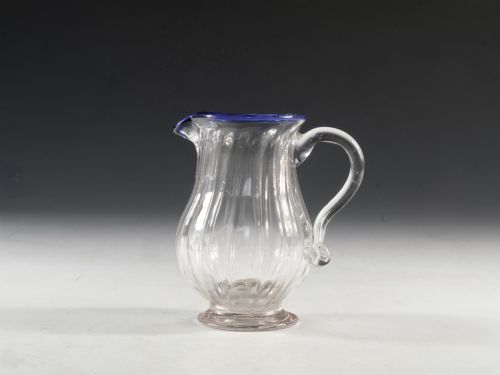
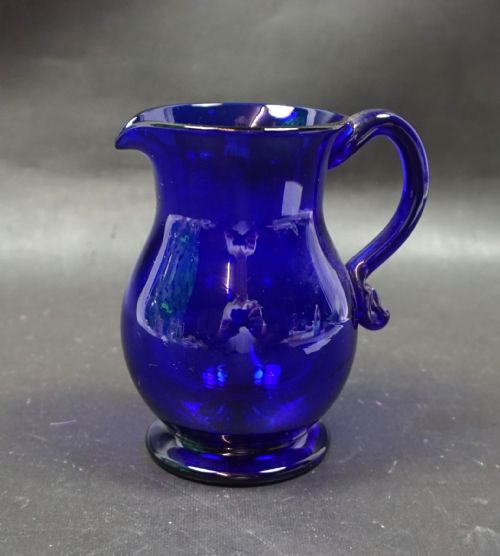
When searching for a blow glass pitcher, buyers encounter a diverse selection of historic vessel forms spanning the eighteenth, nineteenth, and early twentieth centuries. These encompass utilitarian cream jugs, decorative ewers, and substantial wine decanters produced across England, France, Bohemia, and Scandinavia.
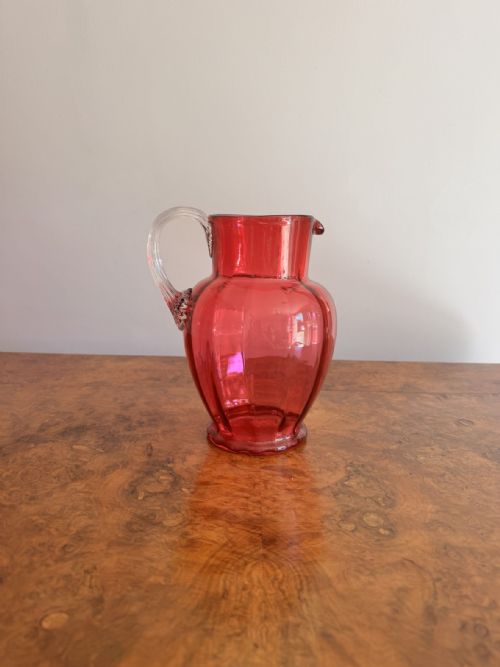
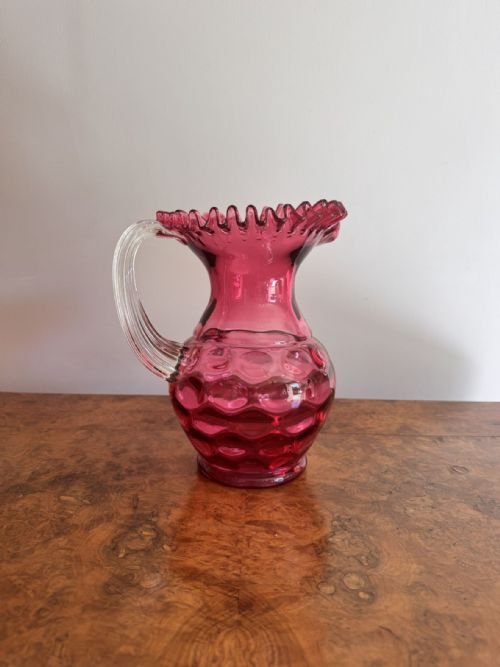
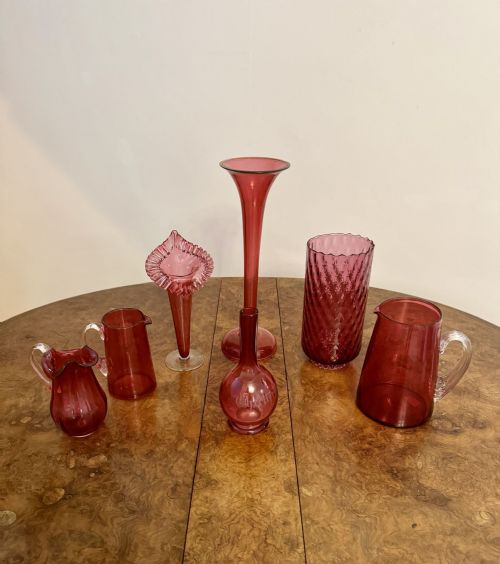
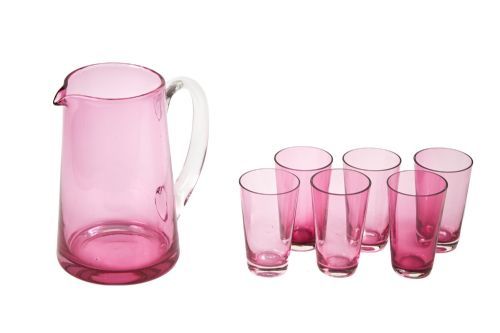
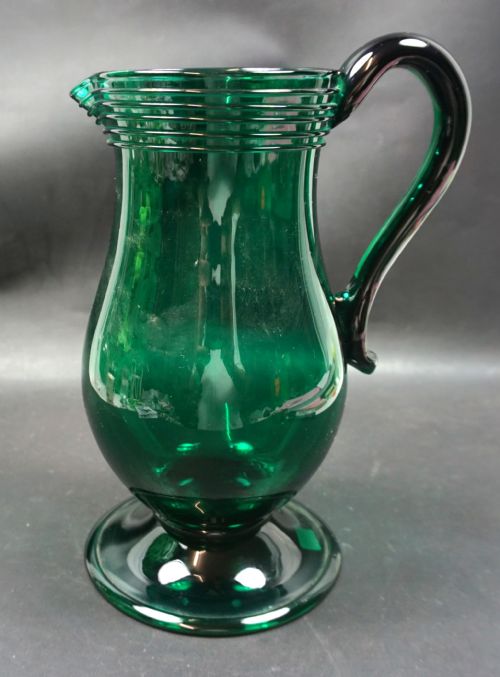
The most common versions met on this page are Victorian cranberry glass jugs and green glass ewers, often displaying vibrant hues and applied details. Alongside single pitchers, the listings incorporate matched sets and related drinkware collections originating from distinct stylistic periods including Georgian, Victorian, and Edwardian eras.
How they were made
Makers shaped molten material freehand or utilised moulds, incorporating lead glass and clear glass bases enriched with gold salt additives, gold leaf, or enamel painting. Artisans applied contrasting decorative elements such as folded feet, trail rims, and white glass latticinio threads directly to the hot body during formation.
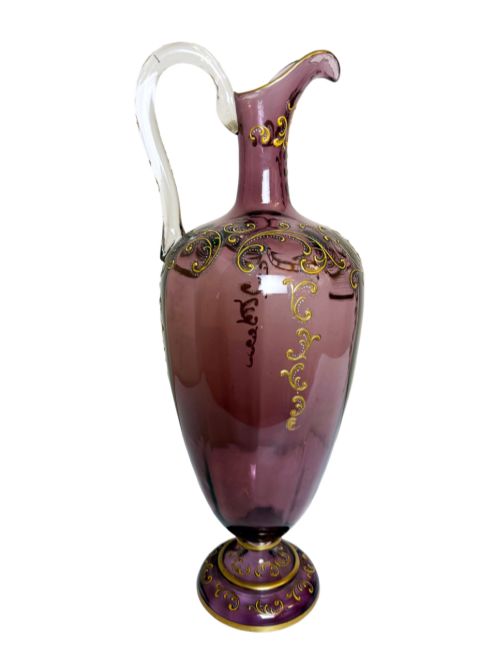
Surface ornamentation ranges from hand-painted gilt applique and intricate enamel scenes to moulded coin motifs and gadrooned texturing. Each piece reflects the physical manipulation of glass while hot, capturing tool marks and individual variations inherent to historical glassblowing techniques.
Blow Glass Pitcher Retail Price Guide 2026
Typical asking prices for blow glass pitcher among the pieces listed under this phrase on Sellingantiques today, from the lower quarter to the upper quarter. They describe what is for sale here now, not the wider market.
One exceptional decanter takes the literal form of a dog, proving that historical glassblowers enjoyed mixing utility with canine sculpture.
What varies in quality
The upper tier of pieces is distinguished by complexity of form, ambition of decorative technique, and crispness of applied details such as handles, trails, and rims. Superior examples demonstrate expert control over colour saturation, particularly within rich cranberry and deep green specimens.
Simpler production wares display more uniform thickness and minimal surface embellishment, whereas finer specimens integrate specialised additions like hand-painted enamel figures, gold leaf application, or intricate latticinio patterns executed by skilled glasshouses.
Baccarat·AVEM
The Blow Glass Pitcher Glossary
- Cranberry glass
- A transparent pinkish-red glass coloured by the addition of gold chloride to the molten batch. It gained immense popularity during the Victorian period for tableware and decorative items.
- Latticinio
- A decorative technique involving white or coloured opaque glass threads embedded within clear glass in criss-cross or spiral patterns. This method requires precise thermal control by the glassblower.
- Ewer
- A large pitcher with a wide spout and a curved handle, traditionally used for holding water or wine. Historic examples often feature elaborate handles and pedestals.
- Gadrooned
- Decorated with a series of convex rounded mounds or flutes carved or moulded along the edge of a vessel. This ornamental detail frequently appears on Georgian silverware and glass.
- Mary Gregory
- A style of decorative glass featuring white or tinted enamel silhouettes of children amidst foliage, popular in the Victorian era. The technique relies on skilled freehand brushwork.
Blow Glass Pitcher: Frequently Asked Questions
What is a blow glass pitcher?
A blow glass pitcher is a liquid-holding vessel shaped by an artisan using a blowpipe and hand tools while the material is molten. These pieces range from simple cream jugs to ornate wine ewers.
Historical examples often display unique textures, applied rims, and distinct colours that reflect the specific glasshouse traditions of their period of origin.
How do I date a glass pitcher?
Dating involves examining the manufacturing characteristics, pontil marks on the base, stylistic traits, and colour chemistry. Victorian pieces frequently utilise cranberry glass or enamel painting.
Earlier eighteenth-century examples tend toward simpler forms with distinct rim styles, while later nineteenth-century items introduce varied applied decorations and moulded details.
How were these pitchers used?
These vessels served practical domestic roles at the dining table for pouring water, wine, cider, or cream. Many functioned as part of larger drinkware sets alongside matching glasses or bowls.
Some elaborate ewers and decanters served primarily as decorative display items within parlours and dining rooms during the nineteenth century.
How should I clean antique glass?
Cleaning requires gentle hand washing in lukewarm water using mild detergent to protect delicate enamel painted surfaces, gold leaf, and applied glass trails. Abrasive materials should be avoided.
Sudden temperature changes can stress historical glass, so water temperature must be adjusted gradually during washing and rinsing routines.