


Blonde Maple Wardrobe
A blonde maple wardrobe brings clean warmth and striking grain into a bedroom through pale timbers and streamlined design.
Blonde Maple Wardrobe
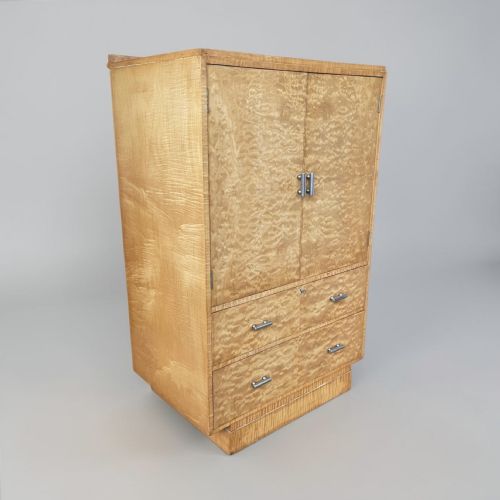
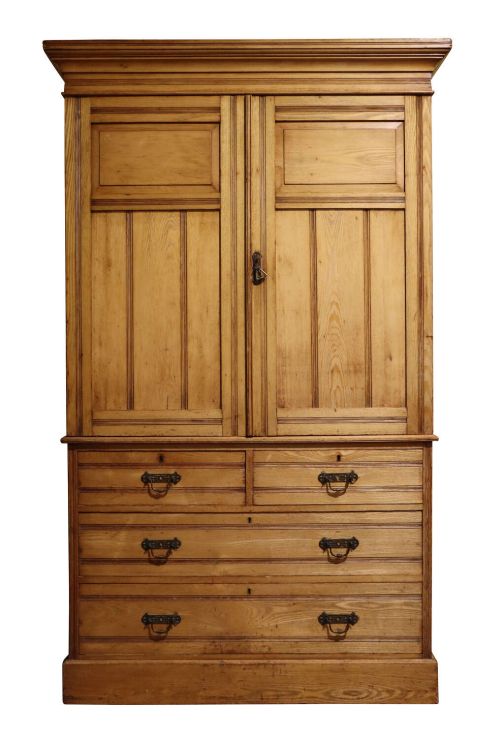
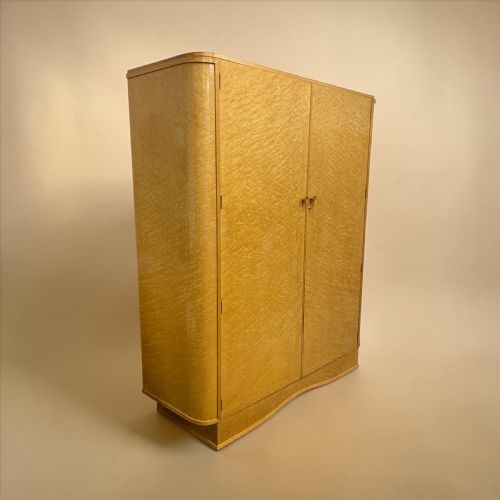
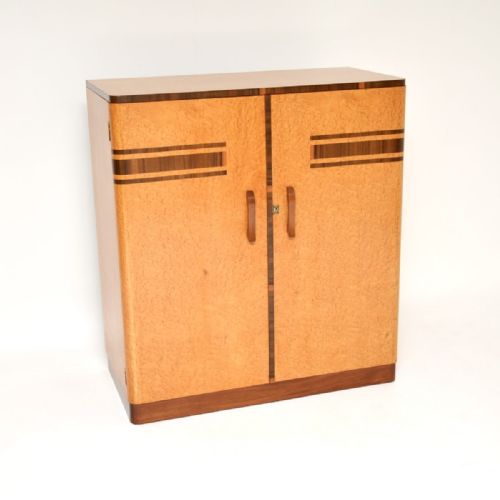
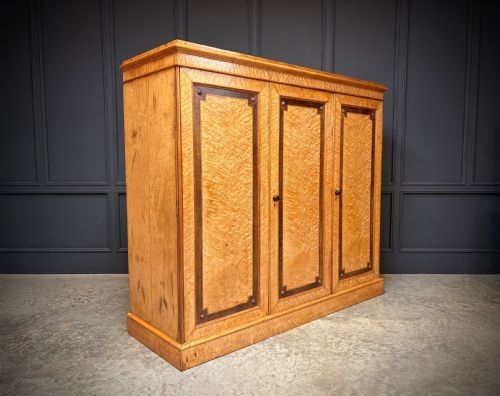
A blonde maple wardrobe represents storage furniture fashioned primarily from pale woods such as maple, birds eye maple, and burr maple. These pieces appear mostly in the Art Deco style from 1930, alongside Victorian examples from the nineteenth century and Swedish Empire Revival designs.
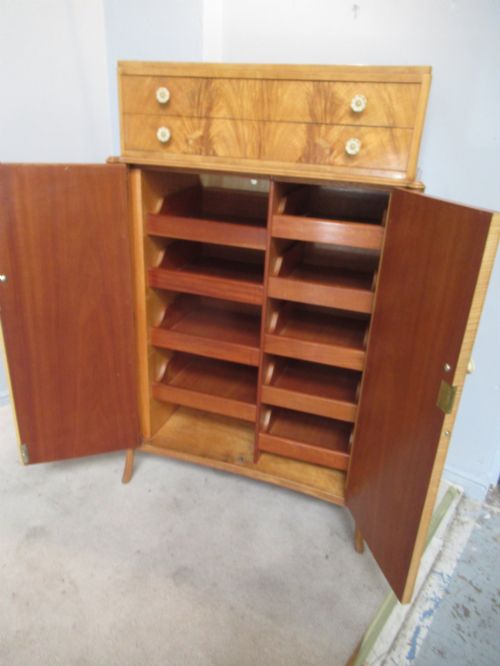
Buyers browsing this selection encounter tallboys, compactum wardrobes, triple wardrobes, and press cupboards. The nineteenth-century pieces tend to be low compactums, whereas the 1930s examples often present large triple doors or tall cabinets.
The aesthetic relies on the natural figuring of the timber rather than heavy carving, creating a light and spacious feel in traditional and modern interiors alike.
How they were made
Cabinet makers utilised birds eye maple veneer and solid maple over secondary woods, often contrasting the pale surfaces with darker sections of walnut or mahogany. Brass and metal hardware provides functional detailing on doors and drawers.
The construction employs veneering techniques to display the intricate patterns of burr and birds eye maple across wide wardrobe doors, supported by solid timber framing for internal shelves and hanging space.
Birds eye maple gets its name from tiny knots in the grain that look like countless small avian eyes staring back.
What varies in quality
The sophistication of the wood figuring dictates much of the visual value, with carefully matched birds eye and burr maple veneers commanding greater appreciation than plain timber surfaces. The balance between the pale maple and contrasting inlay woods like walnut or mahogany also affects the overall visual harmony.
Proportion and scale distinguish finer cabinets, particularly in Art Deco triple wardrobes and Swedish Empire Revival cupboards where brass mounts and clean lines require precise execution to avoid looking heavy.
Harry and Lou Epstein·Maple and Co.
The Blonde Maple Wardrobe Glossary
- Birds Eye Maple
- A figure in maple wood where the grain swirls in small circles resembling tiny eyes. This pattern occurs naturally and is prized for decorative veneer work.
- Compactum
- A fitted wardrobe containing a combination of hanging space, drawers, and shelving within a single unit. It offers efficient storage for varied garments.
- Tallboy
- A tall chest of drawers or a wardrobe built upwards to maximise vertical storage while occupying a smaller floor footprint. These pieces often feature internal compartments.
- Veneer
- A thin layer of superior wood adhered to a base timber to provide a decorative surface. Master cabinet makers used this technique to display striking grain patterns.
- Press Cupboard
- A traditional piece of furniture used for storing linens and clothes, typically featuring upper shelving enclosed by doors.
Blonde Maple Wardrobe: Frequently Asked Questions
What is a compactum wardrobe?
A compactum wardrobe combines hanging space, drawers, and shelves inside one integrated cabinet structure.
This design allows for efficient clothes storage without requiring multiple separate bedroom furniture pieces.
How do I care for maple veneer?
Maple veneer responds best to gentle dusting with a dry microfibre cloth and protection from direct sunlight.
Avoiding excess moisture and extreme temperature changes preserves the pale timber and prevents veneer lifting.
When were blonde wardrobes popular?
Blonde furniture achieved significant popularity during the Art Deco period around 1930, though nineteenth-century examples also exist.
Designers favoured pale woods to create light, modern interiors that contrasted with dark Victorian aesthetics.
How do I identify Art Deco pieces?
Art Deco pieces display geometric symmetry, streamlined shapes, and decorative use of contrasting wood veneers like walnut and maple.
These wardrobes often feature stepped cornices and understated metal or brass handles rather than ornate carving.