


Bleu Celeste Sevres Porcelain
Bleu celeste sevres porcelain brings the distinctive sky-blue ground colour of French ceramic history into nineteenth-century decorative urns, vases, and candelabra.
Bleu Celeste Sevres Porcelain
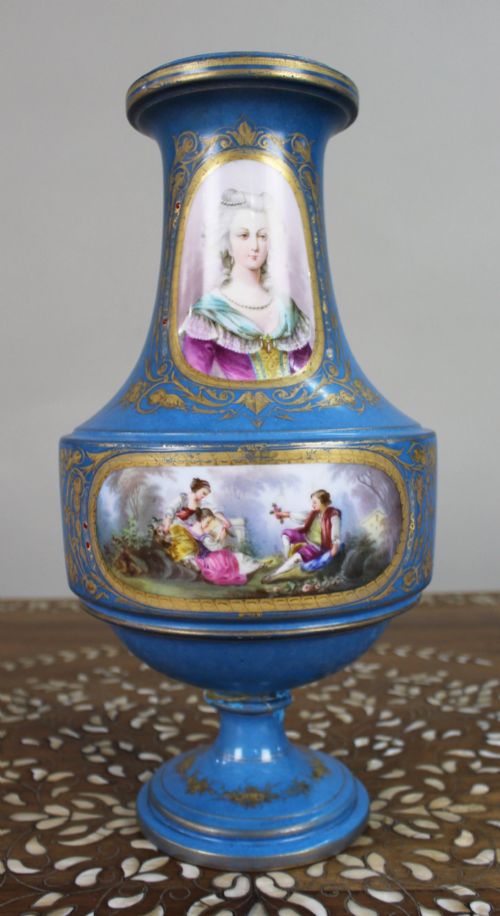
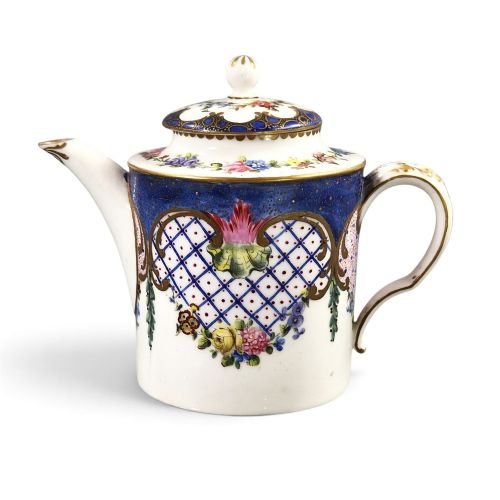
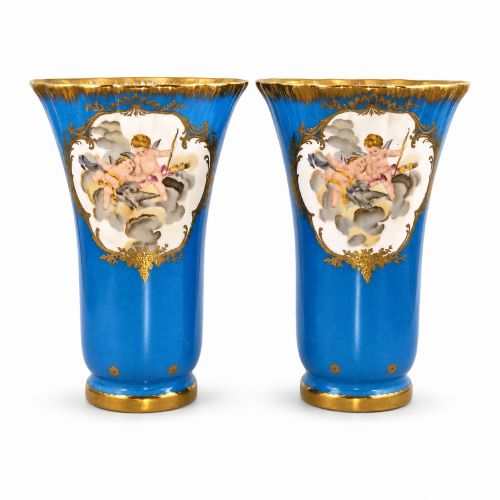
Bleu celeste sevres porcelain centres on pieces finished in a notable bright turquoise blue ground colour, often associated with French rococo revival and second empire tastes. Buyers seeking this aesthetic encounter nineteenth-century interpretations alongside eighteenth-century works, spanning forms from cabinet plates and teapots to large lidded urns and clock sets.
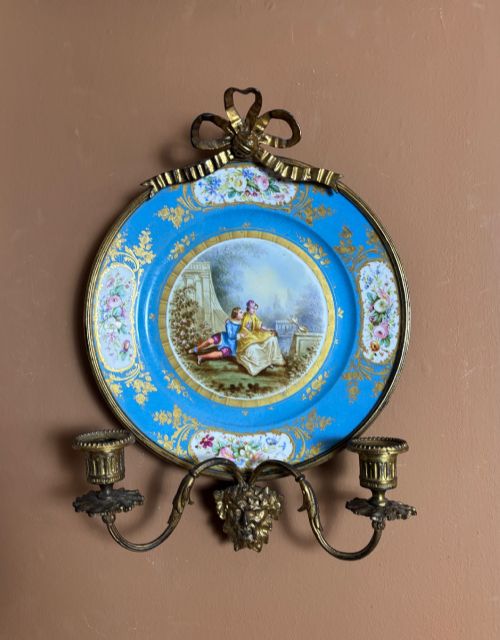
The selection on this page demonstrates substantial variety in object types, including mounted wall sconces, comports, and table lamps alongside traditional decorative vases. Many items combine the ceramic body with gilt bronze or ormolu mounts, reflecting the enduring popularity of French chateau styles across the eighteen hundreds.
Makers such as Samson of Paris also produced significant pieces in the taste of Sevres during the nineteenth century, expanding the range of items available to collectors. These pieces frequently incorporate painted scenes or gilt detailing against the characteristic blue ground.
Materials and production methods
The primary material is porcelain, including soft-paste ceramic bodies decorated with the signature blue enamel and gold leaf or gilt metal highlights. Artisans applied pigments by hand before firing, achieving the characteristic depth of the celeste ground.
Metalwork played a structural and decorative role, with ormolu and gilt bronze mounts cast and chased to support vases, clocks, and candelabra. Glass and enamel elements occasionally supplemented the porcelain and bronze assemblies.
Listings feature eighteenth and nineteenth-century periods, utilising porcelain, ormolu, and soft-paste porcelain across forms such as urns, lamps, and wall sconces.
Assessing quality in celeste porcelain
Quality rests upon the precision of the hand-painted details, such as figurative scenes or floral panels, set against the celeste ground. Finer pieces display crisp brushwork and balanced compositions that command attention.
The execution of the ormolu mounts further distinguishes the range, where deeply chased bronze elements align seamlessly with the porcelain contours. Heavier, more intricate metalwork indicates superior craftsmanship.
Royal Sèvres·Samson Paris·Miroy Frères·Minton
The Bleu Celeste Sevres Porcelain Glossary
- Bleu Celeste
- A bright sky-blue or turquoise enamel ground colour developed at the Sevres factory during the eighteenth century. It remained popular in nineteenth-century French revival pieces.
- Ormolu
- Gilded bronze used for mounts, handles, and feet on porcelain vessels. The technique involves applying a gold amalgam to a bronze base.
- Soft-Paste Porcelain
- An artificial porcelain composition fired at lower temperatures than hard-paste porcelain. It possesses a warmer texture often found in earlier ceramic pieces.
- Comport
- A decorative footed dish or bowl raised above the table surface. These pieces often feature painted panels and gilt trim.
- Candelabra
- Branched lighting fixtures designed to hold multiple candles. They frequently incorporate porcelain bodies paired with elaborate ormolu mounts.
Bleu Celeste Sevres Porcelain: Frequently Asked Questions
What is bleu celeste?
Bleu celeste is the bright sky-blue or turquoise ceramic ground colour characteristic of certain French porcelain wares.
It was applied as an enamel before firing and frequently served as a backdrop for painted pastoral scenes and heavy gilding.
How do I date these pieces?
Dating relies on stylistic markers such as nineteenth-century revival motifs or specific ormolu mount designs.
Markings on the base, where present, can also indicate whether a piece originates from the eighteenth century or later nineteenth-century imitative workshops.
Were these items purely decorative?
Many objects, such as large lidded urns, comports, and charger plates, served primarily as ornamental display pieces in formal rooms.
Other items like teapots, encriers, and table lamps combined functional utility with the same high decorative standard.
What is ormolu mounting?
Ormolu refers to gilded bronze mounts fitted securely around porcelain bodies to enhance their visual weight and utility.
This technique was especially common on nineteenth-century French clocks, candelabra, and decorative vases.