
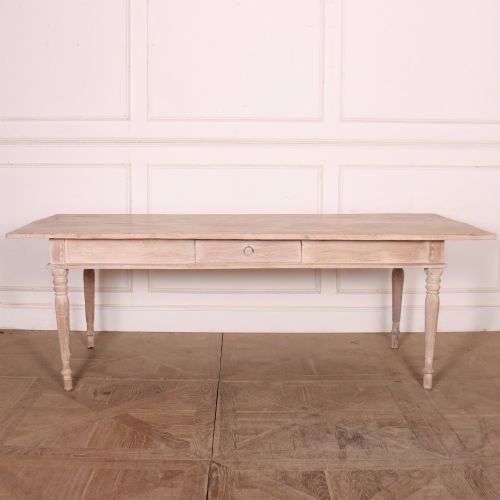
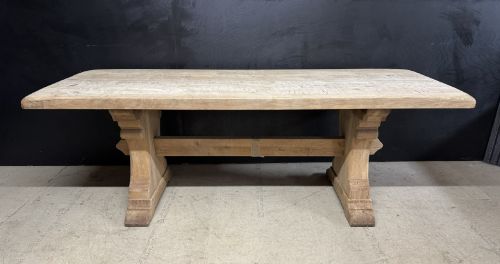
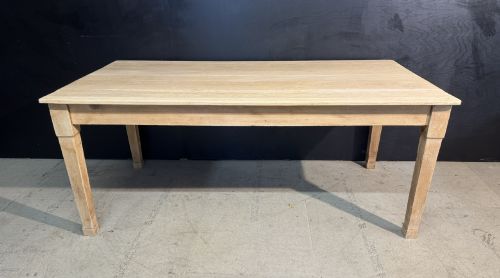
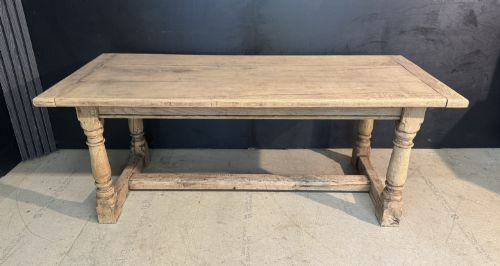




Bleached Wood Refectory Table
A bleached wood refectory table brings immediate warmth and historical character to a dining space through pale, weathered timber.
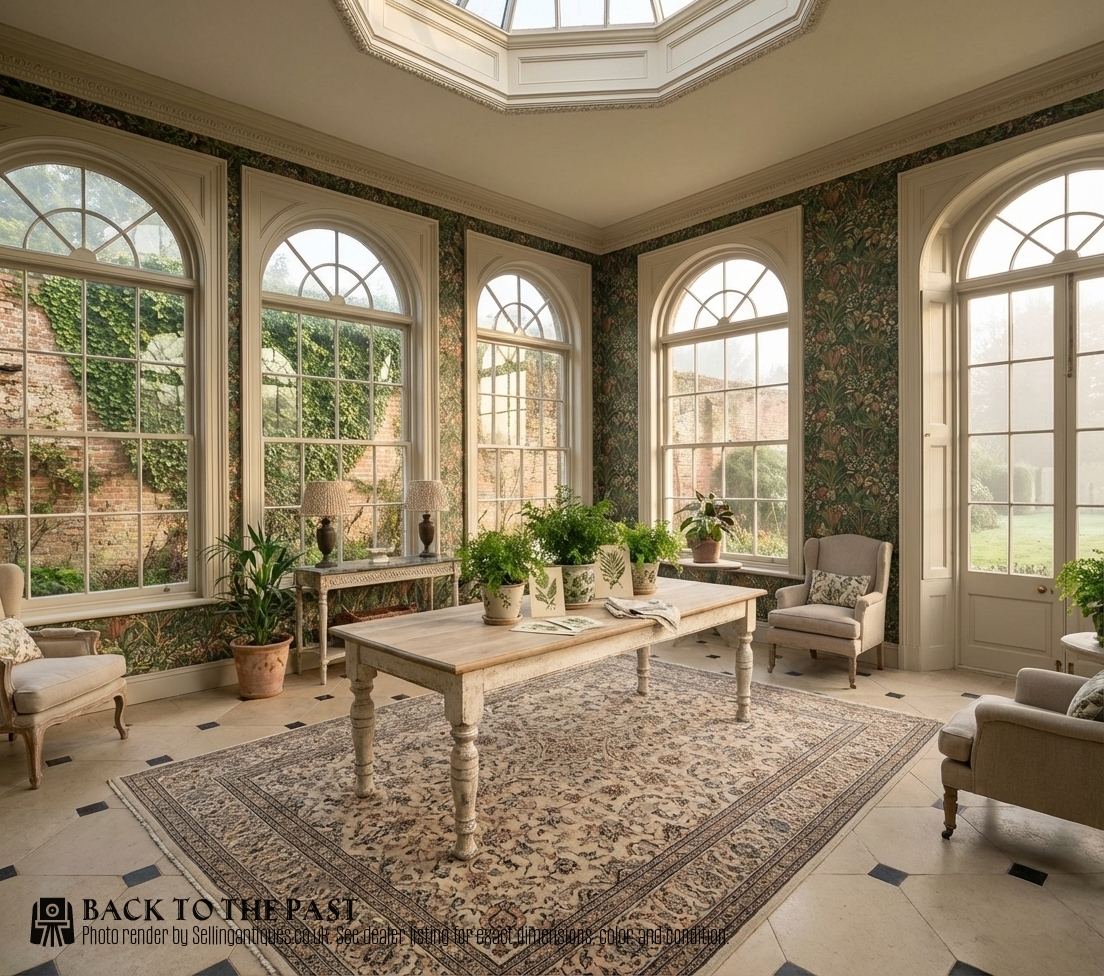
Bleached Wood Refectory Table
When you search for a bleached wood refectory table, you are looking at substantial dining furniture designed for communal meals, originating from various European regions and domestic traditions. The examples found here span from the nineteenth century through the Edwardian era and into the 1920s, capturing provincial dining forms. These long tables served central roles in large households and institutional settings before finding favour in modern interiors.
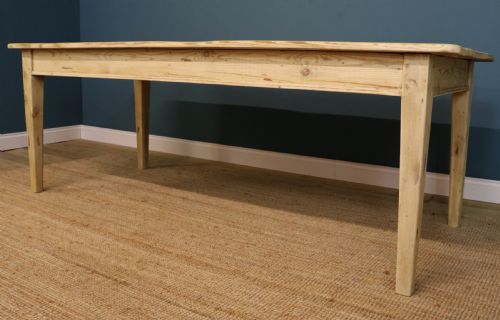
The version you are most likely to meet on this page is an oak farmhouse dining table, often lightened in tone to suit contemporary aesthetics. They appear under regional descriptors such as French country, Italian, Dutch, and Spanish, reflecting local vernacular styles in their construction. Alongside oak, the listings include elm, pine, softwood, and weathered timber, presenting long rectangular surfaces ready for daily use.
These tables draw upon rustic farmhouse, primitive country, and French provincial traditions, prioritising honest construction over elaborate ornamentation. Their elongated proportions make them practical for modern dining rooms and kitchens where people gather in numbers. Each piece bears the marks of its past utility, softened by the process of bleaching or natural weathering over decades.
How they were made
Makers relied primarily on solid oak and elm for strength, selecting dense hardwoods capable of enduring heavy daily use. Softwood and pine also appear in regional pieces, providing lighter alternatives for provincial workshops. Timber selection dictated the longevity of the top and the stability of the underframe.
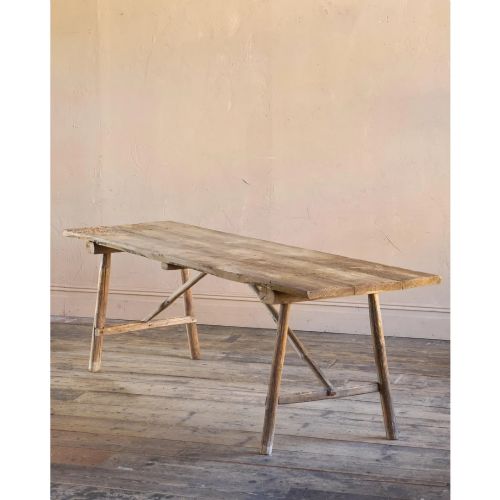
Construction techniques focus on trestle and four-legged farmhouse frames designed to support long planks without sagging. Joinery was kept functional and robust, utilising traditional framing methods appropriate for heavy dining furniture. Surfaces were subsequently bleached or left to weather outdoors, transforming the original dark tones into pale, neutral finishes.
Several tables retain the faint ghost of historical flour dust stubborn enough to survive a century of scrubbing.
What varies in quality
The distinction between pieces rests upon the integrity of the timber and the depth of regional character. Tables fashioned from solid oak or elm possess a structural permanence that lighter softwoods simply cannot match. Grain patterns, timber thickness, and the balance of the proportions determine the overall presence of the table.
Execution of the bleaching process also plays a role in visual harmony, separating evenly lightened surfaces from patchy treatments. Original construction methods, such as pegged joints and heavy plank tops, elevate the standing of a provincial piece. Ultimately, the most successful examples combine honest utilitarian origins with a refined, pale finish that respects the age of the wood.
The Bleached Wood Refectory Table Glossary
- Refectory table
- A long dining table traditionally used in monastic refectories and large households for communal dining. These pieces feature elongated proportions designed to seat many guests.
- Bleached oak
- Timber that has been treated to strip its natural dark finish, resulting in a pale, uniform surface. This finish aligns with modern interior preferences while retaining the grain of the wood.
- Primitive country
- A style of furniture made by local carpenters using straightforward techniques and readily available materials. These pieces lack academic ornament and focus entirely on utility.
- Trestle table
- A table supported by two or more upright structures connected by a horizontal beam. This design provides maximum legroom along the length of the surface.
Bleached Wood Refectory Table: Frequently Asked Questions
What defines a bleached wood refectory table?
A bleached wood refectory table is a long dining surface made from hardwoods like oak or elm, lightened in colour through chemical treatment or natural weathering. They originate from various European farmhouse traditions.
These pieces combine utilitarian proportions with pale, neutral surfaces that suit contemporary domestic spaces while retaining centuries of character.
Where were these tables originally used?
These tables served in large farmhouses, monasteries, and provincial homes across France, Spain, Italy, and the Netherlands. They provided the central gathering place for communal meals.
Over time, their sturdy construction and generous length made them adaptable to various domestic and institutional settings.
How do I care for a bleached timber top?
Maintain the pale surface by wiping spills promptly with a damp cloth and avoiding harsh chemical cleaners. Using placemats and coasters protects the lightened wood from staining.
Periodic gentle cleaning preserves the dry, weathered appearance characteristic of these antique tables.
How do I tell regional styles apart?
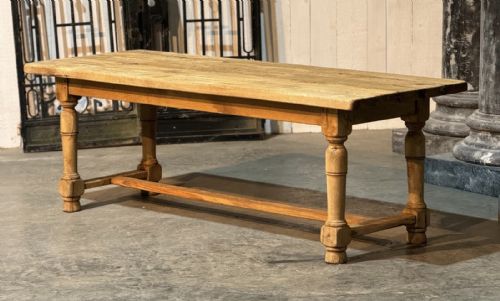
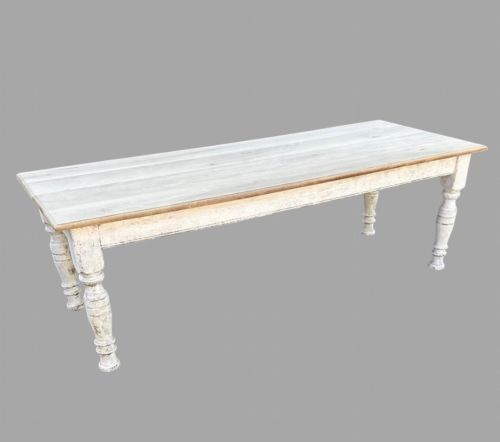
Regional variations often reveal themselves through the choice of timber and the subtle shaping of the legs and stretchers. French and Italian examples frequently display distinct provincial turns, while Spanish and Dutch versions lean toward heavy, austere framing.
Examining the construction methods helps identify the likely geographic origin of the workshop.