
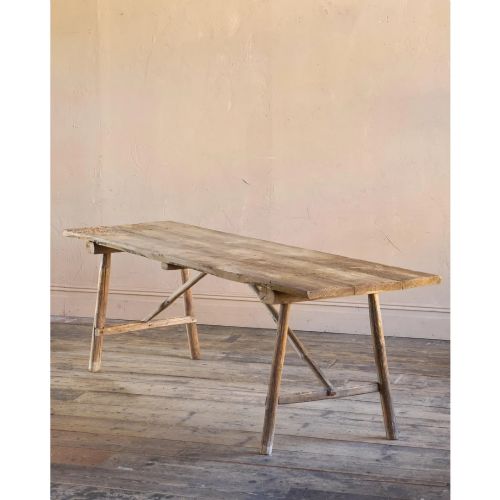
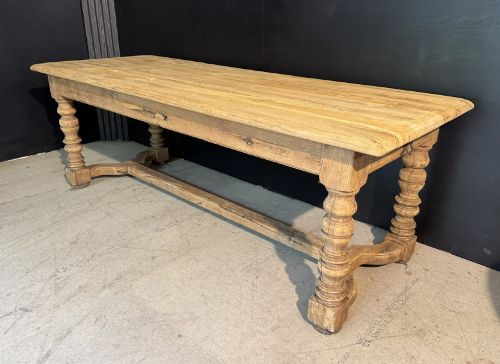


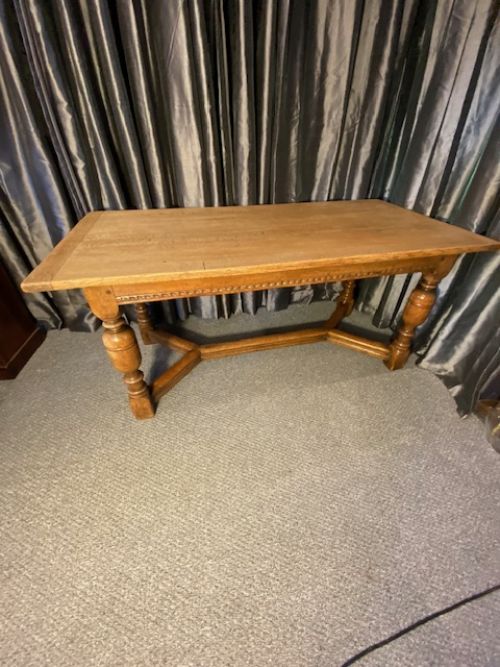


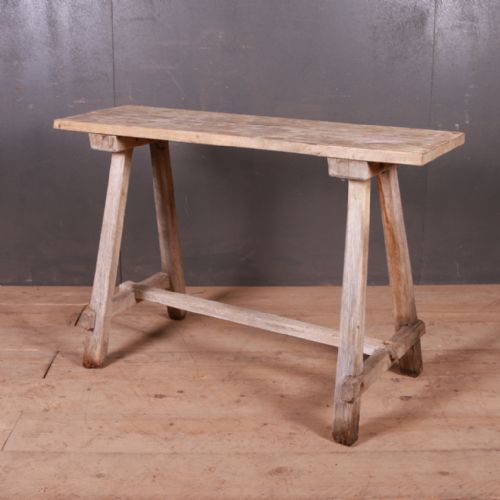
Bleached Oak Desk
A bleached oak desk brings a pale, stripped timber finish and functional writing space to a room, offering both utility and a lighter aesthetic.
Bleached Oak Desk
A bleached oak desk combines the sturdy construction of traditional writing furniture with a softened, lightened wood tone. When searching for a bleached oak desk, buyers encounter forms ranging from pedestal tables to carved writing surfaces originating from the nineteenth century up to the nineteen-thirties.
The selection includes English and French examples, often sharing stylistic traits with farmhouse and trestle tables. Many pieces feature drawers or partner configurations designed for practical daily use in a study or library.
Makers and craftsmen of these periods utilised durable hardwoods, applying surface treatments that transformed darker timber into the characteristic pale finish seen today. These desks serve as both workspace and statement furniture within traditional and rustic interiors.
How they were made
These desks rely primarily on solid oak frameworks, sometimes supplemented with pine, softwood, or timber elements for internal drawer construction and secondary framing. Iron and brass hardware, including handles and key escutructions, provide functional fastening and decorative contrast against the pale wood.
The characteristic finish involves stripping original darker coatings and bleaching the oak timber to achieve a lighter, weathered appearance. Joinery techniques from the nineteenth and early twentieth centuries ensure structural stability across pedestal, trestle, and writing table formats.
The listings show desks and tables spanning from eighteen-eighty through the nineteen-thirties, utilising oak, pine, brass, and iron.
What varies in quality
Quality in these desks depends heavily on the crispness of hand-carved details and the structural integrity of the oak frame. Finer pieces demonstrate careful attention to proportions, robust drawer construction, and harmonious integration of brass or iron fittings.
The execution of the bleaching process also dictates visual success, where even tone and preservation of the natural oak grain distinguish superior examples from unevenly treated surfaces. The original period hardware and intact structural joinery further elevate the standing of a piece.
The Bleached Oak Desk Glossary
- Pedestal desk
- A writing table supported by two pedestals or sets of drawers rather than simple legs. This form provides substantial storage beneath the main writing surface.
- Partners desk
- A large double-sided writing table designed for two people to work opposite one another. These often feature drawers and cupboards on both longitudinal faces.
- Trestle table
- A table structure where the top is supported by two or more trestles, typically consisting of horizontal feet and vertical uprights. This design allows for generous legroom.
- Primitive country
- A style category describing simpler, less ornate furniture made for functional utility rather than formal display. Such pieces often display straightforward joinery and locally sourced timber.
Bleached Oak Desk: Frequently Asked Questions
What is a bleached oak desk?
A bleached oak desk is a traditional writing table made from oak that has undergone a chemical or mechanical whitening process to lighten the timber.
These pieces span the nineteenth and early twentieth centuries, encompassing styles such as French provincial, pedestal, and partners configurations.
How do I date a bleached oak desk?
Dating relies on examining construction methods, drawer linings, hardware styles, and overall design characteristics typical of periods like the nineteenth century or nineteen-thirty.
Secondary woods like pine or softwood inside drawers can also offer clues regarding the geographic origin and production era.
Are these desks suitable for daily work?
Most of these desks offer practical writing surfaces and built-in drawer storage well suited for contemporary study or office use.
Their sturdy oak construction provides the durability required for daily tasks while adding character to a workspace.
Where were these desks made?
The available pieces originate primarily from workshops and makers in England and France, reflecting regional country and provincial design traditions.
Makers utilised local hardwoods and applied distinct regional joinery methods characteristic of their respective periods.