




Black Wooden Sideboard
A black wooden sideboard anchors a room with quiet authority, offering generous storage wrapped in dark, dramatic surfaces.
Black Wooden Sideboard
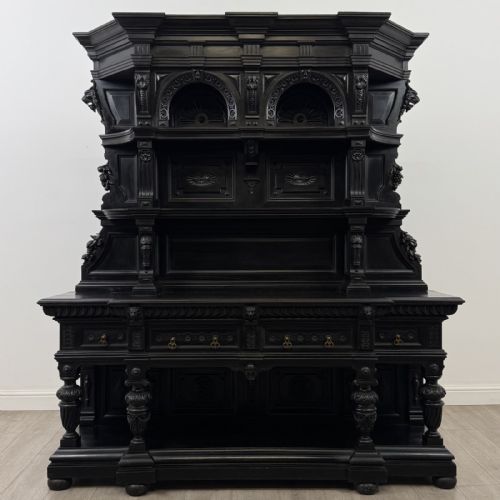
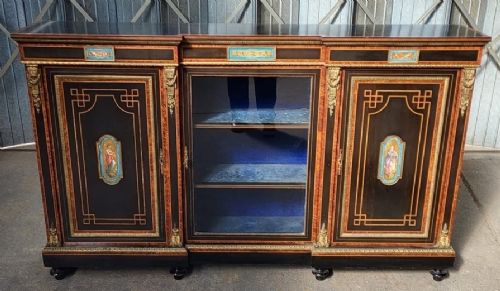
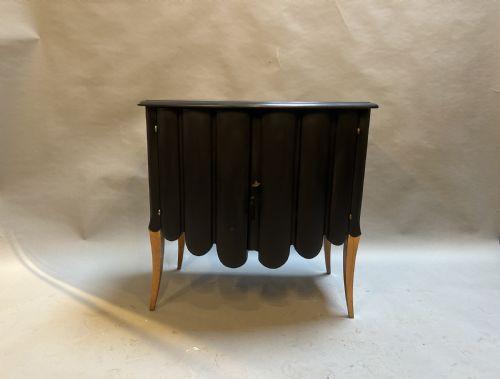
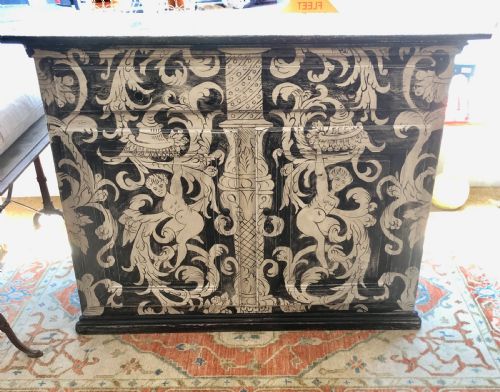
A black wooden sideboard brings deep visual weight to an interior, functioning as a primary storage piece for dining rooms and hallways. When searching for a black wooden sideboard, buyers encounter forms ranging from Victorian ebonised credenzas to 18th-century painted dresser bases and Art Deco commodes.
The selection on this page spans several distinct eras, incorporating Victorian revival styles alongside French Art Deco cabinets and English country pieces. Many examples utilise ebonisation to transform ordinary timber into a sleek dark surface, while others feature black lacquer or hand-painted finishes.
Beyond traditional sideboards, the category embraces related forms such as chiffoniers, buffet cabinets, and commodes. Each piece provides surface display area combined with enclosed shelving or drawers behind panelled doors.
How they were made
Cabinetmakers utilised structural timbers such as oak, pine, and mahogany as foundations for decorative surface treatments. Ebonisation involved staining wood, typically fruitwood or beech, to imitate costly ebony, often finished with a high gloss or polished sheen.
Ornate detailing frequently included applied brass mounts, ormolu, and carved wooden motifs like lion masks. Surface decoration extended to hand-painted scenes, inlaid wood marquetry, and intricate pietra dura panels set into the dark timber bodies.
Black Wooden Sideboard Retail Price Guide 2026
Typical asking prices for black wooden sideboard among the pieces listed under this phrase on Sellingantiques today, from the lower quarter to the upper quarter. They describe what is for sale here now, not the wider market.
Materials represented include oak, pine, ebonised wood, glass, brass, ormolu, and hand-painted finishes.
What varies in quality
Quality reveals itself in the depth of the ebonisation or lacquer work and the crispness of applied carvings. Finer examples display meticulous joinery in carcass construction and drawer linings, ensuring structural stability across large breakfront credenzas.
The integration of mountings, whether gilt bronze, ormolu, or brass, distinguishes high-end pieces from simpler utilitarian storage. Superior execution shows in the precision of inlay work, such as amboyna banding or delicate gilt painting, which remains intact across centuries of use.
Melissa White
The Black Wooden Sideboard Glossary
- Ebonised wood
- Timber treated with stain or polish to resemble genuine ebony. This technique gained immense popularity during the Victorian period for achieving a formal dark finish.
- Ormolu
- Gilding technique utilising ground high-carat gold applied to a bronze base. It frequently appears as decorative mounts on 19th-century French and English cabinets.
- Credenza
- A fine cabinet or sideboard designed for display and storage, often featuring glass-fronted or panelled doors. The form evolved significantly throughout the Victorian era.
- Dresser base
- The lower section of a traditional kitchen or dining room dresser, featuring cupboards and drawers beneath a solid wooden top. These pieces serve independently as sturdy sideboards.
- Pietra dura
- Inlay technique using cut and fitted polished coloured stones to create decorative designs. It adorns high-status furniture surfaces alongside bronze mounts.
Black Wooden Sideboard: Frequently Asked Questions
What is a black wooden sideboard?
A black wooden sideboard is a storage cabinet finished in dark paint, lacquer, or ebonised wood, designed for dining rooms and living spaces. These pieces combine closed cupboards with surface display space.
They appear across various historical periods, incorporating decorative elements like brass mounts, carvings, or painted scenes.
How do I clean ebonised wood?
Cleaning ebonised wood requires a soft, dry cloth to remove dust without scratching the polished dark surface. Avoid harsh chemical cleaners that can strip the delicate dark stain or lacquer.
Periodic application of appropriate furniture wax helps maintain the lustre and protects the timber from drying out.
Where should I place a sideboard?
Sideboards traditionally sit against dining room walls to hold serving dishes, cutlery, and glassware. They function equally well in hallways or living areas as statement storage pieces.
The deep dark finish of these cabinets makes them effective focal points beneath large mirrors or artwork.
How do I date a black sideboard?
Dating relies on examining construction methods, timber choices, and stylistic markers such as hardware and carved motifs. Victorian pieces often show heavy ebonisation and revival styling, while 18th-century examples display simpler painted pine or oak construction.
Interior drawer linings and backboards offer additional clues regarding the age and origin of the cabinet.