

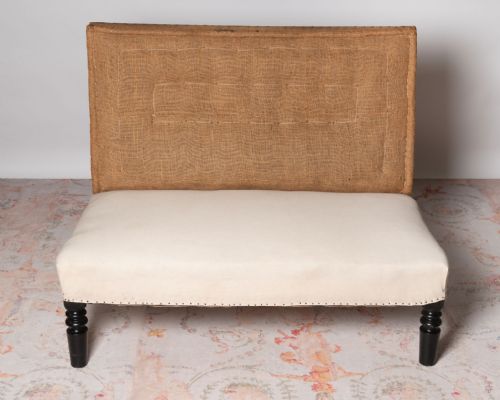

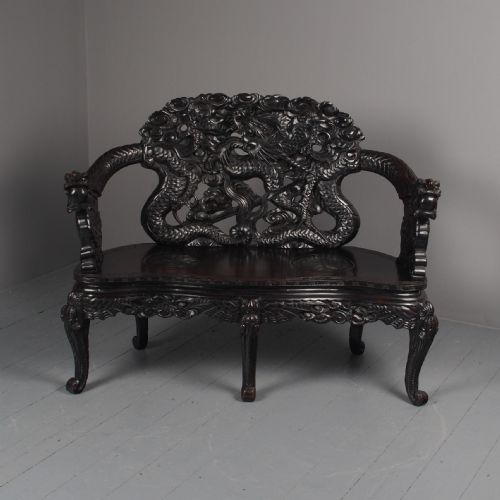


Black Wood Settee
A black wood settee brings deep dark timber and striking silhouette into a room, offering both seating and architectural presence.
Black Wood Settee
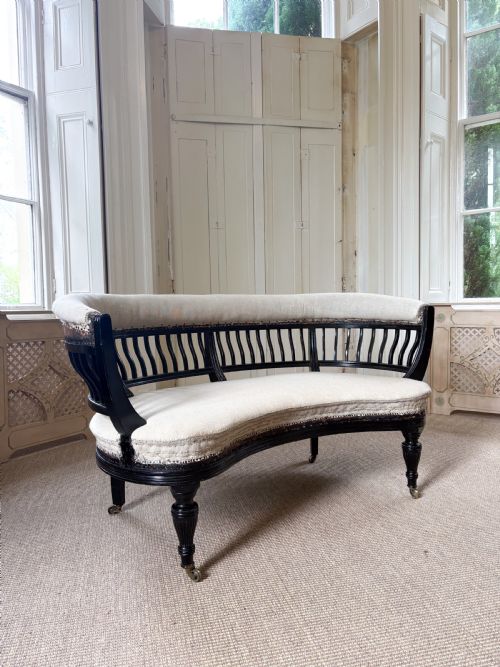
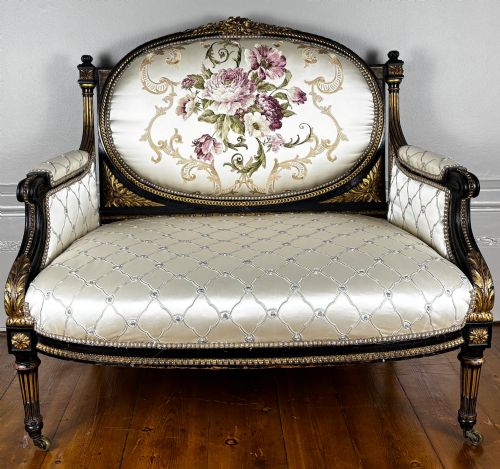
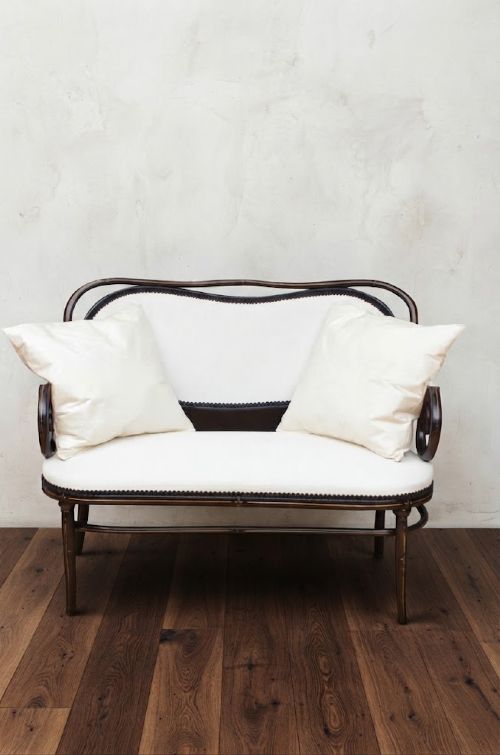
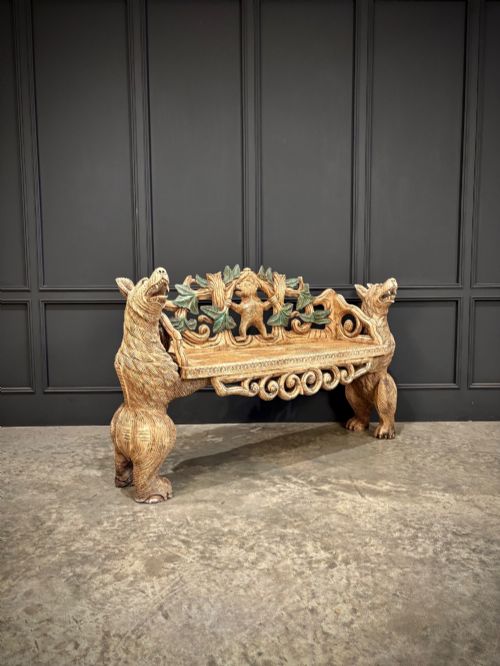
A black wood settee is a multi-seat bench or sofa fashioned from dark or ebonised timber, appearing across periods from the nineteenth century into the twentieth century. These pieces encompass diverse forms, from French ebonised and parcel gilt sofas to Black Forest carved wood benches and bentwood loveseats.
The versions most frequently met on this page span Victorian, Aesthetic Movement, and continental European traditions. Makers utilised ebonisation, natural dark hardwoods, and carving to achieve deep dark tones, often paired with upholstered seats in linen, silk, leather, or left as plain timber.
Object types grouped under this phrase range from two-seat and three-seat sofas to hall benches and banquettes. Each configuration reflects the stylistic preferences of its origin, whether French, Irish, Viennese, or Chinese.
Materials and construction
Construction relies heavily on ebonised wood, linden wood, and carved hardwoods, sometimes enhanced with brass mounts or gold leaf detailing. Ebonisation transforms lighter timbers into deep black surfaces that mimic costly ebony.
Techniques vary by regional style, from the steam-bent processes of Viennese bentwood makers to the intricate figurative carving seen in Black Forest animal benches. Upholstery materials such as linen, silk, and leather are fixed to pad or sprung seats depending on the era.
Black Wood Settee Retail Price Guide 2026
Typical asking prices for black wood settee among the pieces listed under this phrase on Sellingantiques today, from the lower quarter to the upper quarter. They describe what is for sale here now, not the wider market.
Materials recorded across the inventory include ebonised wood, linden wood, brass, gold leaf, linen, silk, and leather.
Judging quality
Quality rests upon the crispness of carved detail and the integrity of the ebonised finish over the underlying timber. Pieces displaying sharp mouldings, finely rendered animal or scroll motifs, and well-preserved parcel gilding stand apart from simpler iterations.
The structural joinery and the original pairing of materials define the tier of a piece. Finer examples maintain robust frames paired with quality upholstery fabrics like silk or leather, showing careful hand-finishing across every visible surface.
The Black Wood Settee Glossary
- Ebonised Wood
- Timber treated with stain or polish to resemble solid ebony. This dark finish gained immense popularity during the Victorian and Aesthetic Movement periods.
- Bentinck or Bentwood
- Wood shaped by steaming to create curved structural members. This technique defined the output of prominent Viennese workshops.
- Parcel Gilt
- Partial application of gold leaf to highlight specific carved details or mouldings. It creates a rich contrast against black wood surfaces.
- Black Forest
- A regional style of woodcarving originating in Switzerland and Germany. Pieces often feature naturalistic animal forms, particularly bears.
Black Wood Settee: Frequently Asked Questions
What is a black wood settee?
A black wood settee is a multi-seat wooden bench or sofa finished in dark tones or ebonised wood. These pieces appear in styles ranging from nineteenth-century Victorian to continental European designs.
They serve as functional seating while adding strong visual contrast to interior spaces through their dark timber frames and varied upholstery.
How do I date a black wood settee?
Dating relies on identifying stylistic markers such as Aesthetic Movement geometry, Louis XV revival curves, or Viennese bentwood construction. Material choices like ebonised wood, gold leaf, and specific upholstery fabrics also provide clues.
Examining the construction methods and joinery beneath the frame helps confirm the period of manufacture.
Where were these settees used?
These settees were placed in grand entrance halls, formal parlours, and drawing rooms as both seating and statement furniture. Hall benches suited entryways, while upholstered sofas fitted reception spaces.
Their substantial timber frames allowed them to anchor room layouts across British and continental homes.
How should I care for ebonised wood?
Ebonised wood requires gentle dusting with a soft cloth to protect the dark surface finish from abrasion. Avoid harsh chemical cleaners that can strip the stain or polish.
Keeping the timber away from direct sunlight and excessive moisture preserves the depth of the black finish.