

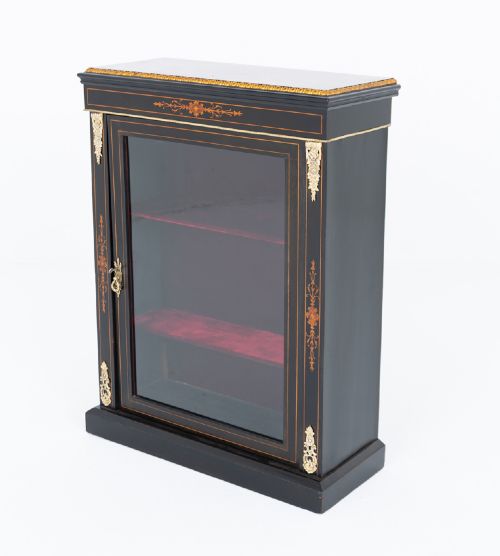


Black Wood Credenza
A black wood credenza brings dark architectural presence and rich surface detail to a room, drawing the eye with contrasting mounts and polished timber.
Black Wood Credenza
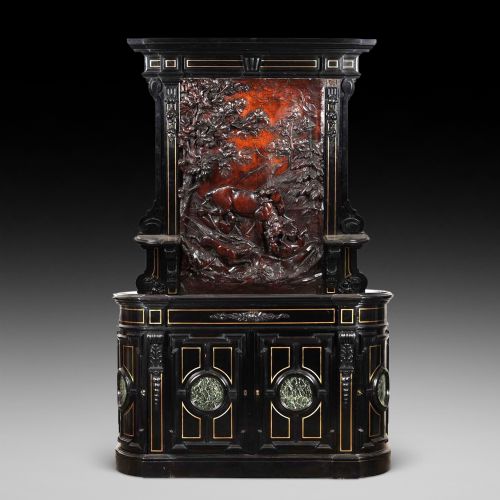
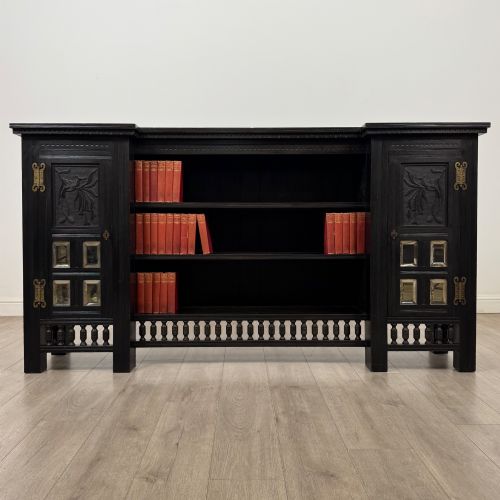
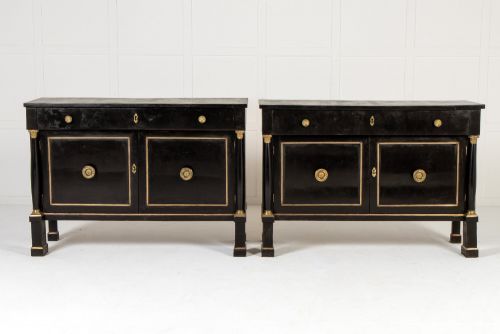
When you search for a black wood credenza, you encounter dark timber sideboards, cabinets, and chiffoniers primarily rooted in the Victorian and nineteenth-century periods. These pieces serve as grand storage items or display surfaces for dining rooms and drawing rooms.
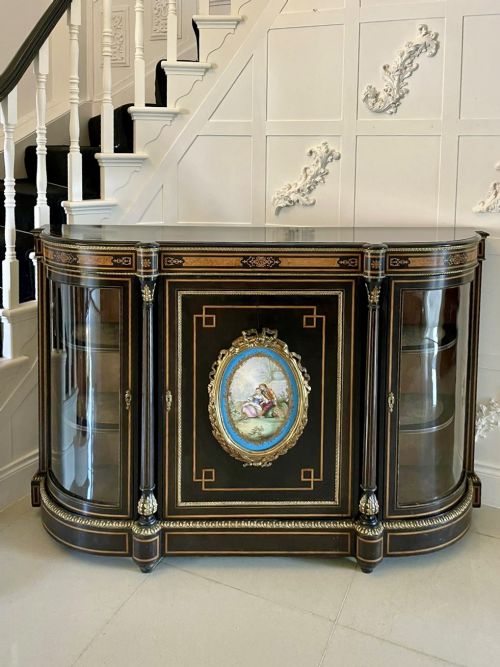
The versions most commonly met on this page are Victorian ebonised side cabinets and French credenzas incorporating materials like brass, glass, and ormolu. You also find eighteenth-century Italian cabinets alongside early twentieth-century Chinoiserie examples.
These items range from simple sideboards to mirrored back credenzas and demi lune cabinets with intricate inlay. Each form reflects the distinct decorative ambitions of its period, from strict neoclassical lines to ornate Victorian tastes.
How they were made
Cabinet makers achieved the deep black surfaces of these pieces through ebonising, a process of staining timber to imitate ebony. This dark finish provided a strong visual ground for contrasting inlay and metal mounts.
Craftsmen enriched these credenzas with brass stringing, ormolu mounts, and porcelain plaques set into the timber doors. Amboyna wood and walnut also appear as complementary timbers within the construction.
Glass panels were integrated into display cabinets and pier cabinets to showcase contents while protecting them from dust. Mirrored backs added a sense of depth to the interiors of Victorian credenzas.
Black Wood Credenza Retail Price Guide 2026
Typical asking prices for black wood credenza among the pieces listed under this phrase on Sellingantiques today, from the lower quarter to the upper quarter. They describe what is for sale here now, not the wider market.
Victorian music cabinets hid your sheet music behind dark ebonised doors while you pretended you just happened to play the piano.
What varies in quality
Quality in these pieces rests upon the precision of the ebonising and the crispness of the applied brass and ormolu mounts. Superior examples display seamless integration between the dark timber and decorative metalwork.
The refinement of internal carcase construction and the quality of secondary timbers separate standard furniture from exceptional cabinet work. Carved details and hand-painted porcelain plaques further distinguish higher tiers of production.
The Black Wood Credenza Glossary
- Ebonised Wood
- Timber treated with a dark stain or finish to simulate genuine ebony. This technique gained widespread popularity during the nineteenth century for formal cabinetry.
- Ormolu
- Gilt bronze mounts applied to furniture for decorative effect. The technique involves treating bronze with a gold amalgam.
- Credenza
- A side cabinet used for storage and display, often featuring central doors flanked by curved glass or side compartments. It sits low against the wall.
- Demi Lune
- A half-moon shape used in the footprint and top design of specific side cabinets. This form fits flush against a wall in smaller spaces.
- Pier Cabinet
- A narrow display cabinet designed to fit the wall space between windows. These pieces typically feature glazed doors and delicate timber frames.
Black Wood Credenza: Frequently Asked Questions
What is a black wood credenza?
A black wood credenza is a low storage cabinet with a dark ebonised finish, typically originating from the nineteenth century.
These pieces often feature decorative brass inlay, glass doors, or ormolu mounts designed for formal rooms.
How do I style a black wood credenza?
Place the credenza against a pale wall to make the dark ebonised wood stand out clearly in the room.
Use the top surface to display ceramics or silver, which contrast sharply against the black timber background.
What periods do these cabinets come from?
The listings span from the eighteenth century through the Victorian era up to the early twentieth century.
Nineteenth-century Victorian and French Napoleon III examples appear most frequently alongside earlier Italian forms.
What materials are used alongside the black wood?
Cabinet makers combined the ebonised wood with brass inlay, ormolu mounts, and Sevres style porcelain plaques.
Glass panels and mirrored backs also feature heavily in the display cabinets and sideboards.