






Black Wood Console Tables
Black wood console tables bring dark elegance and striking form to a room, ranging from painted surfaces to ebonised timber.
Black Wood Console Tables
Black wood console tables encompass furniture designed to sit against a wall or in a hallway, drawing upon centuries of cabinet making traditions. When exploring black wood console tables, buyers encounter pieces from the eighteenth century onwards, alongside nineteenth century interpretations in Regency, Victorian and Edwardian styles.
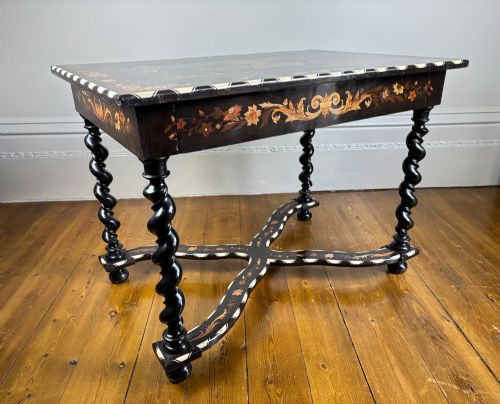
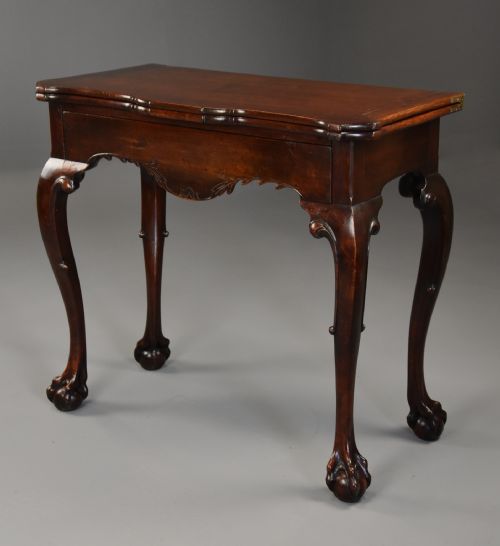
The selection ranges from demilune console shapes to side tables, tea tables and larger country house examples. Many originate from English, French, Dutch and Spanish workshops, utilising forms such as parcel gilt decoration, marquetry and lacquer finishes.
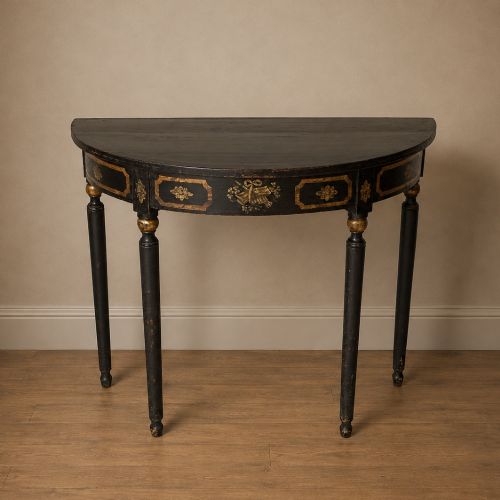
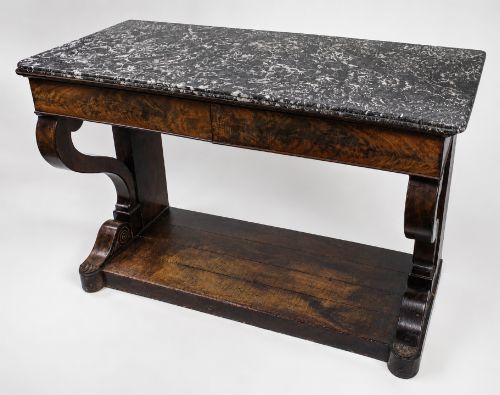
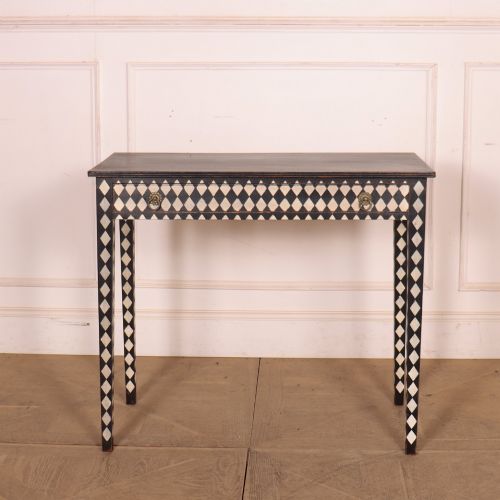
The version most frequently met on this page is the nineteenth century painted or ebonised console table, often featuring contrasting gilt details or marble tops. These pieces reflect the enduring appeal of dark wood surfaces in classical and vernacular interiors.
What varies in quality
Quality rests upon the execution of the surface treatment, whether through the depth of an ebonised finish, the crispness of hand carving, or the precision of parcel gilt details. Superior examples display careful timber selection underneath the paint or lacquer, alongside well proportioned structural forms.
The distinction between standard production and exceptional work lies in decorative additions such as marquetry, bone inlay or integrated marble tops. Maker attribution and original provenance further separate workshop pieces from general vernacular furniture.
Black Wood Console Tables Retail Price Guide 2026
Typical asking prices for black wood console tables among the pieces listed under this phrase on Sellingantiques today, from the lower quarter to the upper quarter. They describe what is for sale here now, not the wider market.
The listings span the eighteenth, nineteenth and twentieth centuries, featuring materials such as marble, brass, gold leaf and ebonised timber.
Jenks & Woods·Gillows
The Black Wood Console Tables Glossary
- Ebonised Wood
- Timber treated with stain or paint to imitate expensive ebony. This technique gained widespread popularity during the nineteenth century across various revival styles.
- Parcel Gilt
- A decorative method where specific carved or raised details are partially covered in gold leaf. It creates a striking contrast against black painted or ebonised surfaces.
- Demilune
- A half moon shape commonly found in console tables designed to stand flush against a wall. This form allows the furniture to occupy minimal floor space while providing a useful surface.
- Marquetry
- The art of applying pieces of veneer to a structure to form decorative patterns. Craftsmen utilised various woods and materials like bone to create pictorial designs.
Black Wood Console Tables: Frequently Asked Questions
Where should I place a console table?
Console tables sit naturally in entrance halls, reception rooms or against living room walls where surface space is required without blocking thoroughfares.
Their shallow depth allows them to fit narrow corridors while supporting lamps, mirrors or decorative objects.
How do I care for ebonised wood?
Ebonised surfaces benefit from regular dusting with a soft, dry cloth to prevent particulate accumulation. Avoid excessive moisture and direct sunlight to maintain the integrity of the dark finish.
Application of appropriate wax polish helps preserve the sheen on traditional timber pieces.
What is the difference between a console and a side table?
Console tables traditionally anchor against a wall, sometimes requiring wall attachment for stability due to their leg configurations. Side tables are generally freestanding pieces designed to be accessed from multiple sides.
In historical listings, the terms occasionally overlap depending on the specific proportions and intended placement.
How can I tell a nineteenth century piece from an eighteenth century one?
Dating relies upon examining construction methods, timber choices, and stylistic vocabulary associated with specific design periods. Eighteenth century examples often display distinct regional joinery and specific patination acquired over centuries.
Nineteenth century pieces frequently draw inspiration from earlier Georgian or continental styles while employing industrial era production techniques.