



Black Wall Clock
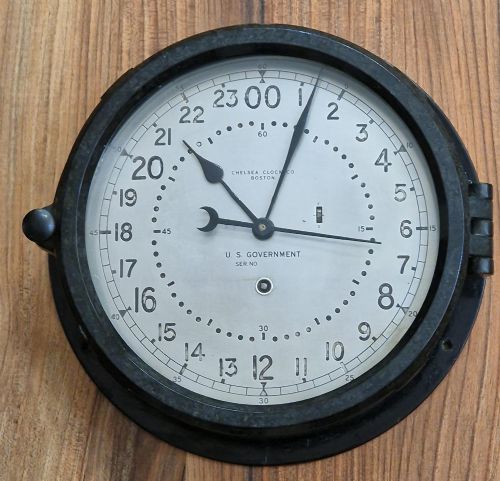
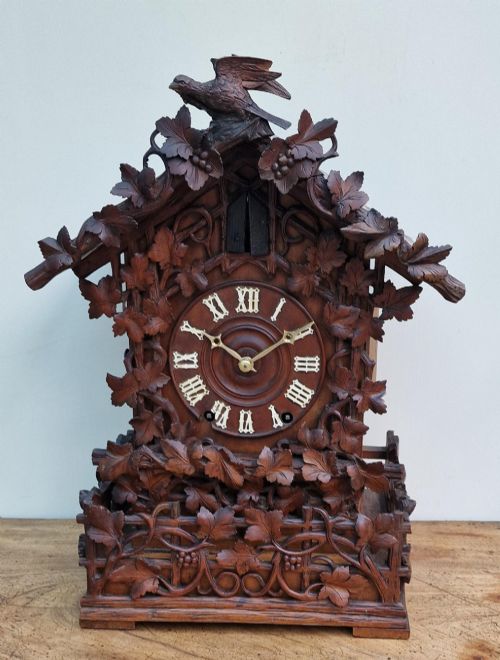
A black wall clock brings architectural weight and precision to a room, ranging from carved nineteenth-century Black Forest cuckoo clocks to industrial station dials.
Black Wall Clock
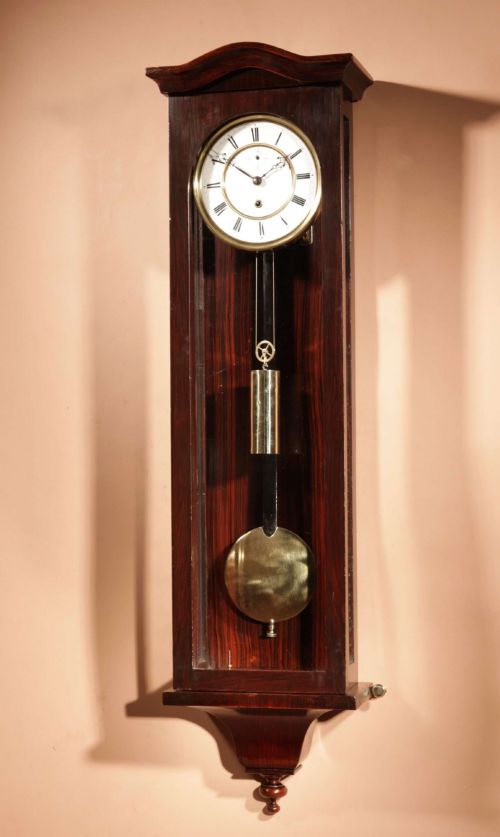
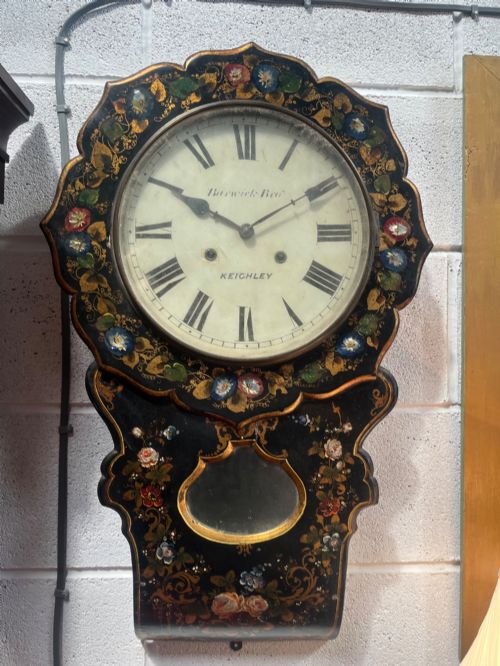
A black wall clock is a timekeeping object designed for domestic or public display, encompassing diverse forms such as Vienna regulators, French ebonised cases, and large outdoor dials. When searching for a black wall clock, buyers encounter nineteenth-century examples most frequently, particularly carved walnut and ebonised pieces originating from the Black Forest or Victorian workshops.
The selection ranges from domestic cuckoo and fusee clocks to large railway and advertising dials by makers such as Smiths of London. Victorian and 1860s examples dominate, often combining dark wood cases with enamel dials and brass fittings.
Industrial dials and aneroid barometers also appear alongside domestic wall clocks, showing how dark cases and black dials served both utilitarian public spaces and formal Victorian interiors.
How they were made
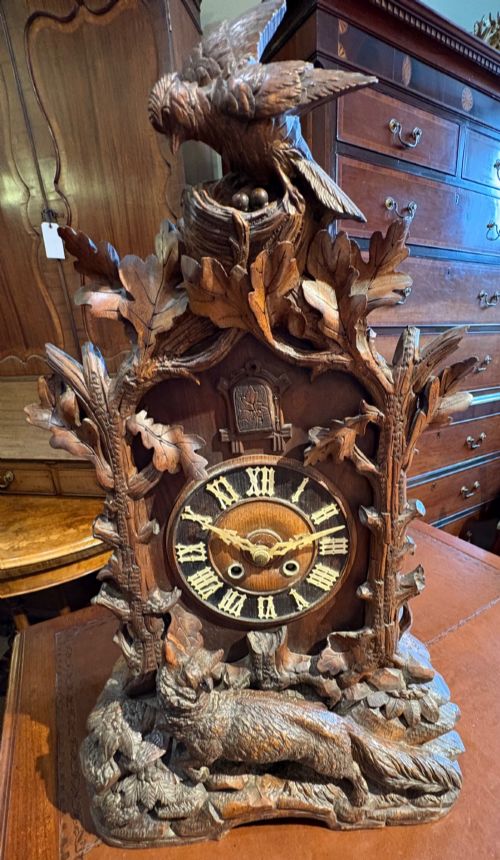
Cases utilise ebonised wood, carved walnut, and cast metal, often enriched with brass bezels, bone details, and painted decoration. Ebonisation gave cheaper or softer timbers the dense, dark appearance of ebony, while Black Forest pieces relied on deeply carved walnut depicting foliage and animal life.
Dials are constructed from enamel, ceramic, or painted metal, providing a sharp contrast against the dark timber and brass work. Movements range from mechanical twin fusee setups to musical automata and simple spring-driven mechanisms.
Black Wall Clock Retail Price Guide 2026
Typical asking prices for black wall clock among the pieces listed under this phrase on Sellingantiques today, from the lower quarter to the upper quarter. They describe what is for sale here now, not the wider market.
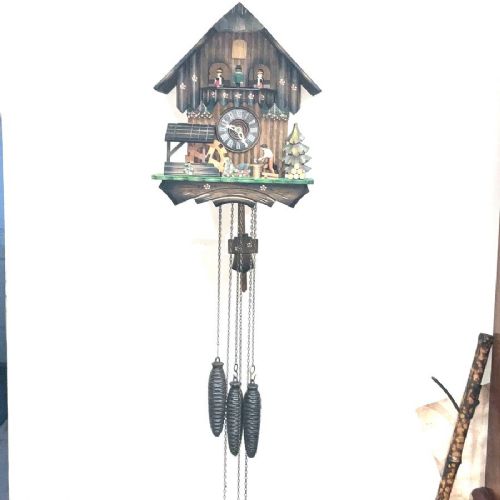
Some nineteenth-century clocks combine telling the time with playing mechanical music or animating wooden birds.
What varies in quality
Quality rests in the crispness of the wood carving, the complexity of the movement, and the integrity of the dial. Master carvers in the Black Forest achieved deep, naturalistic relief that elevates a cuckoo clock from a simple novelty to a sculptural work.
The sophistication of the movement distinguishes standard timepieces from high-grade regulators and twin fusee mechanisms. Original enamel dials and matching brass hands preserve the maker's intended aesthetic better than later replacements.
Philipp Haas·Joyce Whitchurch·Johann Baptist Beha·Smiths of London·Lenzkirch·Gustof Becker·Henri Dasson
The Black Wall Clock Glossary
- Fusee
- A conical pulley used in clock movements to maintain even force as the mainspring unwinds. This mechanism is frequently found in quality nineteenth-century wall clocks.
- Ebonised wood
- Timber treated to resemble ebony through staining and polishing. It provided Victorian cabinetmakers with a uniform black finish.
- Vienna Regulator
- A precision pendulum clock developed in Austria, prized for its accurate movement and elegant walnut case. These pieces often feature glass side panels to display the mechanism.
- Twin Fusee
- A movement utilising two fusee chains or cords, typically separating the timekeeping train from the striking train. This system ensures consistent tension for both functions.
- Aneroid Barometer
- An instrument that measures atmospheric pressure without liquid, using a flexible metal box. They are frequently housed in carved wooden cases matching contemporary wall clocks.
Black Wall Clock: Frequently Asked Questions
How do I wind a fusee wall clock?
Use the appropriate winding key inserted into the dial hole, turning it gently until resistance is felt. Care must be taken not to overwind the mechanism.
Ensuring the pendulum is hanging correctly before starting the clock helps maintain an even beat.
What is a twin fusee movement?
A twin fusee movement uses two separate conical pulleys to drive the timekeeping and striking trains independently. This design delivers steady power to the gears as the springs relax.
Clocks with this mechanism usually require professional setup to ensure accurate timekeeping.
Where were Black Forest clocks made?
They were produced in the Black Forest region of Germany by specialist woodworking communities during the nineteenth and early twentieth centuries. Artisans carved intricate walnut cases featuring leaves, birds, and architectural motifs.
These clocks often incorporated mechanical cuckoo calls or musical automata.
How do I hang a heavy wall clock?
Mount the clock directly into wall studs or use appropriate heavy-duty fixings suited to the wall material. The weight of ebonised wood and carved walnut requires secure structural support.
Checking that the case hangs plumb ensures the pendulum swings freely without catching.