

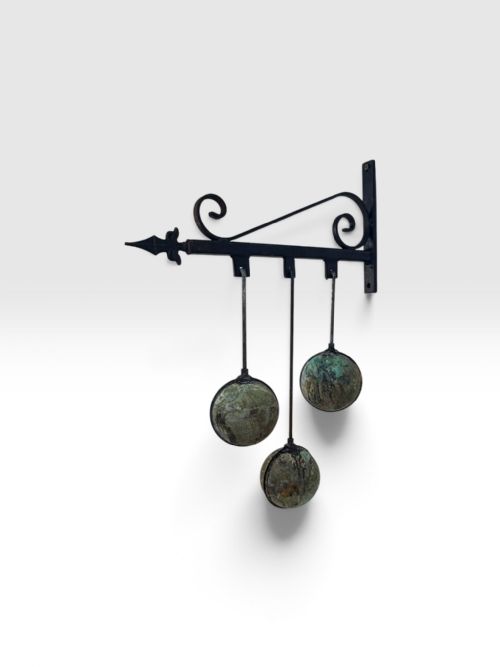


Black Wall Brackets
Black wall brackets provide architectural support and display space, bringing dark tones and period character to any room.
Black Wall Brackets
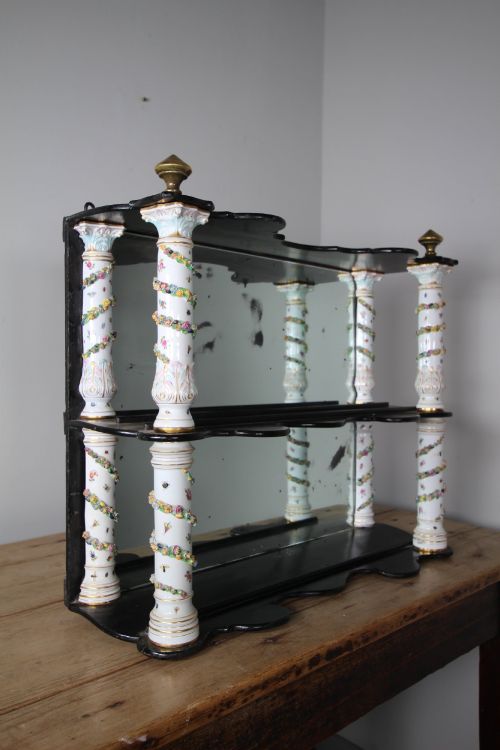
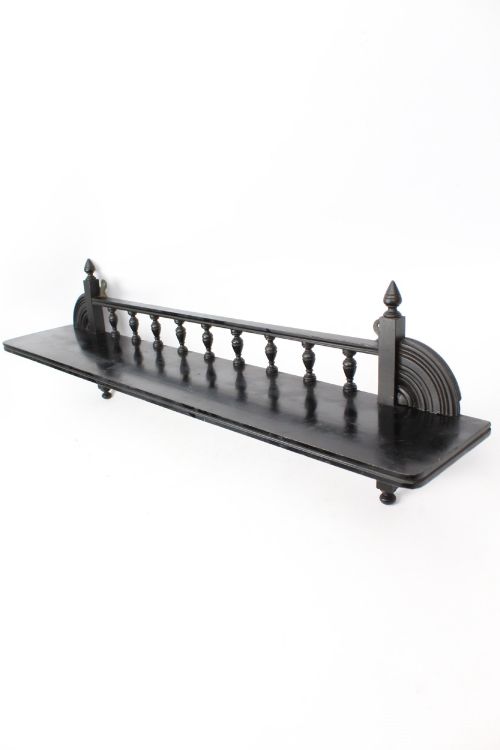
Black wall brackets encompass a diverse selection of architectural and decorative hardware designed to mount directly onto vertical surfaces. When searching for black wall brackets, collectors encounter objects ranging from cast iron supports to ebonised wood shelves and wrought iron lighting fixtures. These items serve both functional and decorative purposes within interiors.
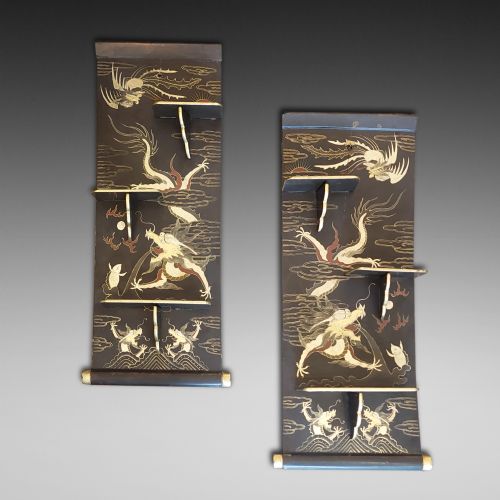
The listings span multiple periods, predominantly drawing from the Victorian era, the Edwardian period, and the early twentieth century. Common forms include hanging shelves, wall lights, and architectural sink brackets alongside specialised items like sign brackets and bell supports. Stylistic influences vary widely, incorporating Victorian Aesthetic Movement, Gothic, Chinoiserie, and Art Deco designs.
Buyers frequently meet ebonised wood and wrought iron versions on this page, reflecting the darker finishes favoured by nineteenth and early twentieth-century makers. Pieces often incorporate contrasting materials such as brass, glass, or ormolu to highlight the primary dark structure. Originating from various European and Asian traditions, these brackets demonstrate the versatility of black finishes across different decorative styles.
Materials and construction methods
Wrought iron and cast iron form the structural core of many utilitarian and decorative brackets in the collection. Blacksmiths shaped wrought iron through heating and hammering to create adjustable arms and scrolling supports, while founders poured molten metal into moulds to produce intricate designs featuring dragons or foliate motifs. These iron pieces often rely on a painted finish or natural dark oxidation to achieve their characteristic colour.
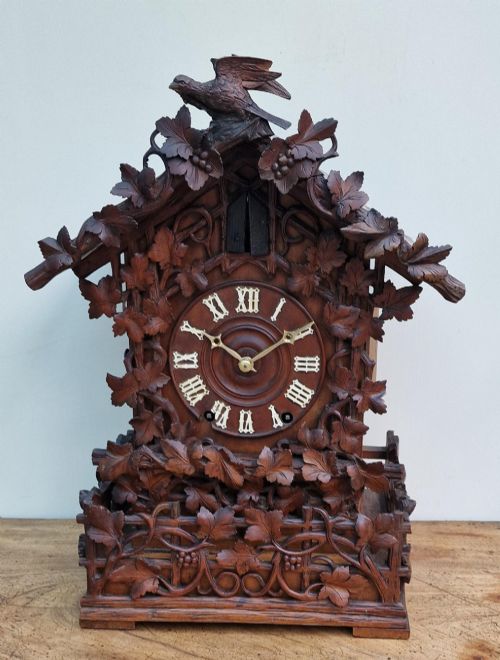
Woodworking techniques dominate the shelving and clock bracket categories, utilising ebonised wood or lacquered surfaces. Artisans applied dark stains or black lacquer to timber bases, sometimes incorporating hand-painted decoration in the Chinoiserie tradition or deep carving seen in Black Forest pieces. Brass, ormolu, and glass components were then added as mounts, dials, or decorative accents to complete the design.
Black Wall Brackets Retail Price Guide 2026
Typical asking prices for black wall brackets among the pieces listed under this phrase on Sellingantiques today, from the lower quarter to the upper quarter. They describe what is for sale here now, not the wider market.
Listings feature iron, wood, and brass materials across Victorian, Edwardian, and Art Deco periods.
Evaluating craftsmanship and execution
Quality in these brackets rests primarily on the crispness of the casting or the depth of the carving. Superior ironwork displays clean lines and well-finished joints, whereas finer wood pieces show precise joinery and detailed hand-carved elements rather than shallow, machine-pressed decoration. The integration of secondary materials like ormolu or brass fittings also distinguishes finer examples from standard utility hardware.
The sophistication of the surface finish dictates much of the visual appeal. Original ebonising, hand-applied lacquer, or patinated paint surfaces that show age honestly without heavy restoration represent a higher grade of manufacture. Pieces retaining their original functional components, such as adjustable iron mechanisms or matching hardware, command stronger interest from collectors.
Henri Dasson·Lenzkirch
The Black Wall Brackets Glossary
- Ebonised wood
- Timber treated with a stain or chemical process to imitate expensive ebony. This finish became particularly popular during the Victorian period for decorative furniture and wall fixtures.
- Wrought iron
- Iron that has been heated and worked with tools by a blacksmith rather than cast in a mould. It allows for strong, flexible, and slender architectural supports.
- Ormolu
- Gilt bronze ornamentation applied to furniture, clocks, and brackets. The technique involves treating bronze with a finely ground gold-mercury amalgam.
- Aesthetic Movement
- A late nineteenth-century design reform movement that emphasised art for art's sake. Pieces from this style often feature clean geometric forms and Japanese-inspired motifs.
- Chinoiserie
- European artistic interpretation of Chinese and East Asian artistic traditions. It frequently appears on lacquered wooden shelves and decorative hanging brackets.
Black Wall Brackets: Frequently Asked Questions
How do I hang a heavy iron wall bracket?
Heavy iron brackets require secure attachment to wall studs or solid masonry using appropriate fixings suited to the weight of the object. Ensuring a firm anchor prevents the bracket from pulling away under load.
For fragile walls or plaster surfaces, professional installation is often recommended to distribute the weight evenly and protect both the bracket and the wall.
Are these brackets strong enough to hold heavy items?
Strength varies significantly depending on the material, with cast iron and wrought iron offering robust structural support for heavy objects like shelves or clocks. Lighter decorative brackets or lacquered wood consoles are better suited for display rather than heavy loads.
Buyers should assess the original intended function of each specific piece before placing substantial weight upon it.
How do I clean ebonised wood and painted iron?
Dust ebonised wood gently with a soft, dry cloth and avoid harsh chemical cleaners that can strip the dark finish. For iron brackets, a light wipe with a dry or barely damp cloth helps remove surface dust without introducing moisture that causes rust.
Preserving the original patina requires minimal intervention and regular gentle maintenance rather than deep scrubbing.
How can I tell a Victorian bracket from a later reproduction?
Victorian and Edwardian pieces typically exhibit hand-finished details, tool marks from forging, or period-specific fastening methods like slotted screws. Examining the wear patterns and the natural ageing of the paint, iron, or wood helps confirm authenticity.
Later reproductions often display uniform machine casting and lack the subtle irregularities characteristic of nineteenth-century craftsmanship.