






Black Tea Tray
A black tea tray brings dark surfaces, gilt motifs and sturdy service to a room, moving easily from a table top to a low stand.
Black Tea Tray
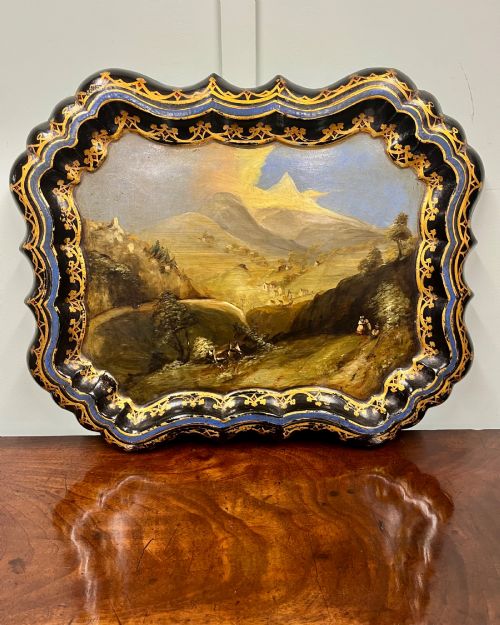
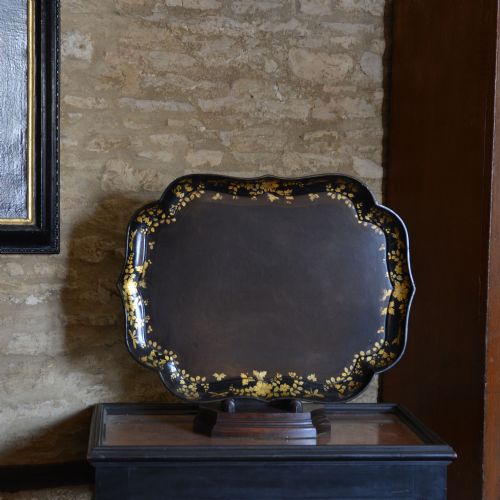
A black tea tray gathers serving ware on a dark ground, appearing most frequently in papier-mâché, lacquer and painted metal forms. These pieces date from the eighteenth century through the Edwardian period, spanning Georgian, Regency and Victorian eras.
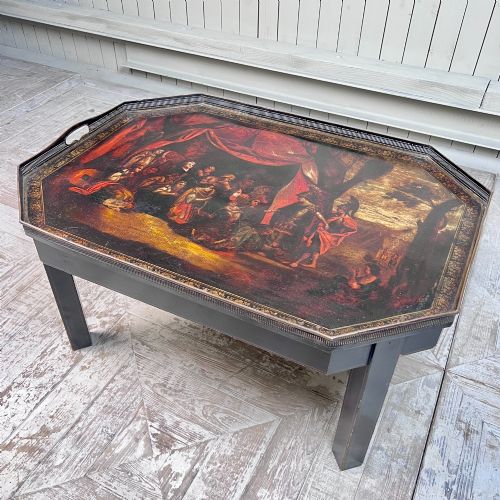
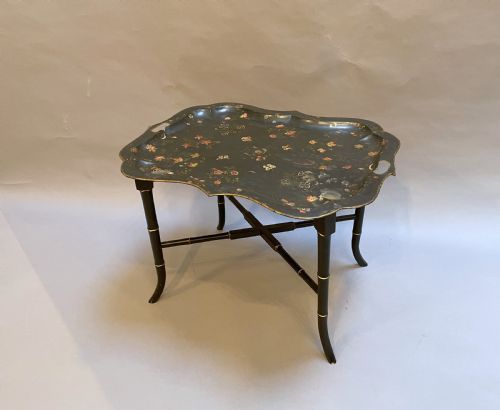
The format ranges from flat serving surfaces and waiters to large trays mounted on later stands to serve as coffee tables or side tables. Oval, rectangular and octagonal shapes dominate the selection alongside kidney-shaped variants.
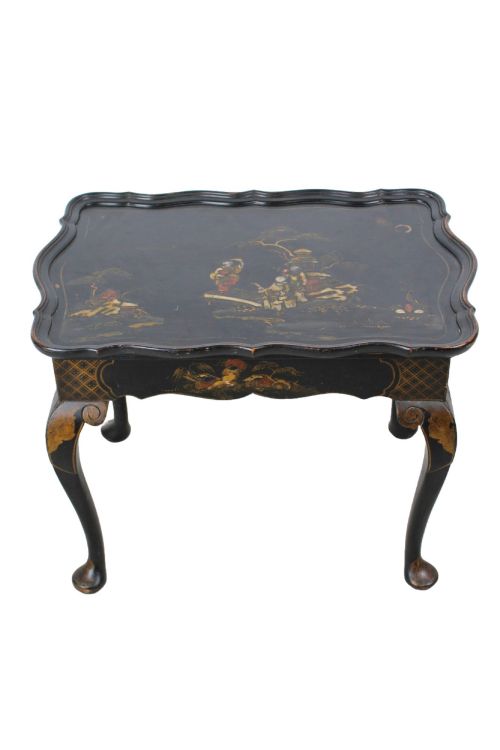
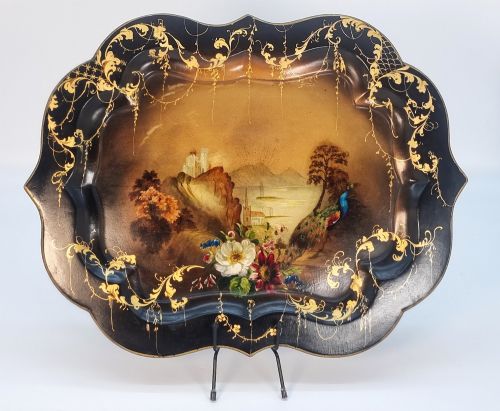
Makers produced these items for domestic hospitality, applying decorative painting, floral details and Chinoiserie scenes to dark surfaces. Many survive today either as portable trays or adapted permanently onto folding and fixed stands.
How They Were Made
Papier-mâché construction involves layering paper pulp and size pressed into heavy boards, dried and smoothed before receiving dark lacquer and polish. Artisans built durable trays that resisted warping from hot liquids and daily handling.
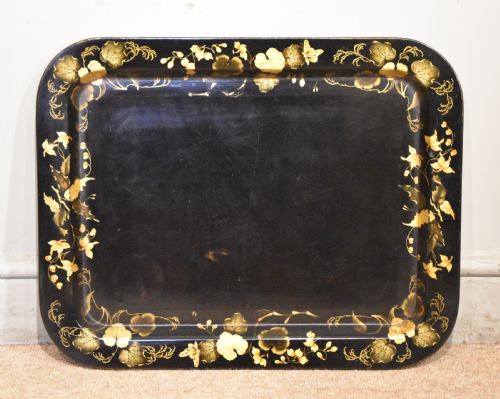
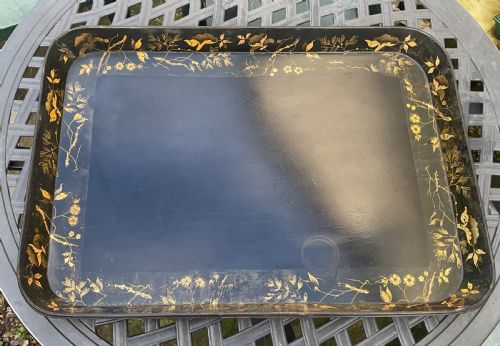
Metal toleware trays use sheet iron coated in enamel or japanned finishes, often decorated with hand-painted flora and gilt leaf embellishments. Wood foundations also appear with ebonised surfaces, brass mounts and silver plate galleries.
Black Tea Tray Retail Price Guide 2026
Typical asking prices for black tea tray among the pieces listed under this phrase on Sellingantiques today, from the lower quarter to the upper quarter. They describe what is for sale here now, not the wider market.
What Varies in Quality
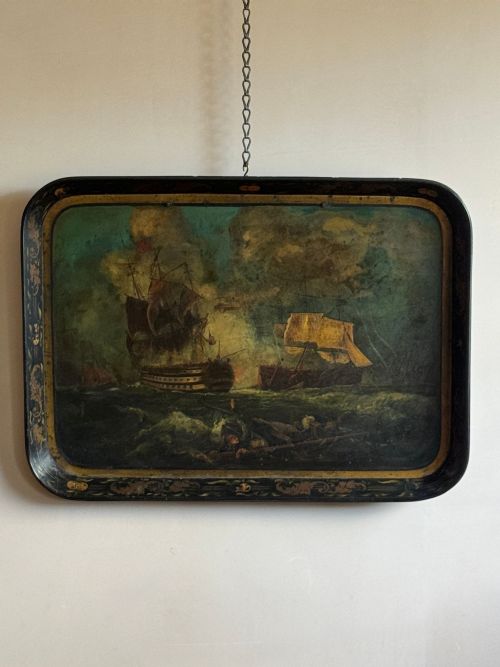
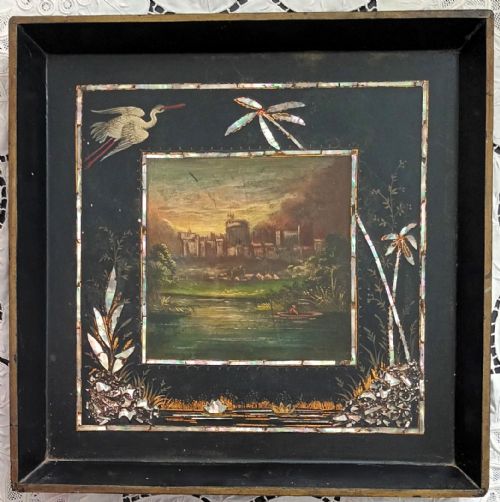
The fineness of the hand-painted decoration and the depth of the lacquer finish separate standard utility pieces from masterworks. Details like raised gilt borders and pictorial narrative scenes indicate skilled workshop production.
Structural integrity of the papier-mâché base and the crispness of moulded edges determine longevity. Pieces retaining original stands and maker stamps command closer attention from collectors.
Henry Clay·Jennens & Bettridge
The Black Tea Tray Glossary
- Papier-mâché
- A composite material made from paper pulp or layers of paper bound with glue, pressed and dried to form rigid trays. This substance took dark lacquer finishes exceptionally well.
- Toleware
- Painted or lacquered sheet metal utensils and trays, often produced in Welsh and English workshops. Pontypool stands as a notable centre for this metalwork.
- Japanned
- A European imitation of East Asian lacquerwork achieved through successive coats of dark varnish cured by heat. It created a glossy black surface resistant to moisture.
- Chinoiserie
- European artistic style reflecting Chinese motifs, featuring figures, pavilions and landscapes in gold paint on black grounds. This aesthetic dominated many Regency and Victorian trays.
- Waiter
- A small serving tray or dish raised on feet, used for carrying glasses and cups. The term applies to both metal and papier-mâché examples.
Black Tea Tray: Frequently Asked Questions
How do I clean a papier mache tray?
Dust gently with a dry, soft cloth to protect the delicate lacquer and gilt paint. Avoid liquid cleaners, water immersion and chemical sprays that soften the historic finish.
Keep the surface away from direct sunlight and extreme heat sources to prevent the black ground from cracking or fading over time.
Can I use these trays for serving tea?
While historic black tea trays served guests originally, modern use requires caution to protect fragile surfaces from moisture and heat rings. Placing a linen cloth or coaster underneath heavy pots preserves the painted decoration.
Many collectors prefer displaying them on stands or mounting them on walls rather than risking daily service wear.
What is a tray table?
A tray table combines a removable serving tray with a folding or fixed wooden stand, creating a low surface for drinks. These conversions often utilise nineteenth century papier-mâché tops paired with later nineteenth or twentieth century bases.
They function well as portable coffee tables in traditional and contemporary sitting rooms.
How do I date a black tea tray?
Examine the materials, edge profiles and painting styles to determine the period of origin. Georgian and Regency pieces often feature bold Chinoiserie or flat gilt borders, while Victorian examples lean toward floral motifs and ebonised stands.
Maker stamps on the underside provide the most reliable guide to specific workshop decades.