



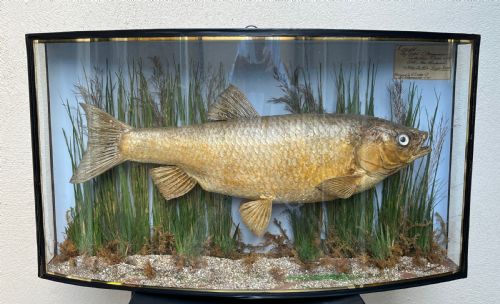
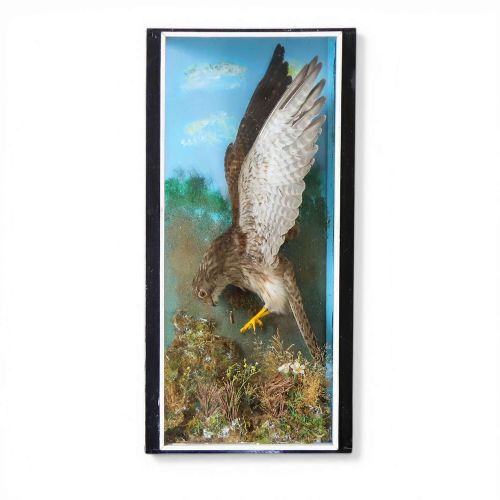

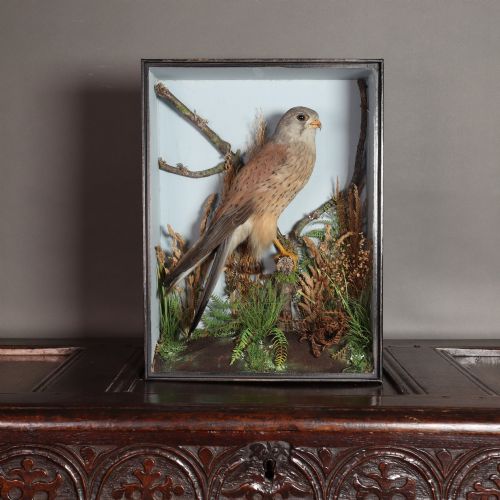

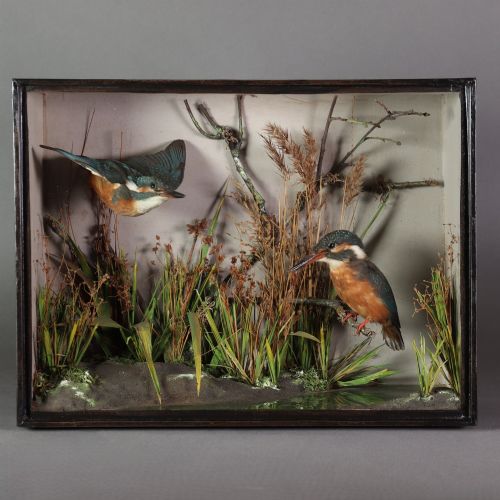


Black Taxidermy Display Case
A black taxidermy display case houses preserved specimens within dark frames and bases, bringing Victorian natural history into domestic spaces.
Black Taxidermy Display Case
A black taxidermy display case serves to protect and exhibit preserved birds, fish, and mammals against dark timber or painted surrounds. These pieces range from upright picture frame enclosures to deep wooden boxes and glass domes sitting on ebonised plinths.
The examples seen on this page span the Victorian and Edwardian eras through to the early twentieth century. Most frequently, a buyer meets ebonised wooden cases and framed dioramas housing single birds or small groups of specimens.
Makers and taxidermists across England produced these enclosures, from local provincial shops to well-known establishments in London and regional centres. The regional variety spans works from Cotswold practitioners to Welsh and northern specialists.
Materials and Construction
Makers constructed the housing using timber, glass, and paper, often finishing the wood with ebonising to achieve a deep black surface. Glazing panels protect the interior, whilst internal paper or painted backdrops create a natural habitat illusion for the preserved specimens.
Preservation techniques combined taxidermy mounting with internal groundwork composed of natural foliage, feathers, and painted backgrounds. The glass elements were mouth-blown or drawn, resulting in subtle surface variations and bubbles typical of the period.
Black Taxidermy Display Case Retail Price Guide 2026
Typical asking prices for black taxidermy display case among the pieces listed under this phrase on Sellingantiques today, from the lower quarter to the upper quarter. They describe what is for sale here now, not the wider market.
Several examples preserve unexpected domestic companions, including a remarkable pet dog recorded by a Welsh taxidermist.
Evaluating the Pieces
Quality rests upon the lifelike posture of the preserved specimen and the skill of the taxidermist in arranging plumage or scales. Works by documented makers show superior anatomical accuracy and more complex internal scenery.
The condition and clarity of the glass dome or front panel influence the overall retention of the piece. Well-sealed frames protect the interior from dust and damp over generations, preserving the original paper labels and painted backdrops.
Bill Cox of Liverpool·Little and Co·J Griffiths of Burford·T E Gunn·Hutchings of Aberystwyth·W F Homer London·J Cooper and Sons
The Black Taxidermy Display Case Glossary
- Ebonised
- Wood finished to resemble ebony by staining or painting it black. This dark finish provides a formal, uniform frame that directs attention to the brightly coloured specimens inside.
- Cloche
- A bell-shaped glass cover used to protect delicate objects. In taxidermy contexts, these domes sit over wooden bases to enclose specimens completely.
- Diorama
- A three-dimensional scene depicting wildlife within a simulated natural environment. These enclosures often incorporate painted background panels and dried foliage.
- Plinth
- The solid base upon which a glass dome or display case rests. They are frequently turned from timber and finished with an ebonised coating.
Black Taxidermy Display Case: Frequently Asked Questions
How do I clean a glass dome?
Glass domes attached to ebonised bases should remain sealed where possible to protect the fragile contents within. Dust the exterior gently with a dry microfiber cloth.
Avoid using liquid cleaners near the join between the glass and the wooden base, as moisture can seep inside and damage the historic taxidermy specimens.
Where should I place my case?
Keep taxidermy display cases away from direct sunlight and damp environments to prevent fading of feathers and deterioration of internal papers. Stable room temperatures ensure the materials do not dry out excessively.
Position the case on a sturdy surface where it will not be knocked, as historic glass and mounted specimens are vulnerable to sudden impacts.
How do I identify the period?
Examine the construction methods of the wooden frame or base, along with any remnants of maker labels or handwritten notes on the backing paper. Victorian examples often feature heavier ebonised mouldings and hand-blown glass.
Edwardian and later twentieth-century pieces tend to show slightly different framing proportions and machine-drawn glass panes.
Are original labels important?
Original trade labels pasted inside the case or beneath the base help identify the taxidermist and often provide a date or working address. These paper markers add historical context to the piece.
Take care not to remove or clean these labels, as they form part of the documented history of the taxidermy work.