

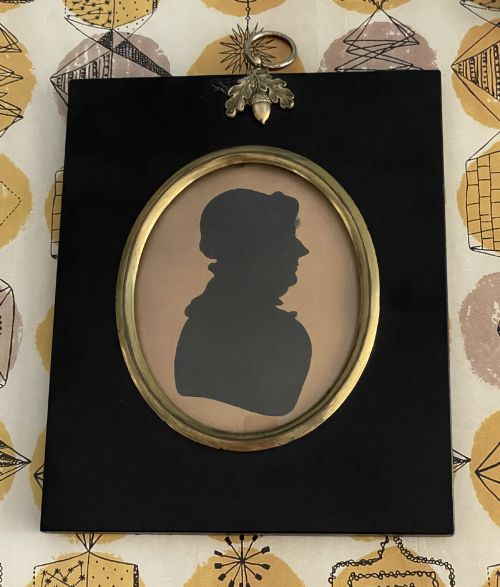


Black Shadow Portrait
A black shadow portrait captures likenesses in stark profile, offering an intimate glimpse into Georgian and Victorian lives through delicate paper and painted silhouettes.
Black Shadow Portrait
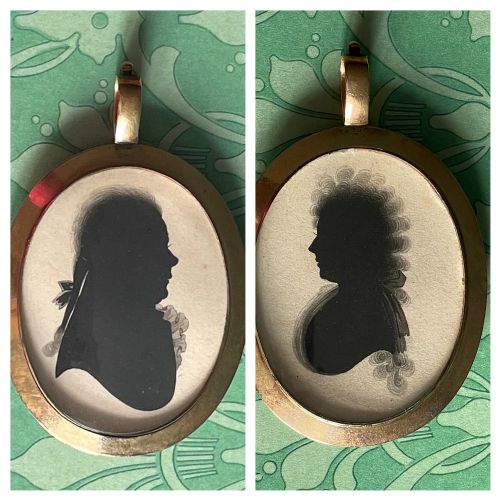
A black shadow portrait, commonly known as a silhouette, presents a profile likeness shaped from cut paper or applied pigment. When collectors search for a black shadow portrait, they encounter works ranging from simple hollow-cut paper to elaborate painted pieces detailing costume and hair.
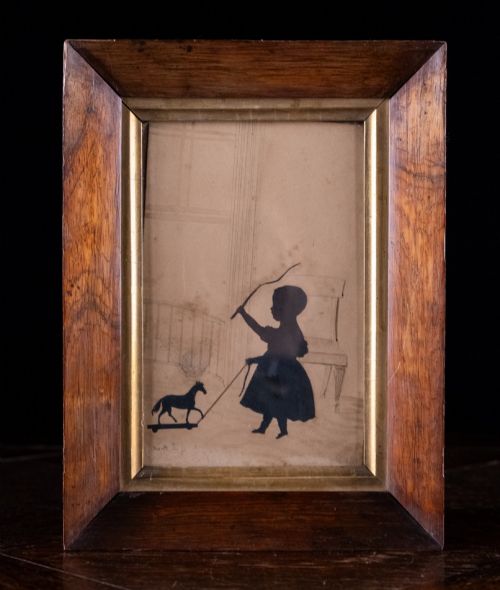
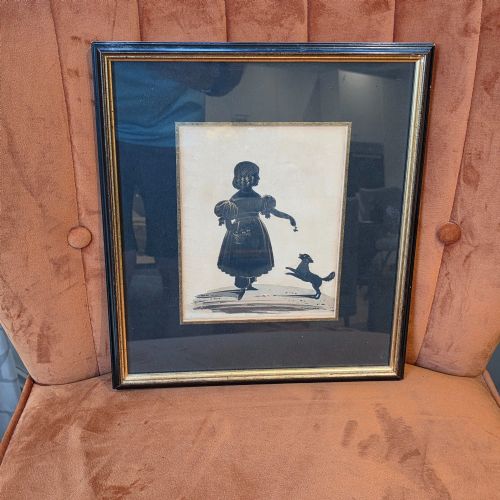
The pieces appearing on this page span the eighteenth, nineteenth, and Victorian eras, with the nineteenth century heavily represented. Makers utilised various media, mounting profiles in frames made from ebonised wood, maple, or rosewood.
Subjects include gentlemen, ladies, children, and family groups, sometimes accompanied by animals or rendered as conversational conversation pieces. Most works present solitary figures, though pairs and multi-figure compositions also emerge.
Materials and methods
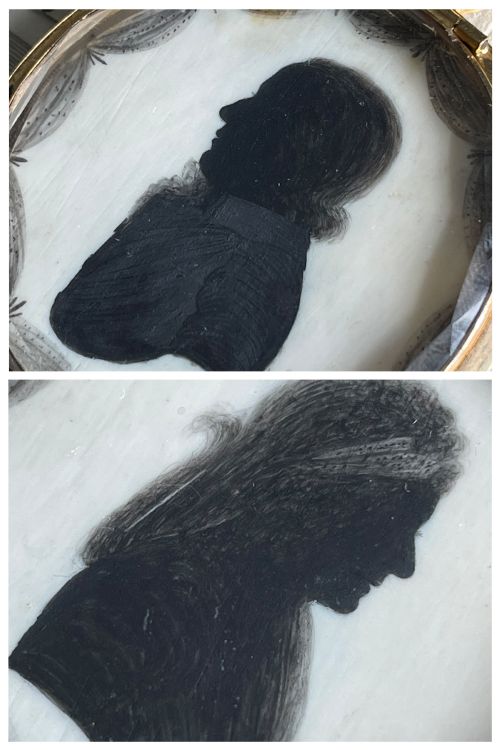
Makers fashioned these profiles using black paper, ink, and watercolour, often employing scissors or blades for freehand cutting. Reverse painting on glass offered an alternative method, fixing the dark pigment directly beneath the protective glaze.
Artists frequently added gold leaf highlights to accentuate buttons, lace, and hair details against the dark ground. Frames incorporated materials such as brass, glass, and polished wood to house the delicate paper or glass panels securely.
Black Shadow Portrait Retail Price Guide 2026
Typical asking prices for black shadow portrait among the pieces listed under this phrase on Sellingantiques today, from the lower quarter to the upper quarter. They describe what is for sale here now, not the wider market.
The listings on this page span the 18th century, Georgian, Regency, William IV, and Victorian periods, using glass, paper, wood, ink, and gold leaf.
Assessing quality
The sophistication of the framing and mounting further distinguishes the pieces. Original ebonised wooden frames, convex glass covers, and well-preserved gilt highlights indicate superior execution and careful preservation.
William James Hubard·James Gillespie·Augustin Edouart·Frederick Frith·Thomas London·J. Deacon·Alfred Darbyshire·John Miers
The Black Shadow Portrait Glossary
- Silhouette
- A portrait profile filled in with a solid dark colour, typically black, representing a sitter in profile. The term derives from Etienne de Silhouette, a French finance minister.
- Reverse painting on glass
- A technique where the artist applies pigment and details to the reverse side of a glass panel so the image appears correctly when viewed through the front.
- Hollow-cut
- A method where the profile is cut out from a sheet of paper, leaving the surrounding paper to serve as the mount against a darker background fabric.
- Convex glass
- Curved glass panes used in framing silhouette miniatures to protect the delicate paper or painted surface while adding depth to the presentation.
Black Shadow Portrait: Frequently Asked Questions
What is a black shadow portrait?
A black shadow portrait is a profile likeness rendered in solid dark tones, historically created by cutting paper or painting directly onto glass or card. These works served as accessible portraiture before the widespread adoption of photography.
Artists captured the distinct facial outlines and hairstyles of sitters, preserving personal likenesses with economy and precision. The resulting images range from minimalist paper cuttings to richly embellished painted miniatures.
How were silhouettes displayed?
Makers housed these portraits in small, protective frames fashioned from ebonised wood, rosewood, or maple, frequently incorporating brass bezels and convex glass. These frames allowed the delicate paper or glass panels to hang securely on parlour walls.
Many pieces were designed for domestic display in intimate groupings or pairs, reflecting family connections and social standing. The dark profiles stood out sharply against light backgrounds within their compact surrounds.
How do I date a silhouette?
Dating relies heavily on the sitter's costume, hair styling, and bonnet or cap design, which shifted noticeably between the Georgian, Regency, and Victorian periods. Bonnets, cravats, and high-waisted dresses provide reliable chronological markers for researchers.
Framing styles and backing papers also offer clues to the era of production. Additionally, surviving signatures, dates inscribed on the reverse, or known working dates of artists help narrow down the timeline.
Are these portraits unique?
Most historical silhouettes are entirely hand-cut or hand-painted unique works created from life sittings or small studio sessions. Artists produced bespoke likenesses directly for individual patrons rather than mass-producing copies.
While some professional studios utilised mechanical tracing devices to assist with proportions, the finishing touches and cutting remained individual acts. This ensures that surviving examples retain distinct personal characteristics.