

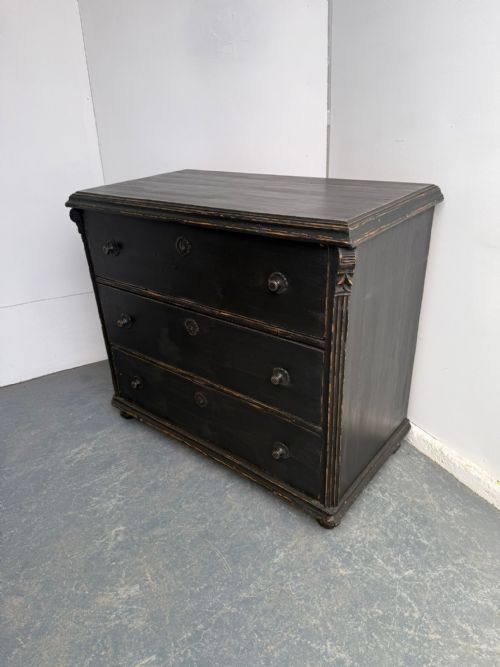


Black Pine Chest
A black pine chest provides robust storage with dark painted surfaces, carrying history from domestic, maritime and workshop settings across the nineteenth century.
Black Pine Chest
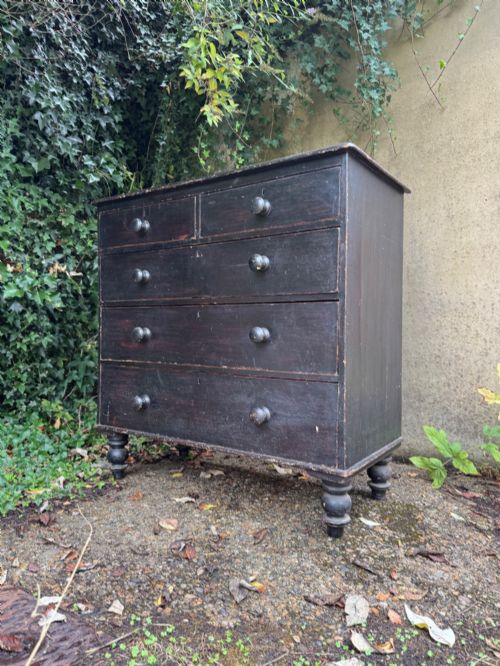
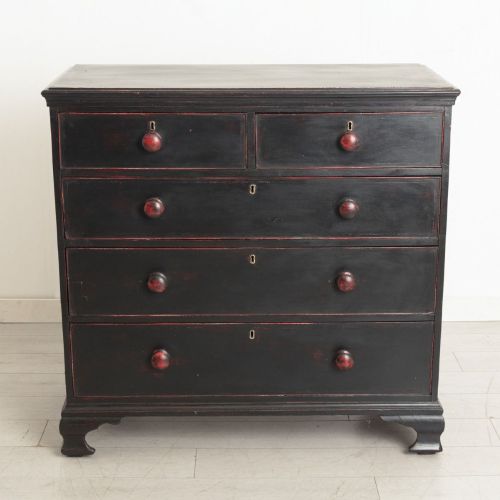
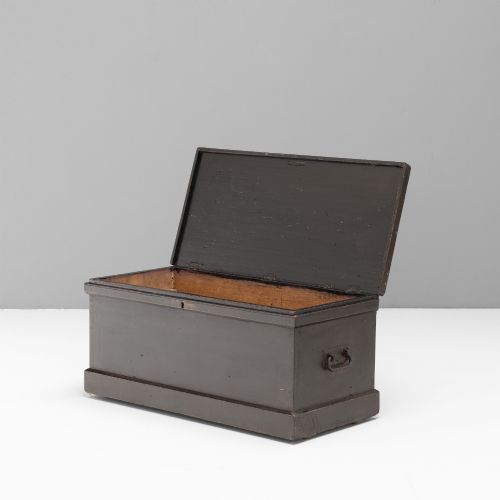
A black pine chest encompasses versatile storage forms including blanket boxes, blanket chests, tool trunks, seaman's chests and multi-drawer chests. These utilitarian items originate from various regions, notably England, Hungary and Sweden, dating primarily from the eighteenth and nineteenth centuries.
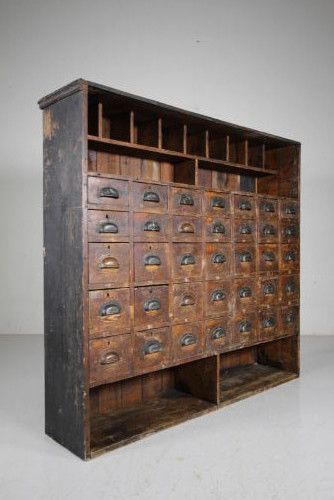
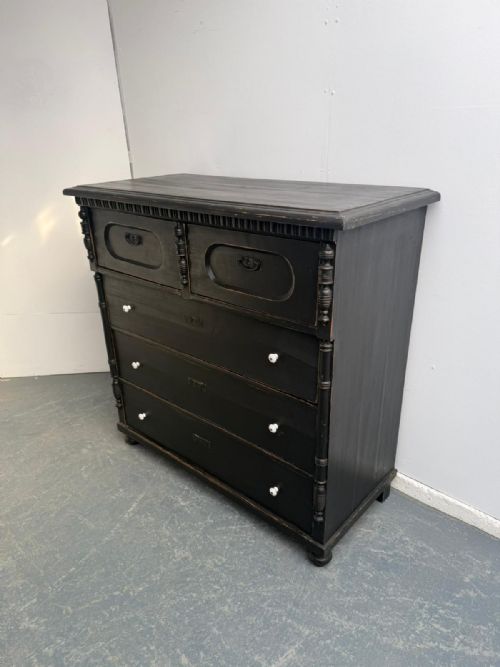
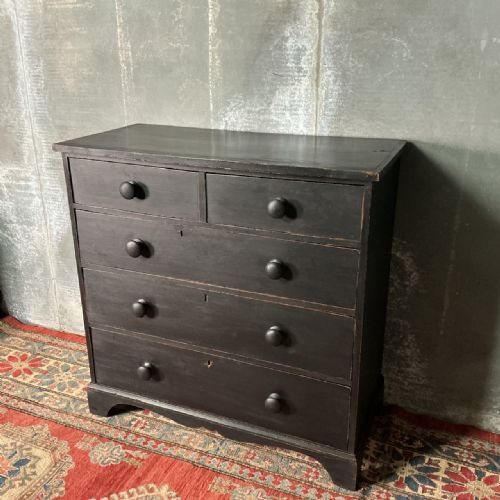
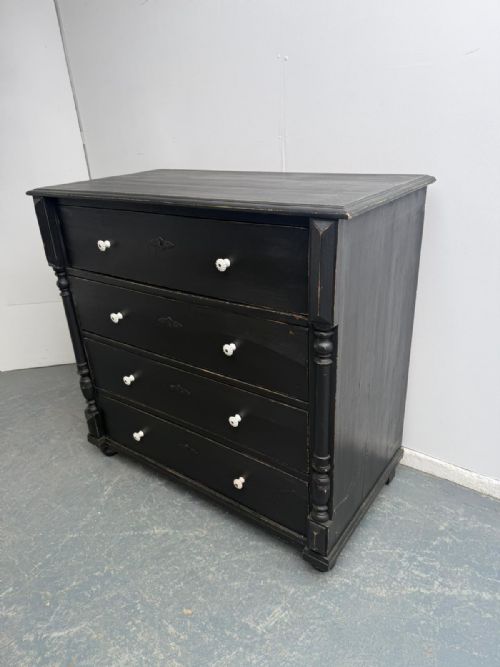
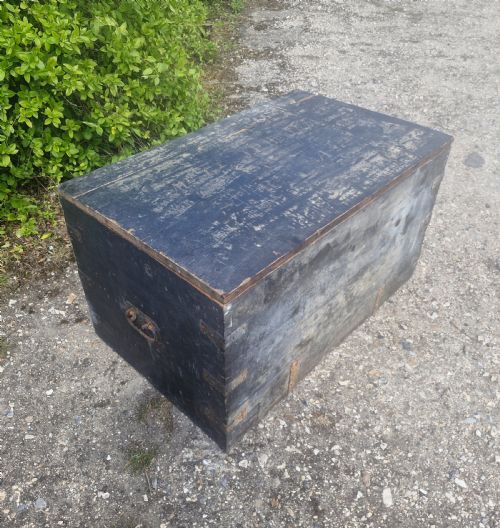
Buyers seeking a black pine chest encounter storage furniture finished in dark paint, often combining pine construction with iron, brass or rope mounts. Forms range from simple lidded boxes and strong boxes to commodes, banks of drawers and large chests with fitted interiors.
Domestic and maritime contexts shape these pieces, with examples carrying specific regional characteristics such as Scandinavian folk art motifs or Victorian industrial utility. The selection balances sturdy storage capacity with the distinct aesthetic of dark painted wood surfaces.
How they were made
Construction relies on solid pine planks joined to create durable carcases for heavy daily use, finished with layers of black paint. Metal components such as iron hinges, brackets and brass fittings reinforce the corners and lids of trunks and tool chests.
Hardware details include wrought iron handles and rope beckets designed for lifting heavy maritime or campaign boxes. Surfaces show hand-painted finishes, ranging from simple protective coats to folk art decoration and sign-written lettering.
Black Pine Chest Retail Price Guide 2026
Typical asking prices for black pine chest among the pieces listed under this phrase on Sellingantiques today, from the lower quarter to the upper quarter. They describe what is for sale here now, not the wider market.
Materials recorded across the inventory include pine, wrought iron, brass, ceramic, paint and rope.
What varies in quality
Quality rests in the original integrity of the pine carcase and the character of the painted surface, distinguishing utilitarian workshop pieces from finer folk art and regional furniture. Original surface patination and untouched historic paint finishes hold greater appeal than later re-painting.
Construction methods determine durability, visible in the hand-dovetailed joints of drawers and the robust fitting of iron and brass hardware. Superior examples retain their original internal fittings, such as till boxes, tool trays and dividing partitions, alongside authentic transport markings or inscriptions.
The Black Pine Chest Glossary
- Pine
- A softwood utilised extensively for utilitarian furniture, carcases and storage boxes throughout the eighteenth and nineteenth centuries. It provides a lightweight yet resilient structure suitable for heavy paint finishes.
- Campaign trunk
- A portable chest constructed for travel and military use, often featuring recessed brass handles and reinforced corners. These pieces were designed to withstand rigorous transport.
- Seaman's chest
- A robust wooden box utilised by sailors to store personal possessions aboard ship, frequently fitted with rope handles for secure grip at sea. Many examples display maritime motifs or inscriptions.
- Folk art
- Decorative work produced within a traditional community style, often seen on Scandinavian boxes and chests from the nineteenth century. It adds distinctive painted ornamentation to otherwise utilitarian items.
- Commode
- A low piece of furniture featuring drawers or cupboards, appearing in nineteenth-century Scandinavian variations finished in dark paint. They combine domestic storage utility with regional decorative traits.
Black Pine Chest: Frequently Asked Questions
What is a black pine chest used for?
These pieces serve as practical storage furniture for blankets, clothing, logs or household items, bringing historic utility into modern rooms.
Their sturdy construction also allows them to function as coffee tables or decorative focal points in hallways and living spaces.
How do I care for a painted pine chest?
Keep the piece away from direct heat sources and strong sunlight to prevent the pine wood from drying and the historic paint from flaking.
Dust gently with a dry cloth and avoid harsh chemical cleaners that might damage the aged surface patination.
Are these chests genuinely old?
The selection includes pieces dating primarily from the eighteenth and nineteenth centuries, featuring authentic period construction methods and materials.
Examination of the timber, joinery and hardware helps verify the age and historic origins of each individual trunk or drawer unit.
What is the difference between a tool chest and a blanket box?
Tool chests usually feature internal trays, specialised compartments and robust iron or brass hardware designed for carrying heavy equipment.
Blanket boxes offer open internal space intended for textiles, linens and garments, often presenting a simpler internal layout.