


Black Parcel Gilt Table
A black parcel gilt table brings dark polished surfaces and flashings of gold leaf into a room, offering both gravity and light.
Black Parcel Gilt Table
When you search for a black parcel gilt table, you are looking at items defined by dark grounds offset by gold highlights. The examples seen here range from console tables and writing tables to étagères, card tables, and stools.
The versions you are most likely to meet on this page span the eighteenth century, the Regency period, and the Victorian era. They appear in styles such as Regency, Aesthetic Movement, Neoclassical, and Baroque Revival.
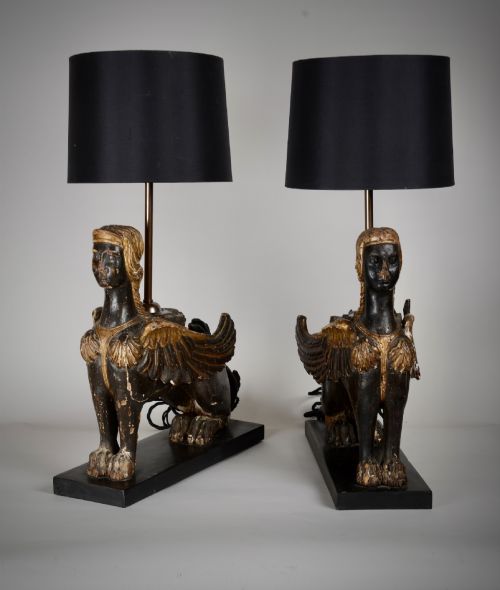
Makers recorded in these pieces include Lamb of Manchester and Howard & Sons, alongside Venetian and English workshops. Forms include demi-lune console tables, lamp conversions, and low coffee tables.
How they were made
Makers utilised ebonised wood, painted wood, and black lacquered surfaces to create the dark ground. Gold leaf and parcel gilt details were then applied to carved wooden elements and mouldings.
Secondary timbers and veneers such as amboyna, burr thuya, and ebony support the primary structure. Additional components include brass mounts and baize linings found within card and gaming tables.
Materials recorded across the inventory include ebonised wood, gold leaf, brass, amboyna, and burr thuya veneers.
What varies in quality
Quality rests in the crispness of the carved wood beneath the paint and the purity of the gold leaf application. Finer pieces demonstrate precise contrast between the deep ebonised finish and the gilded highlights.
The choice of underlying timber, from simple painted wood to burr thuya and amboyna veneers, separates standard production from high workshops. Attribution to makers like Lamb of Manchester or Howard & Sons elevates the standing of a piece.
Lamb of Manchester·Howard and Sons
The Black Parcel Gilt Table Glossary
- Parcel Gilt
- Wood or other material partially gilded with gold leaf, leaving portions of the base surface exposed. This technique creates contrast between the dark ebonised wood and the bright metallic highlights.
- Ebonised
- Wood stained or painted black to imitate true ebony. It serves as the primary dark ground on nineteenth century and Victorian furniture.
- Demi-Lune
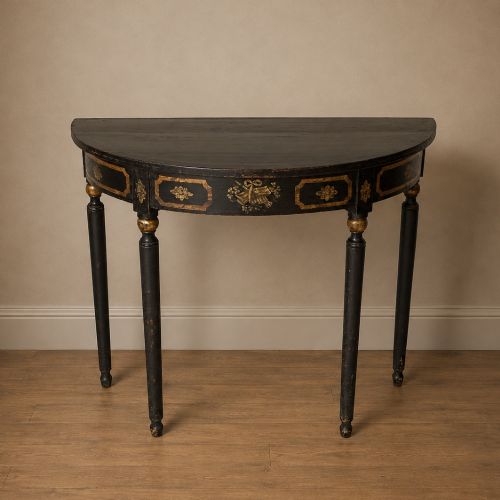
- A half-moon shape used frequently for console tables designed to stand flat against a wall. This form allows the gilded details on the curved frieze to catch the light.
- Étagère
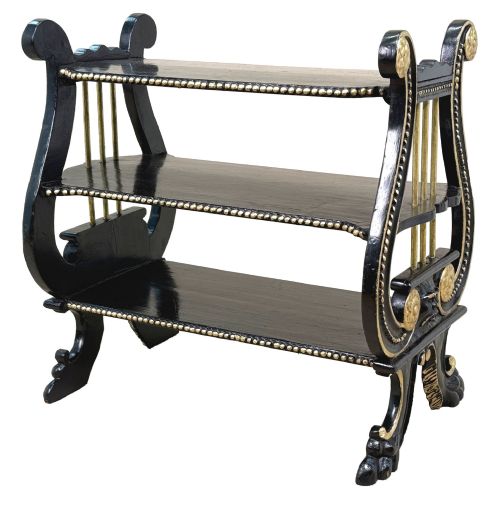
- A piece of furniture consisting of a series of open shelves for displaying small objects. These open tiers are often supported on ebonised and gilded uprights.
- Chinoiserie
- European decorative art imitating Chinese motifs and lacquer techniques. It appears on black lacquered tables featuring gold painted Oriental scenes.
Black Parcel Gilt Table: Frequently Asked Questions
What is a black parcel gilt table?
A black parcel gilt table is a piece of furniture finished in black paint, lacquer, or ebonised wood, decorated with partial gilding in gold leaf. These items include console tables, writing desks, and étagères.
They rely on the contrast between dark surfaces and bright metallic highlights to catch the light in a room. The style spans multiple periods from the eighteenth century through the Victorian era.
How do I identify a Regency table?
Regency tables often display Neoclassical influences, clean architectural lines, and bold use of black lacquer or ebonised finishes. They date from the early nineteenth century and frequently incorporate parcel gilt mouldings.
Look for classical motifs and forms such as demi-lune console tables or Chinoiserie decoration. The combination of dark painted surfaces and gold leaf is characteristic of the period.
Where should I place a console table?
A console table is designed to stand flat against a wall, making it suitable for hallways, drawing rooms, or entrance spaces. Because many feature semi-circular demi-lune shapes, they occupy minimal depth while providing surface area.
Pairing them with a mirror or placing a lamp upon them highlights the parcel gilt details. They serve as decorative focal points rather than heavy utility furniture.
What is the Aesthetic Movement?
The Aesthetic Movement was a late nineteenth century design trend that prioritised beauty and craftsmanship over strict historical revival. Furniture from this period often utilised ebonised wood combined with exotic veneers.
Pieces like ladies writing side tables from this era showcase refined proportions and careful parcel gilding. They reflect a shift towards art for art's sake in interior decoration.
How do I care for ebonised wood?
Ebonised wood requires gentle dusting with a soft, dry cloth to prevent the accumulation of grit on the black finish. Avoid harsh chemical cleaners that can strip the dark stain or damage the underlying wood.
Care must also be taken around the parcel gilt areas, as gold leaf can be delicate. Maintaining a stable room environment protects both the dark finish and the metallic highlights from moisture.