


Black Paper Silhouette Portrait
These black paper silhouette portrait pieces offer a direct line to past lives, capturing Regency and Victorian likenesses in paper, wood, and gold leaf.
Black Paper Silhouette Portrait
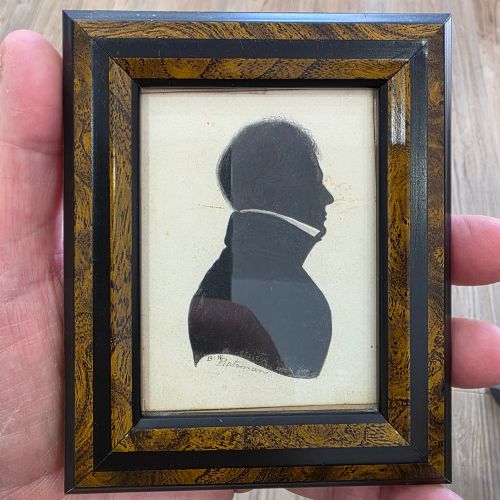
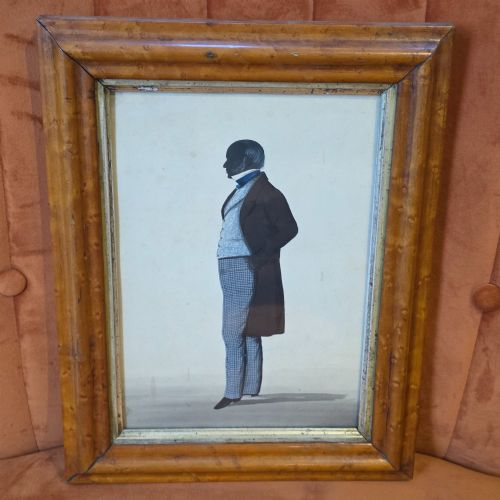
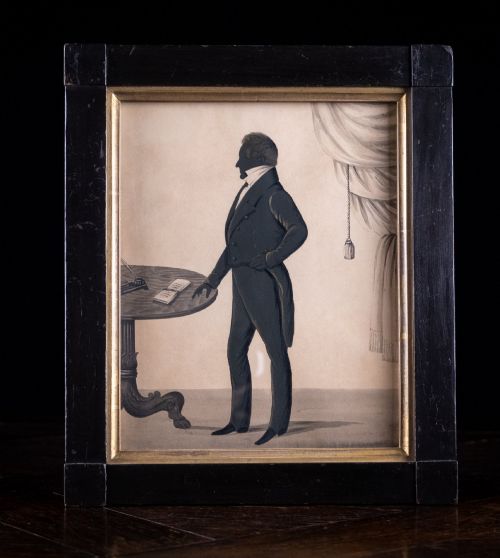
A black paper silhouette portrait captures the likeness of a sitter through cut paper, ink, and watercolor, framed for wall display or kept as a miniature. The examples on this page span the 18th century, the Georgian era, the Regency period, and the Victorian age, taking the form of framed wall art and conversation pieces.
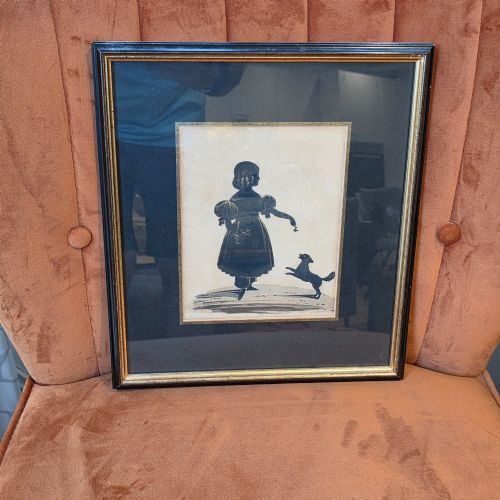
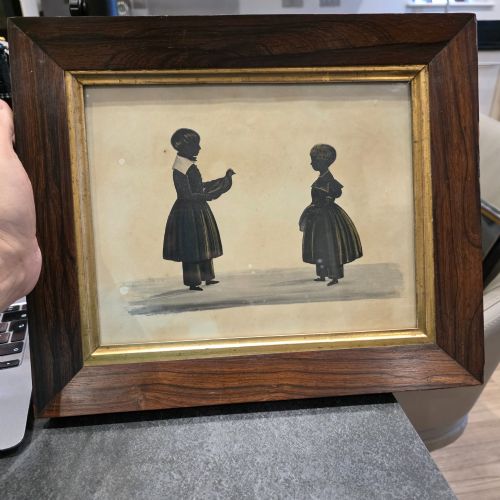
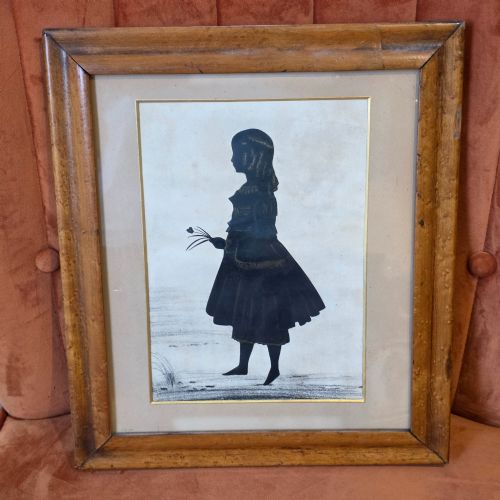
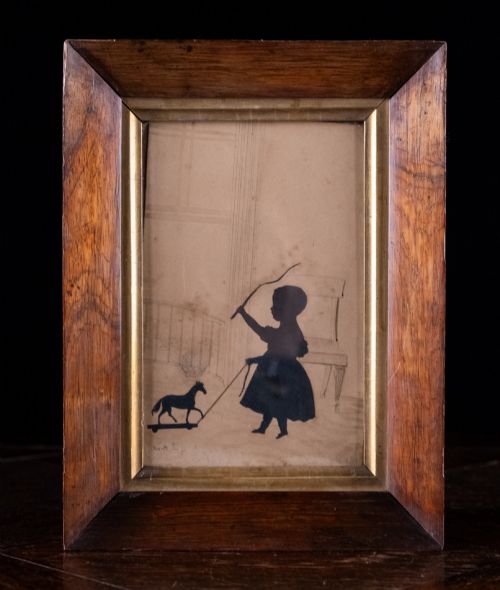
Most entries are framed silhouettes depicting gentlemen, ladies, children, and family groups, often accompanied by animals such as dogs and horses. These works appear in maple, rosewood, and ebony frames, occasionally enhanced with gold leaf and gilded highlights.
Full-length standing figures and bust portraits predominate, reflecting the style of itinerant profile artists and commercial galleries operating during the 19th century.
How They Were Made
Maker techniques rely on hand-cut paper mounted against contrasting backdrops, sometimes paired with delicate watercolor details to define hair, clothing, and accessories. Gilding and gold leaf add highlights to waistcoats, bonnets, and frame borders.
Artists house these paper profiles behind glass within wooden frames made of maple, rosewood, and ebony, protecting the delicate mediums from dust and handling.
Several profiles feature children accompanied by dogs and horses, proving that getting youngsters and pets to sit still was just as tricky centuries ago.
What Varies in Quality
Quality rests on the precision of the hand-cutting and the fidelity of the likeness, where skilled profile cutters capture posture and costume with minimal lines. The integration of watercolor work and gilding elevates certain examples above plain cutouts.
The preservation of the original framing, such as period ebony or maple surrounds with intact glass, influences the character and integrity of the piece.
William James Hubard·Augustin Edouart·Frederick Frith·Alfred Darbyshire·George Atkinson·John Smith of Edinburgh
The Black Paper Silhouette Portrait Glossary
- Silhouette
- A portrait profile filled in with a solid colour, typically black, representing a sitter in outline.
- Cut Paper
- A technique where the likeness is snipped directly from paper using scissors or a small knife rather than painted.
- Conversation Piece
- An artwork depicting a group of figures engaged in a common activity or interaction, rather than a single static portrait.
- Gilded
- Embellished with gold leaf or gold paint to highlight details such as buttons, jewellery, or frame mouldings.
- Miniature Portrait
- A small-scale painting or silhouette designed for intimate viewing rather than large wall display.
Black Paper Silhouette Portrait: Frequently Asked Questions
How do I date a silhouette?
Dating relies heavily on the clothing, hair styles, and headdresses worn by the sitters, which shift noticeably from the Georgian era through the Regency and Victorian periods. Frame styles and backing papers also provide helpful chronological clues.
Makers' signatures, gallery trade labels, and inscriptions on the reverse offer further confirmation of the date of execution.
Were silhouettes made by hand?
Professional profile artists cut these likenesses by hand from black paper, often working entirely by sight without preliminary sketches. Some pieces incorporate painted details in ink and watercolor to accent the costume.
Galleries and itinerant cutters produced these portraits swiftly for clients before the widespread adoption of photography.
How should I display them?
These framed works suit small wall spaces, study rooms, or gallery walls grouped alongside other period art. Keeping them out of direct sunlight protects the paper and watercolor pigments from fading.
Original wood frames made of maple, rosewood, or ebony complement the dark tones of the paper portraits.
What is a conversation piece?
A conversation piece is a portrait showing multiple figures, often with children, pets, or domestic settings included in the composition. These scenes record family groups and shared activities rather than isolated profiles.
They offer a fuller narrative of domestic life during the 19th century compared to single bust portraits.