



Black Painted Wood Mirror
A black painted wood mirror brings depth and a sharp silhouette to a room, drawing the eye with its stark, dark frame.
Black Painted Wood Mirror
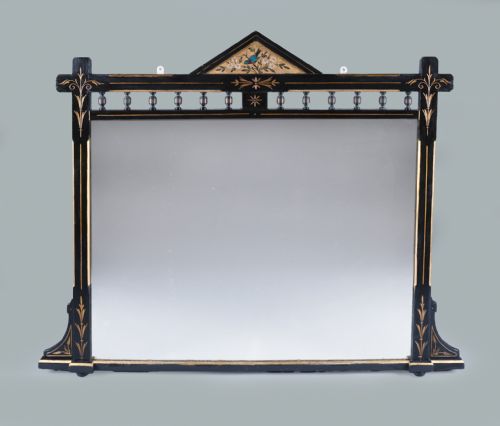
You are most likely to meet nineteenth-century overmantel mirrors finished in black paint alongside gilt, silver, or gesso details. These larger items sit alongside lighter twentieth-century wall mirrors and decorative pieces influenced by the aesthetic movement or gothic revival.
Materials and Construction
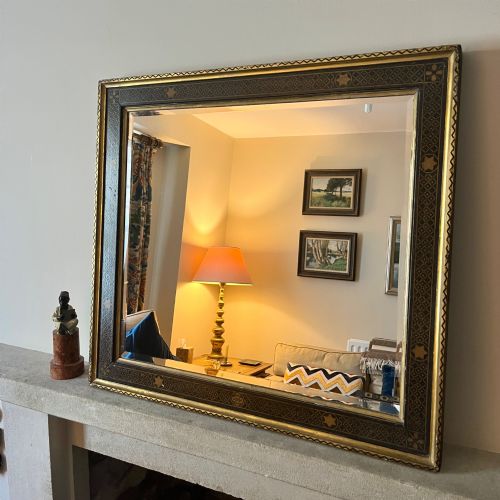
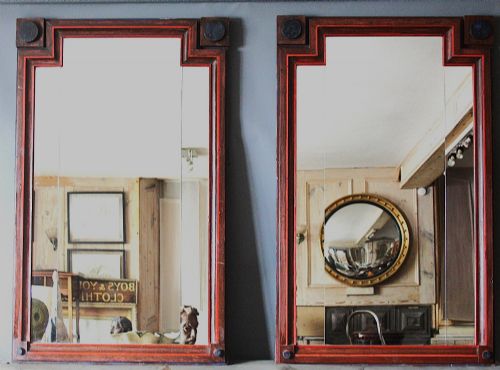
Carved wooden foundations receive layers of gesso to build up decorative moulding, curves, and arched tops before the application of paint and metallic leaf. Craftsmen utilise black paint alongside silvering, parcel-silvering, or gilding to highlight raised carving and create contrast on the frame.
Surviving pieces show finishes ranging from simple flat black paint to lacquer and ebonised treatments on wood. The underlying timber supports complex gesso ornamentation, particularly on grander overmantel mirrors from the nineteenth century.
Black Painted Wood Mirror Retail Price Guide 2026
Typical asking prices for black painted wood mirror among the pieces listed under this phrase on Sellingantiques today, from the lower quarter to the upper quarter. They describe what is for sale here now, not the wider market.
A fun house mirror survives among the selection, proving that nineteenth-century amusement parks occasionally infiltrated the antique market.
Assessing Quality and Execution
The finesse of the carved wood and the crispness of the gesso mouldings separate standard production from finer examples. Superior mirrors display deep, intentional carving beneath the black paint rather than simple surface decoration.
The integrity of the original paint and metallic leaf finish dictates the desirability of a piece. Hand-applied layers of black paint combined with genuine gilt or silvering show a depth and ageing process that lesser modern repainting lacks.
The Black Painted Wood Mirror Glossary
- Gesso
- A plaster-like mixture applied to wood frames to create a smooth surface for painting and intricate moulded relief work. It allows craftsmen to shape elaborate scrolls and borders before applying colour.
- Ebonised
- Wood treated with a chemical stain or black paint to imitate expensive ebony. This dark finish became particularly popular during the nineteenth century for decorative furniture and frames.
- Overmantel mirror
- A large glass designed specifically to hang above a fireplace mantelpiece. These pieces often feature wide proportions and substantial gesso frames to anchor the domestic hearth.
- Aesthetic movement
- A late nineteenth-century style prioritising visual beauty over narrative or moral function. Mirrors from this period often employ bold black finishes and Japanese-inspired motifs.
- Parcel-gilt
- A decorative technique where only specific raised parts of an object are covered in gold leaf. On black painted frames, this method creates a striking contrast between the dark background and metallic highlights.
Black Painted Wood Mirror: Frequently Asked Questions
How do I hang a heavy overmantel mirror?
Heavy overmantel mirrors require secure wall fixings distributed across multiple points to support the substantial weight of the timber and gesso frame. Professional installation into masonry or properly located studwork ensures the piece remains safe.
Because these frames often carry significant historical value, checking the original wooden backing and hanging loops before mounting is essential for long-term preservation.
Where should I place a black painted mirror?
A black painted mirror works effectively opposite a window to reflect natural light and open up darker corners of a room. The dark frame acts as a strong visual anchor against pale or boldly coloured walls.
In living spaces, positioning the mirror above a fireplace or a sideboard creates a traditional focal point that draws the eye upward and balances surrounding furniture.
How do I clean an antique painted frame?
Dust the carved wooden frame gently with a dry, soft brush to remove loose particles without disturbing delicate gesso or original paint surfaces. Avoid liquid cleaners and harsh chemicals, which can strip historic black paint or damage underlying metallic leaf.
Glass surfaces require a minimal amount of glass cleaner applied to a cloth rather than directly to the mirror, preventing moisture from seeping behind the plate or into the wooden joints.
What is the difference between Victorian and Edwardian mirrors?
Victorian mirrors tend to feature heavier proportions, elaborate gesso ornamentation, and dramatic combinations of black paint with heavy gilding or silvering. Pieces from this era often reflect revivalist tastes such as gothic or aesthetic styles.
Edwardian examples often display simpler lines, lighter frames, and smoother lacquer finishes, showing a shift towards more restrained domestic decoration and refined geometric forms.