






Black Painted End Table
A black painted end table brings dark lacquer and gilded detail beside a chair, offering a practical surface with distinct decorative character.
Black Painted End Table
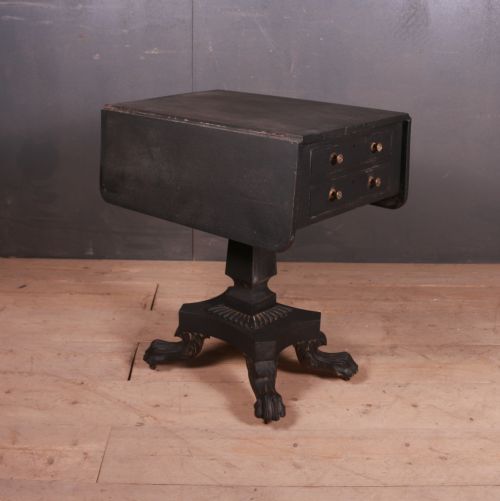
A black painted end table encompasses small occasional furniture, lamp tables, bedside surfaces, and nests of tables finished in dark lacquer, ebonised wood, or painted wood. These pieces emerge from periods spanning the nineteenth century, the Victorian era, and the early twentieth century.
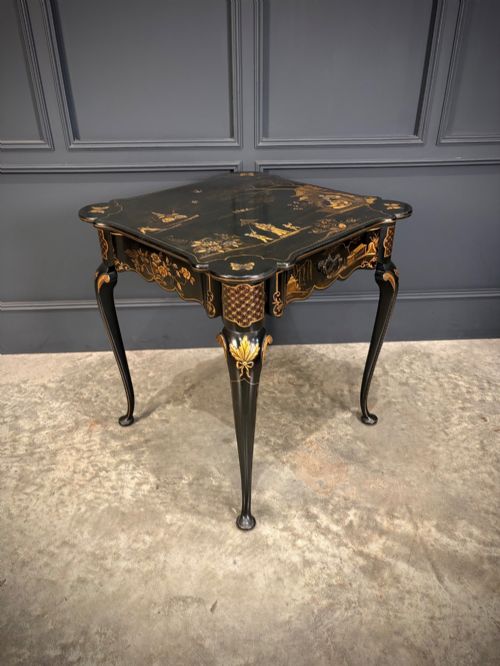
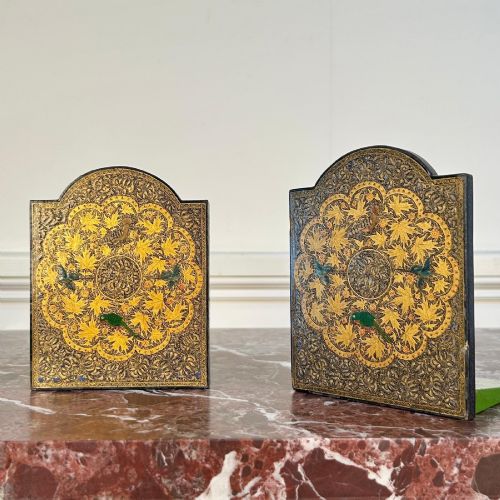
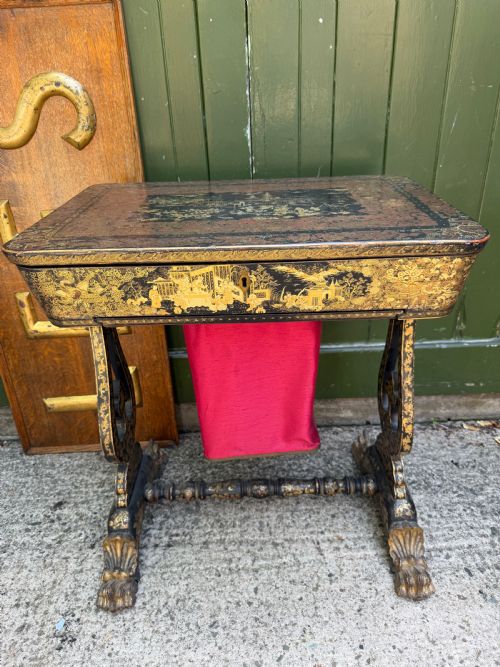
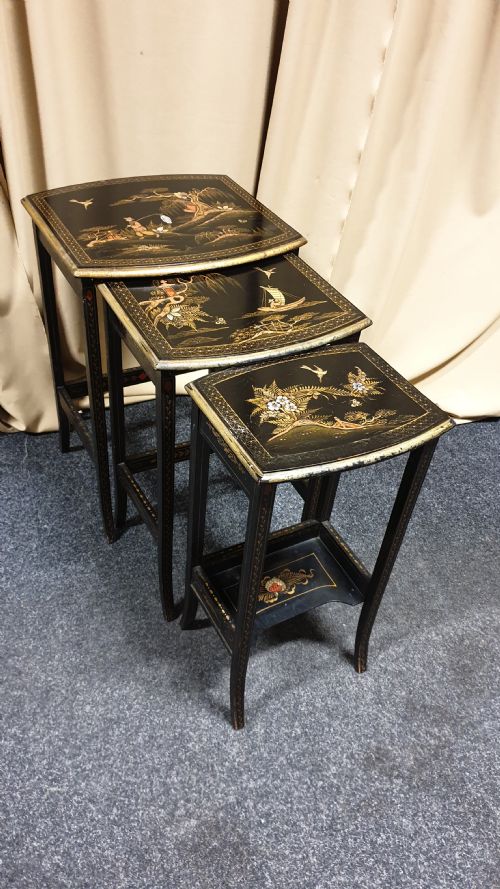
The styles appearing on this page lean heavily towards Chinoiserie and Kashmiri decorative traditions alongside Regency, Queen Anne, and French Provincial revivals. Buyers frequently encounter side tables, dropleaf designs, and nests of three tables decorated with gold leaf and oriental motifs.
How they were made
Construction relies upon traditional woodworking techniques applied to solid wood, papier-mâché, and lacquered surfaces. Artisans built structural forms using timber frames before applying layered black lacquer or paint.
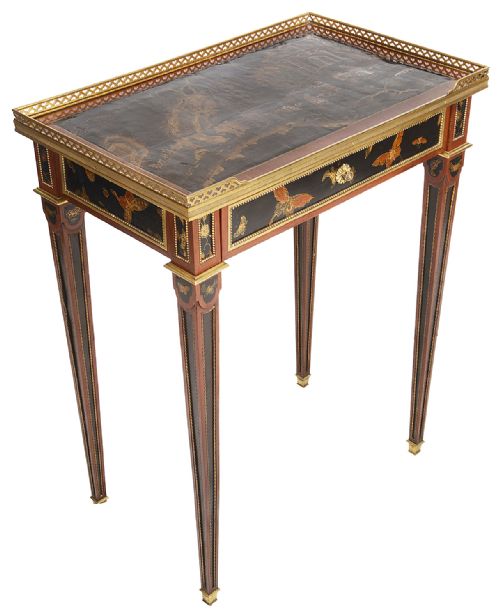
Decoration involves meticulous hand-applied gold leaf, gilding, and intricate painted scenes characteristic of Chinoiserie and Kashmiri craft. Brass accents occasionally complete the hardware and detailing of these occasional surfaces.
Black Painted End Table Retail Price Guide 2026
Typical asking prices for black painted end table among the pieces listed under this phrase on Sellingantiques today, from the lower quarter to the upper quarter. They describe what is for sale here now, not the wider market.
Listings feature items spanning the nineteenth century, Victorian era, and nineteen-twenty, utilising wood, lacquer, papier-mâché, and brass.
What varies in quality
The refinement of the hand-painted decoration and the depth of the lacquer finish dictate the standing of an individual table. Finer examples display crisp, detailed gilding and intricate pictorial scenes rather than simplified stencilling.
Structural integrity of the joints, the stability of nesting sets, and the preservation of the original painted surface determine the long-term character of the piece. Tables retaining their unblemished nineteenth-century finishes command greater attention from discerning collectors.
The Black Painted End Table Glossary
- Chinoiserie
- European artistic interpretation of Chinese and East Asian decorative motifs, prominent in furniture decoration. This style frequently employs gold figures, pagodas, and landscapes against a dark painted ground.
- Ebonised wood
- Timber treated with chemical stains or dark pigment to resemble expensive ebony. It provides a dense, uniform black surface common on nineteenth-century occasional furniture.
- Lacquer
- A durable resin finish applied in multiple thin layers and polished to a smooth sheen. It protects the underlying wood while creating a deep reflective surface.
- Nesting tables
- A set of graduated tables designed to fit neatly beneath one another when not in use. They offer flexible surface space in compact sitting rooms.
- Dropleaf table
- A table featuring hinged flaps on the sides that fold down to save space or lift up to extend the surface. This mechanism provides versatility for lamp placement.
Black Painted End Table: Frequently Asked Questions
Where should I place a black painted end table?
These compact surfaces sit comfortably beside armchairs, sofas, or beds where space is at a premium. Their dark finishes anchor neutral room schemes and provide a functional spot for lighting or books.
Because many examples incorporate delicate gilding, positioning them away from direct, harsh sunlight preserves the painted surface over time.
How do I care for antique lacquered furniture?
Dust surfaces gently with a soft, dry cloth to prevent scratching the delicate lacquer and gold leaf. Avoid harsh modern cleaning sprays, moisture, and chemical polishes.
Maintaining a stable room temperature prevents the underlying wood from expanding and protects the aged finish from cracking.
What is the difference between Chinoiserie and Kashmiri styles?
Chinoiserie reflects European interpretations of East Asian artistic traditions, typically featuring pagodas, figures, and landscapes rendered in gold leaf upon black or dark lacquer. Kashmiri decoration draws from Indian craft traditions, often incorporating dense floral patterns and vibrant colours.
Both styles utilise painted and lacquered wooden surfaces but produce distinctly different visual patterns.
Are nest of tables practical for daily use?
Nesting tables offer exceptional versatility in smaller spaces by providing multiple surfaces that occupy the footprint of a single small table. They can be separated when entertaining and tucked away neatly afterward.
Checking the stability of the joints ensures that frequent movement does not strain the antique timber frames.