



Black Marquetry Sideboard
A black marquetry sideboard brings serious presence to a room, combining dark ebonised surfaces with intricate inlay.
Black Marquetry Sideboard
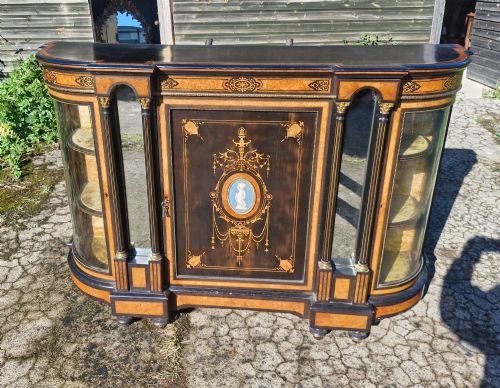
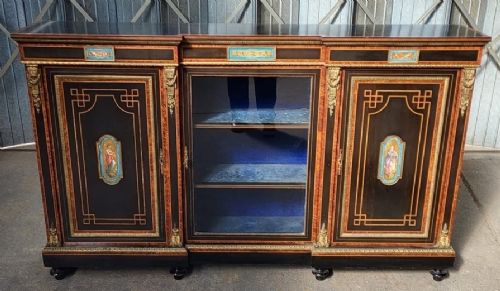
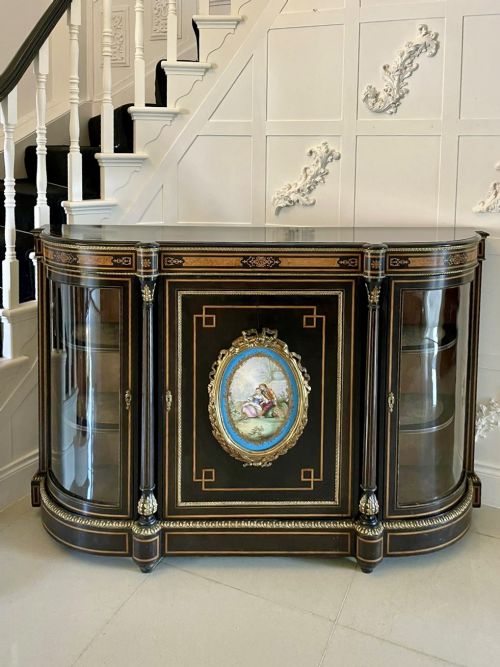
A black marquetry sideboard usually takes the form of a credenza or side cabinet, dating from the Victorian period or the nineteenth century. These items were built to anchor a dining room or formal parlour, offering generous display space and enclosed storage.
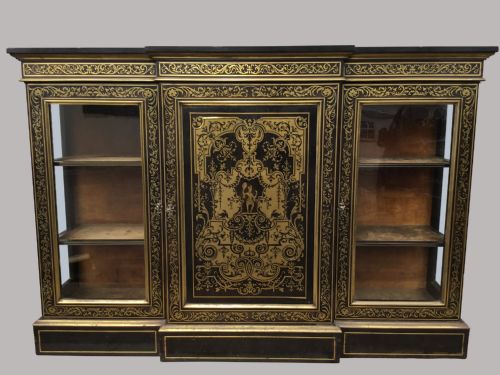
The versions met here range from English Victorian examples to French Napoleon III pieces, often featuring glazed central doors and curved bow ends. They combine architectural stature with elaborate surface decoration, making them central focal points in traditional interiors.
How they were made
Construction relies heavily on ebonised wood or ebony, providing a deep black ground that highlights contrasting details. Amboyna wood and tortoiseshell frequently appear within the marquetry panels, adding rich warmth and mottled texture.
Ornate mounts in ormolu and brass accent the corners and borders, while boullework incorporating brass and tortoiseshell creates dazzling geometric patterns. Selected examples feature porcelain plaques or pietre dura panels inset into the dark timber.
Black Marquetry Sideboard Retail Price Guide 2026
Typical asking prices for black marquetry sideboard among the pieces listed under this phrase on Sellingantiques today, from the lower quarter to the upper quarter. They describe what is for sale here now, not the wider market.
Listings span the Victorian era and the broader nineteenth century, showcasing French and English cabinet making traditions.
What varies in quality
The standard of a black marquetry sideboard rests on the precision of the inlay work and the crispness of the cast ormolu mounts. Finer pieces demonstrate seamless integration between the floral marquetry or boulle panels and the ebonised carcass.
Heavier architectural formatting, such as breakfront shapes or mirrored backs with glazed side cabinets, elevates the sophistication of the piece. The choice of secondary timbers and the depth of the polish also distinguish standard production from exceptional work.
The Black Marquetry Sideboard Glossary
- Ebonised
- Wood treated to imitate ebony, giving a dense, uniform black finish. This technique was widely utilised across nineteenth century cabinet making.
- Marquetry
- The art of applying pieces of veneer to a structure to form decorative patterns and pictures. It differs from inlay by being assembled on a template before being glued to the surface.
- Ormolu
- Gilt bronze ornamentation applied to furniture mounts and hardware. It provides a bright metallic contrast against dark woods.
- Boulle
- A type of marquetry using brass and tortoiseshell, popular in French furniture design. Named after the master cabinetmaker André Charles Boulle.
- Pietre dura
- An inlay technique using cut and fitted polished coloured stones to create images. It creates durable, highly colourful pictorial panels on luxury cabinets.
Black Marquetry Sideboard: Frequently Asked Questions
Where should I place a sideboard?
These cabinets suit dining rooms, grand hallways, or spacious living areas where their dark finishes and intricate details can command attention.
Ensure they sit away from direct sunlight to protect tortoiseshell and delicate wood veneers from fading.
How do I clean ebonised wood?
Dust regularly with a soft, dry cloth to prevent particulate buildup on the dark surfaces. Avoid harsh chemical cleaners that can strip the polished ebonised finish.
Use specialist wax sparingly to maintain the natural sheen of the timber.
What is a credenza?
A credenza is a low cabinet traditionally used for storing and serving food, which evolved into a display piece for porcelain and decorative objects during the nineteenth century.
Victorian versions frequently feature glass doors and mirrored backs to enhance light reflection.
How do I date a nineteenth century cabinet?
Examine the secondary timbers, construction methods, and hardware style to determine the likely decade of manufacture. French Napoleon III and English Victorian pieces often display distinct mounting techniques and veneer patterns characteristic of the period.
Compare the complexity of the brass boullework or floral marquetry against known design shifts of the era.