


Black Lacquer Trinket Box
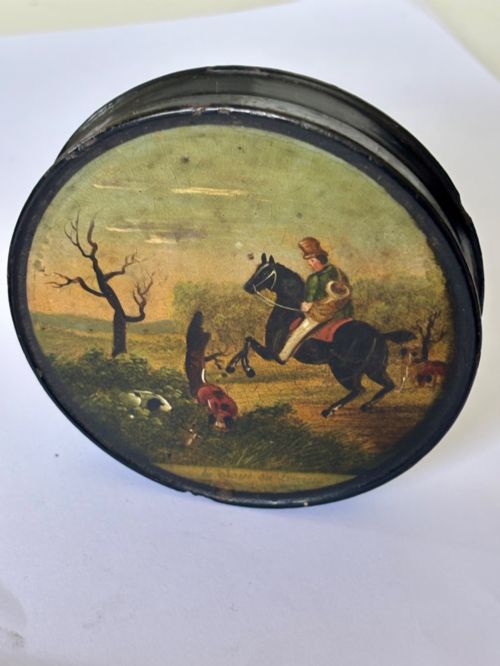
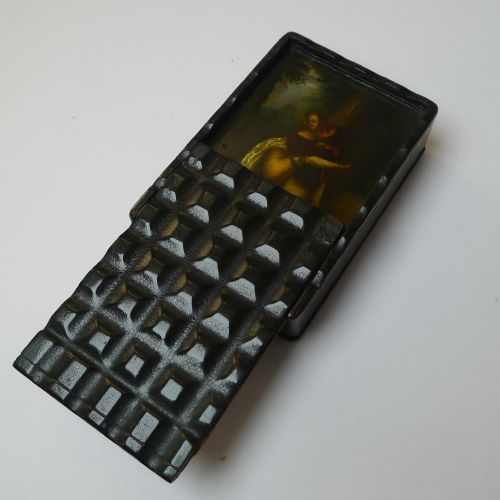
A black lacquer trinket box brings dark polished surfaces and hand-painted detail to a dressing table.
Black Lacquer Trinket Box
When you search for a black lacquer trinket box, you encounter small decorative containers intended for jewellery, snuff, stationery, or keepsakes. Most examples on this page are formed from papier-mâché or wood finished with dark lacquer, spanning periods from the Georgian era through the Victorian decades and into the twentieth century.
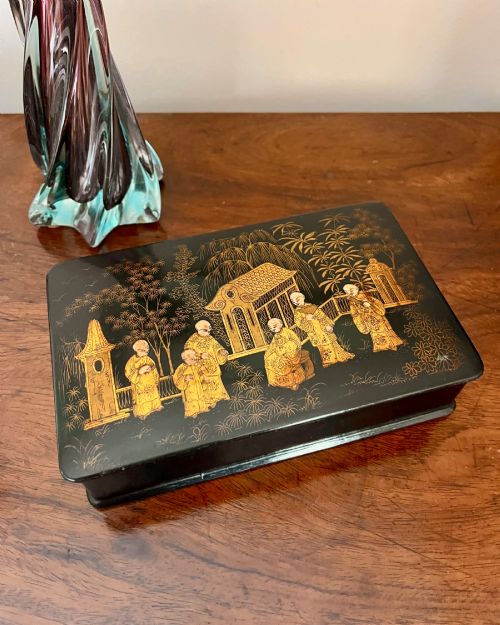
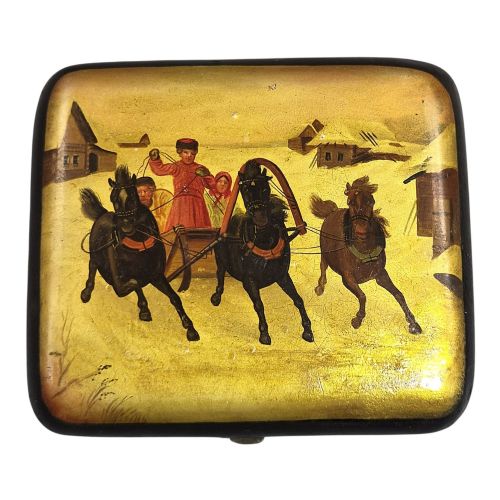
The assortment includes English penwork boxes, Japanese Meiji period pieces, Russian papier-mâché cigarette cases, and French snuff boxes. Formats range from simple pocket boxes to table cabinets and tea caddies, reflecting diverse domestic uses across European and Asian workshops.
How they were made
Maker construction relies heavily on papier-mâché or solid wood carcasses built to receive multiple layers of dark lacquer. Artisans built up smooth surfaces through successive coatings, providing a dark ground for subsequent decoration.
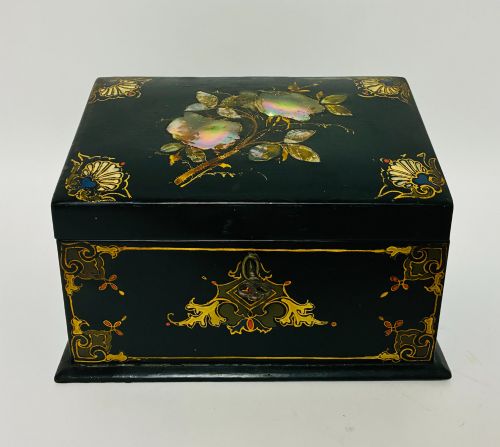
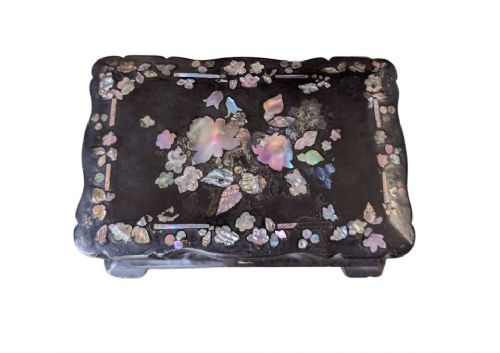
Surface ornament incorporates gold leaf, hand painting, and mother-of-pearl inlay. Penwork techniques and detailed pictorial scenes, including chinoiserie motifs and portraits, sit permanently within the hardened lacquer surface.
Current listings span the Georgian, Regency, Victorian, and 1920s periods, utilising lacquer, papier-mâché, mother-of-pearl, and brass.
What varies in quality
The fineness of the hand-painted detail and the crispness of inlaid mother-of-pearl separate standard containers from exceptional work. Precision in the penwork and the depth of the lacquer finish indicate the skill of the original maker.
Integrity of the papier-mâché or wooden structure, alongside the preservation of the original painted surface without extensive overpainting, dictates the standing of an individual box.
Vishnyakov Workshop·Stobwasser
The Black Lacquer Trinket Box Glossary
- Lacquer
- A durable resin finish applied in multiple layers to wood or papier-mâché to create a smooth, hard surface.
- Papier-mâché
- A composite material made from paper pulp or sheets of paper mixed with glue, pressed into moulds, and dried to form strong lightweight boxes.
- Chinoiserie
- European decorative style reflecting Chinese artistic influences, frequently seen in gold motifs on black grounds.
- Penwork
- Detailed surface decoration drawn with fine ink or paint pens, common on Regency boxes.
- Mother-of-pearl
- Iridescent inner layer of mollusc shell used for inlaid accents on Victorian boxes.
Black Lacquer Trinket Box: Frequently Asked Questions
What were small black boxes used for?
These containers held precious items including rings, necklaces, loose snuff, and calling cards. Owners kept them in parlours, on dressing tables, or carried pocket versions for daily use.
Their enclosed spaces protected delicate contents from dust, light, and handling while serving as decorative objects in domestic interiors.
How do I date a papier-mâché box?
Dating relies on observing the structural form, hinge types, and decorative styles recorded across different periods. Georgian and Regency pieces often display fine penwork, while Victorian examples frequently incorporate mother-of-pearl inlay.
Examining the interior linings and the wear patterns on the lacquer surface helps establish the manufacturing era relative to known historical periods.
How do I clean a lacquer box?
Maintenance requires only a soft, dry cloth to remove dust from the surface. Moisture and chemical cleaning agents can damage the delicate lacquer and painted decoration.
Keeping boxes away from direct sunlight and extremes of humidity preserves the finish and prevents the papier-mâché or wood from warping.
What is Japanese Meiji lacquer?
Meiji period Japanese pieces display traditional craftsmanship using techniques like gold takamaki-e to depict natural subjects such as cranes and birds of prey. These items reached Western markets during the late nineteenth century.
Their construction combines traditional Asian lacquer methods with forms adapted for international collectors of the period.