

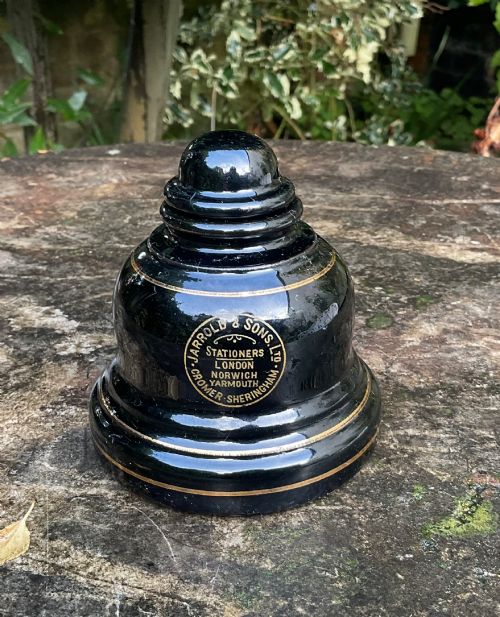


Black Inkstand
A black inkstand brings dark, dense timber and carved animal figures to the writing desk, holding pens and ink pots with solid Victorian weight.
Black Inkstand
A black inkstand sits upon the writing table as a functional desk accessory designed to hold one or more inkwells alongside pen rests and channels. When you search for a black inkstand, you encounter ebonised wood, dark marbles like Ashford marble, and deep papier-mâché alongside expressive carved timber pieces.
The Victorian era and the late nineteenth century produced many of these desk sets, particularly within the Black Forest carving tradition. Animal figures such as bears, dogs, cats, owls, and eagles dominate these figural wooden stands, often clutching logs or forming the main body of the inkwell.
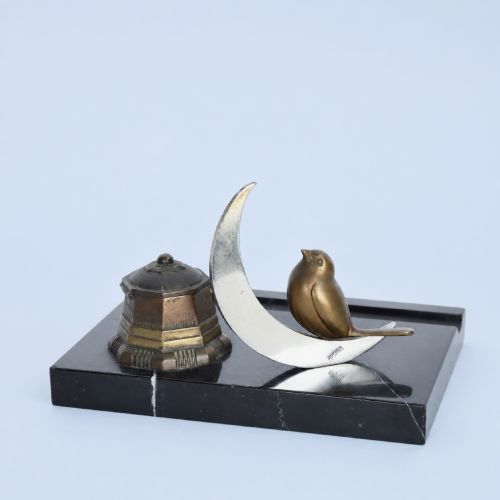
Later examples extend into the twentieth century with geometric Art Deco desk tidies and streamlined black marble bases paired with bronze or brass elements. Desk lamps, clocks, and pen stands occasionally accompany the central inkwell within these collections.
Materials and Construction
Makers utilised dense natural materials including linden wood, ebony, oak, and patinated or gilded bronze. Papier-mâché provided a smooth dark surface suitable for intricate hand-painted decoration and inlaid Boulle work.
Carvers shaped wood into lifelike animal forms and naturalistic scenes, while stonemasons polished Ashford marble and black marble to create smooth, heavy bases. Brass and bronze components formed hinged lids, collars, and decorative mounts fitted around glass or ceramic ink pots.
Black Inkstand Retail Price Guide 2026
Typical asking prices for black inkstand among the pieces listed under this phrase on Sellingantiques today, from the lower quarter to the upper quarter. They describe what is for sale here now, not the wider market.
Listings feature Victorian and Art Deco periods, utilising materials such as carved wood, brass, marble, and papier-mâché across various desk accessories.
Assessing Quality and Execution
The distinction between ordinary and superior pieces rests on the depth and animation of the carving, particularly in Black Forest wooden animal studies. Crisp detailing in the fur, feathers, and facial expressions of bears and dogs elevates a desk accessory from a simple utility object to fine sculpture.
The integrity of the materials and the completeness of the set dictate its standing. Original fitted glass ink pots, intact brass hinges, and well-preserved surface polishes without heavy repair indicate careful preservation of the original work.
Albert Marionnet·Zimmermann·Maison F. Mack
The Black Inkstand Glossary
- Black Forest
- A style of wood carving originating from the mountain region of Germany and Switzerland. It is recognised for naturalistic animal figures, particularly bears and dogs.
- Ebonised
- Wood treated with a dark stain or finish to imitate ebony. This dark surface creates a sombre, uniform appearance popular in Victorian desk accessories.
- Ashford marble
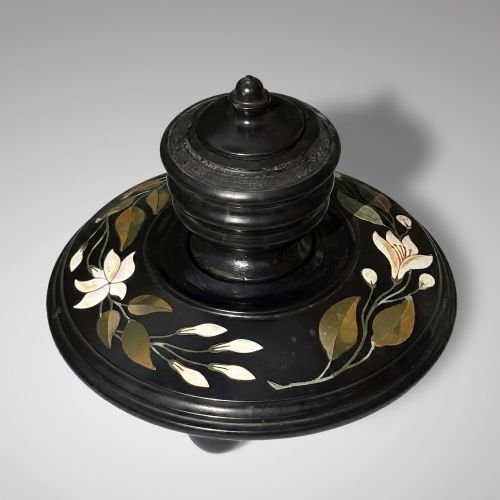
- A dark, compact limestone inlaid with coloured minerals in floral or geometric patterns. It originates from Derbyshire and provides a heavy, polished stone base.
- Papier-mâché
- A composite material made from paper pulp or layers of paper bound with glue, then pressed and dried. It forms a durable base for lacquer and hand-painted designs.
- Boulle
- A technique of marquetry using brass and tortoiseshell inlaid into dark wood. It appears on French desk sets from the nineteenth century.
Black Inkstand: Frequently Asked Questions
What is a black inkstand?
A black inkstand is a desk accessory made from dark materials like ebonised wood, black marble, or carved timber, designed to hold ink pots and pens.
These pieces served a central role on nineteenth-century writing desks, keeping writing implements organised and ready for use.
How do I date a Black Forest inkstand?
Dating relies on the style of the carving, the materials used, and the accompanying hardware such as brass hinges and glass ink inserts. Pieces from the late nineteenth century often feature realistic animal studies with glass eyes and detailed fur texturing.
Later twentieth-century versions transition into simpler geometric forms, particularly during the Art Deco period.
Were original glass ink pots always included?
Most inkstands were fitted with matching glass or ceramic inserts designed to hold the liquid ink securely within the wooden or stone housing.
Finding a stand that retains its original ink pots adds significantly to its completeness.
How should I care for an antique wooden inkstand?
Keep wooden and papier-mâché desk stands away from direct sunlight and excessive heat to prevent the wood from splitting or the finish from drying out.
Dust gently with a dry, soft cloth and avoid using harsh liquid cleaners on antique polished surfaces.