





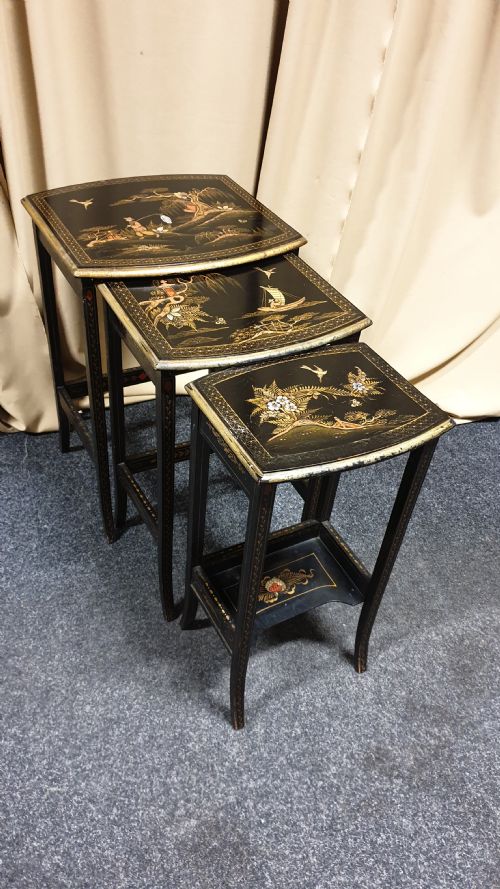


Black Gold Accent Table
A black gold accent table brings rich dark surfaces and gilded warmth into a room, offering both functional placement and striking visual contrast.
Black Gold Accent Table
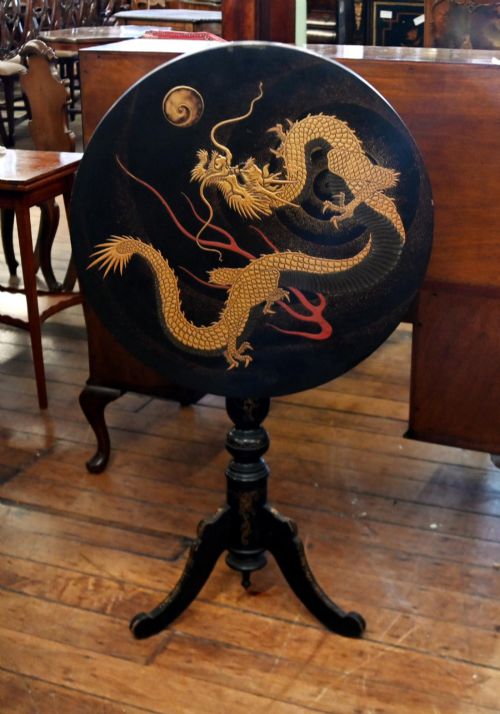
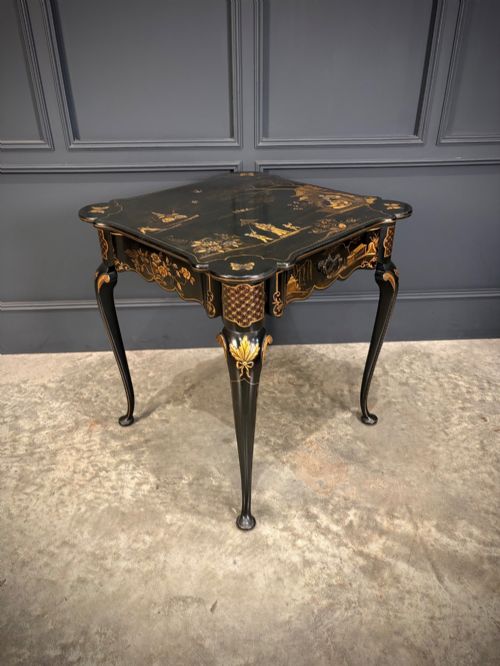
When buyers search for a black gold accent table, they encounter a range of dark-finished surfaces highlighted by gilt, gold leaf, or hand-painted details. The selections span diverse forms including occasional tables, nests of tables, tilt-top tables, tray tables, and work tables.
Most examples originate from the 19th century and the Georgian period, alongside pieces from the 1920s and 1930s. Styles lean heavily towards Chinoiserie, Regency, and Victorian aesthetics, often combining deep lacquer or ebonised wood with ornate gold ornamentation.
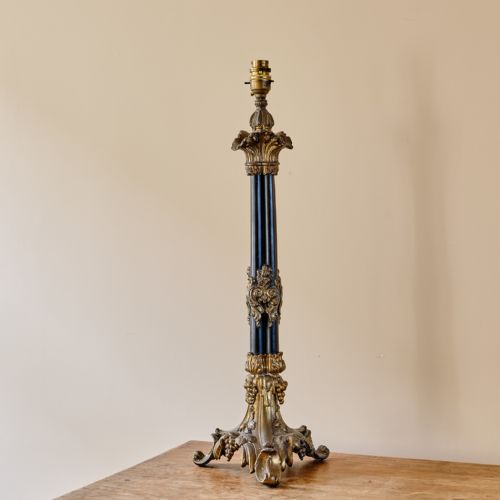
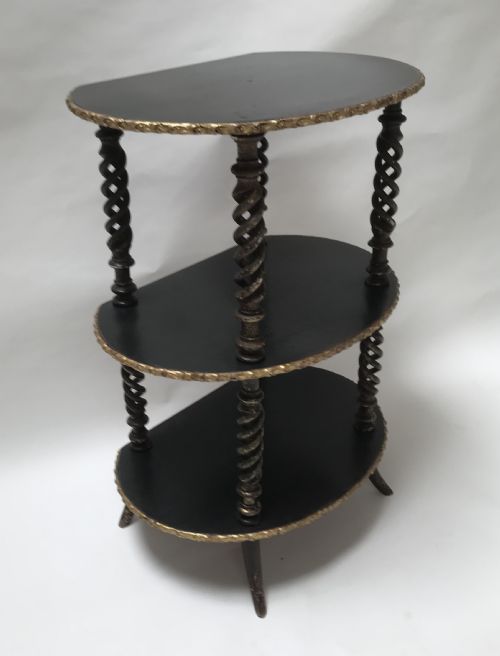
The inventory also includes related furnishings like whatnots, stools, and table lamps that share the same distinctive black and gold palette. Buyers are most likely to meet pieces finished in lacquer, gilt wood, or ebonised wood bearing classic ornamental motifs.
Materials and Construction Techniques
The foundational structures rely on wood, ebonised wood, and lacquered wood, providing sturdy support for decorative finishes. Artisans applied layers of lacquer to achieve deep, reflective dark surfaces that served as a base for intricate ornamentation.
Gold leaf and gilt are applied to highlight carved details, edges, and pictorial scenes. Hand painting often introduces complex Chinoiserie designs, while brass components and fabric elements appear in specific work tables and lamps.
Black Gold Accent Table Retail Price Guide 2026
Typical asking prices for black gold accent table among the pieces listed under this phrase on Sellingantiques today, from the lower quarter to the upper quarter. They describe what is for sale here now, not the wider market.
Even a humble sewing table gets the grand Chinoiserie treatment, proving that past generations believed mending socks deserved golden pagodas.
Assessing Quality and Craftsmanship
Quality rests in the depth of the lacquer finish and the precision of the hand-painted or gilded details. Superior pieces display crisp execution in their Chinoiserie motifs and careful integration of gold leaf onto the wood substrate.
The integrity of the underlying timber construction and the preservation of the original surface finishes distinguish finer examples. Finer workmanship shows in the balance of the proportions and the enduring stability of tables, nests, and stands.
The Black Gold Accent Table Glossary
- Chinoiserie
- European decorative style reflecting Chinese artistic influences, frequently featuring figures, landscapes, and pavilions rendered in gold on dark grounds. This style defines many of the lacquered tables and lamps.
- Ebonised wood
- Timber stained or painted to imitate ebony, creating a dense black surface. It provides a dark contrast for parcel gilt highlights.
- Gilt
- A thin layer of gold applied to wood, metal, or other surfaces for decoration. It brings reflective brightness to dark furniture.
- Lacquer
- A durable resin finish applied in multiple layers and polished to a smooth sheen. It forms the hard dark surface characteristic of many antique tables.
- Tilt-top table
- A table with a hinged top that can be tilted vertically when not in use. This form appears in Georgian Chinoiserie examples.
Black Gold Accent Table: Frequently Asked Questions
What periods do these black gold tables come from?
The available pieces span the Georgian era, the 19th century, and the Victorian period, alongside selections from the 1920s and 1930s.
These dates reflect traditional manufacturing periods for lacquered and gilded furnishings, encompassing both formal antique items and later decorative interpretations.
How do I style a black gold accent table at home?
These tables work effectively as occasional surfaces beside seating or as display stands for lamps and decorative objects. Their dark finishes and gold accents complement both neutral interiors and bolder colour schemes.
Position them where the reflective lacquer and gilt highlights can catch natural light to best effect.
What is the difference between lacquer and ebonised wood?
Lacquer involves building up smooth, hard resin layers to create a deep, glossy dark surface often decorated with painted scenes. Ebonised wood is standard timber treated with stain or paint to achieve a dense black appearance without the resin depth of lacquer.
Both materials provide the dark background essential for gold leaf and gilt decoration.
Are these tables suitable for everyday use?
Most occasional tables, nests, and tray tables are designed for normal daily placement of small items, books, or lamps. Care should be taken to protect antique surface finishes from excessive moisture and heat.
Gentle cleaning with a soft cloth helps preserve the integrity of the lacquer and gold leaf over time.