



Black Glass Tray
A black glass tray brings striking monochrome elegance to a table, offering a sleek surface for barware and desk accessories.
Black Glass Tray
When you search for a black glass tray, you encounter a focused selection of serving pieces and desk accessories spanning several decades. The forms range from mirrored drinks trays and lazy susans to cocktail sets and desk sets, with Art Deco examples frequently appearing alongside Victorian papier-mâché and carved wooden pieces.
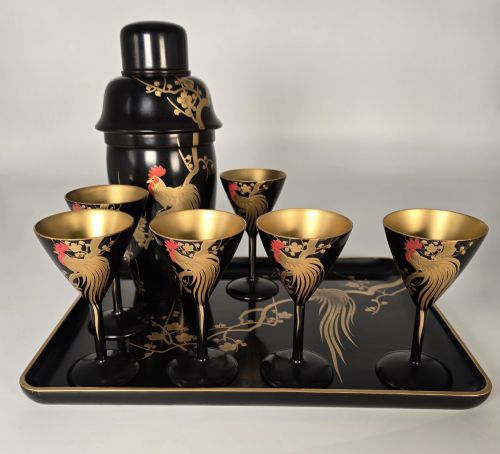
The selection also incorporates Japanese lacquerware from the Taisho period and Czech decanter sets mounted on matching glass bases. These objects bridge utilitarian function and decorative display, serving as functional table centrepieces or refined desk furniture.
Victorian examples rely heavily on ebonised wood and papier-mâché to achieve their dark aesthetic, whilst the 1930s pieces utilise mirror and black glass alongside chrome mounts. Each piece reflects the material preferences of its respective era, from the ornate carving of the nineteenth century to the geometric lines of the interwar period.
How they were made
Makers shaped these pieces using glass, wood, and papier-mâché as primary structural materials. Artisans often enhanced the dark surfaces with gold leaf, hand-painted details, or brass and chrome fittings.
Carved wooden items feature detailed hand-carved figures, such as bears or eagles, typical of Black Forest production. Glass components are frequently paired with mirrored bases or mounted in metal frames to create durable serving surfaces.
Black Glass Tray Retail Price Guide 2026
Typical asking prices for black glass tray among the pieces listed under this phrase on Sellingantiques today, from the lower quarter to the upper quarter. They describe what is for sale here now, not the wider market.
Several trays come attended by hand-carved bears and eagles, ensuring your morning post is supervised by vigilant wildlife.
What varies in quality
The distinction between standard examples and the finest pieces lies in the crispness of the surface finish and the precision of the metal mounts. Hand-painted decoration and delicate carving demand superior craftsmanship, which elevates the visual impact of the object.
Material combination also defines the hierarchy, where genuine mirror glass, heavy chrome, and intact gold leaf outrank simpler ebonised finishes. The integrity of the black glass or lacquered surface dictates the overall preservation and desirability of the tray.
Mosey
The Black Glass Tray Glossary
- Art Deco
- A design style spanning the 1920s and 1930s characterised by sleek geometric shapes, stylised motifs, and modern industrial materials.
- Papier-mâché
- A composite material made from paper pulp or layers of paper bound with glue, moulded and heavily varnished to resemble dark lacquer.
- Ebonised
- Wood treated with a dark stain or finish to imitate the dense, black appearance of genuine ebony.
- Taisho Period
- The era in Japanese history spanning from 1912 to 1926, known for a distinct blend of traditional craftsmanship and modern design influences.
- Lazy Susan
- A revolving tray placed on a table or countertop to assist in moving food or drinks easily between guests.
Black Glass Tray: Frequently Asked Questions
How do I clean a black glass tray safely?
Use a soft microfiber cloth and a mild glass cleaner to remove dust and fingerprints without scratching the surface. Avoid harsh abrasives that might damage any surrounding chrome, brass, or gold leaf.
Take care around hand-painted areas or delicate wooden edges, ensuring moisture does not seep into older joints or lacquered finishes during cleaning.
Can I use an antique tray for serving drinks?
Many of these pieces are sturdy enough for occasional service, particularly the mirrored Art Deco drinks trays and glass decanter sets. However, consider the delicate nature of nineteenth-century papier-mâché and carved wood before using them for heavy daily hospitality.
For regular entertaining, place glasses carefully to protect the vintage glass and metal surfaces from sudden impacts or excessive moisture accumulation.
How do I date a black glass or mirrored tray?
Examine the materials and mounting hardware to determine the era of manufacture, comparing chrome and mirror finishes against ebonised wood and papier-mâché. Art Deco pieces from the 1930s typically feature geometric styling and metal framing, whereas nineteenth-century items rely on hand-carving or layered paper composites.
Reviewing the accompanying object types, such as inkstands versus cocktail sets, also points toward the specific domestic habits of the period.
Where should I display a vintage tray at home?
Position a mirrored or black glass tray on a sideboard or cocktail cabinet to anchor a display of decanters and glassware. The reflective surface enhances the visual depth of barware and smaller desk accessories.
Alternatively, use a carved wooden or lacquered tray as a focal point on a coffee table to corral smaller decorative objects and create texture.