



Black Framed Needlework
Black framed needlework unites centuries of historic textile art within dark wooden and glass settings.
Black Framed Needlework
When buyers search for black framed needlework, they encounter historic textile art spanning the Georgian, Regency, Victorian, and seventeenth-century periods. These pieces encompass framed embroidery, silkwork pictures, woolwork panels, and samplers created by makers across England and the continent. Wall art and textile artwork form the principal categories seen on this page, preserved behind protective glass.
The most common examples combine silk or wool thread on linen grounds with dark wooden framing. Pieces range from formal eighteenth-century samplers and classical embroidered panels to nineteenth-century woolwork pictures of girls in gardens. Mezzotint black glass and verre églomisé surrounds frequently complement these historic textiles.
Early works demonstrate traditional needle skills through domestic employment scenes and portraiture. Later nineteenth-century items include Japanese silk textiles alongside British floral and figural compositions. Each framed panel retains the distinct characteristics of its original period of execution.
Materials and construction
Makers utilised fine silk, wool, and paper threads worked onto linen foundations to create pictorial and textual compositions. These textiles required patient hand stitching, employing various stitches to build texture and depth within the imagery. Completed works were then mounted behind glass to protect the delicate fibres from dust and atmospheric damage.
Frames incorporate wood, gilded wood, and giltwood, often finished with mezzotint black glass borders. Verre églomisé techniques appear on select surrounds, adding painted and gilded decoration directly to the glass panel. Original wooden backings and fixings frequently survive alongside these housing materials.
Black Framed Needlework Retail Price Guide 2026
Typical asking prices for black framed needlework among the pieces listed under this phrase on Sellingantiques today, from the lower quarter to the upper quarter. They describe what is for sale here now, not the wider market.
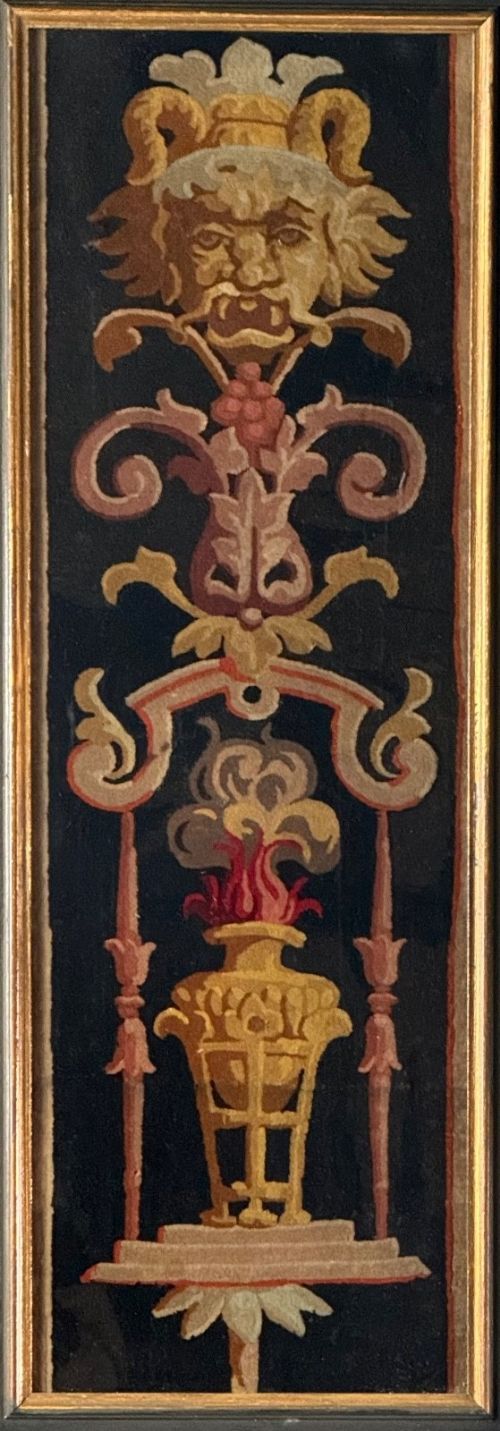
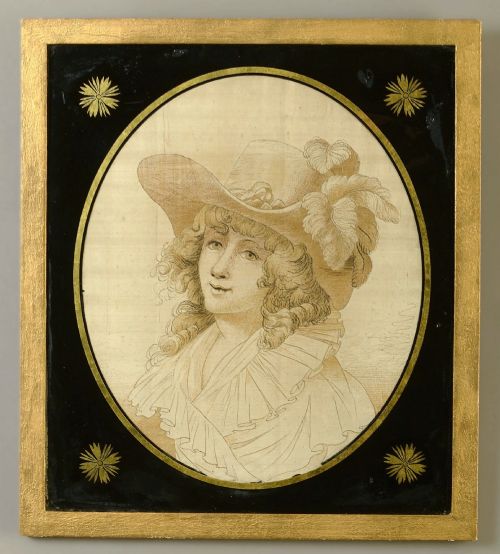
A fashionable young lady woven in silk shares space with mysterious continental masks and grotesques.
Assessing quality and preservation
Quality rests upon the fineness of the needlework execution and the preservation of the original materials. Superior examples retain vibrant silk and wool tones without significant fading or fibre loss across the textile ground. The tightness of the stitch work and the complexity of the design distinguish accomplished pieces from simpler domestic exercises.
The integrity of the housing contributes substantially to the overall standing of the object. Original frames featuring period black glass, mezzotint borders, and untouched giltwood enhance the historical authenticity of the textile. Evidence of later re-framing or replacement glass alters the original presentation of the artwork.
Iida Takashimaya Company
The Black Framed Needlework Glossary
- Sampler
- A piece of needlework produced as a demonstration or test of skill in various stitches. These often incorporate alphabets, numerals, and moral verses alongside decorative motifs.
- Silkwork
- Embroidery executed primarily using silk threads upon a woven ground. This technique allows for subtle tonal gradations and a lustrous finish.
- Verre églomisé
- A process of applying cold painting and metal leaf to glass. This produces an ornate decorative border surrounding the central picture.
- Mezzotint glass
- Dark glass borders used in framing to create a contrasting visual margin around the artwork. It typically enhances the depth of the central textile.
- Woolwork
- Embroidery created using wool yarns, commonly known as Berlin wool work when executed on canvas. These pieces display robust textures and rich colour palettes.
Black Framed Needlework: Frequently Asked Questions
What is black framed needlework?
Black framed needlework comprises historic embroidered textiles, samplers, and silkwork pictures housed within dark wooden or glass borders. These pieces date from the seventeenth century through to the Victorian era.
Such artworks preserve traditional hand stitching, featuring domestic scenes, portraits, and stitched alphabets protected behind glass.
How were antique samplers used?
Makers originally created samplers to practice needle skills, record patterns, and demonstrate literacy or domestic diligence. Young women stitched alphabets, numerals, and family records onto linen grounds.
Completed samplers were subsequently mounted and framed to hang as decorative or educational testaments within domestic interiors.
How should I care for silk embroidery?
Silk embroidery requires protection from direct sunlight to prevent the delicate natural fibres from fading and degrading over time. Keeping pieces away from excessive moisture and fluctuating temperatures preserves the textile.
Displaying works in their original sealed frames prevents dust accumulation and reduces physical handling of the vulnerable fabric.