



Black Forest Chamois Carving
A black forest chamois carving is a substantial wooden sculpture capturing alpine wildlife, prized by collectors for expressive detail and rich dark timber.
Black Forest Chamois Carving
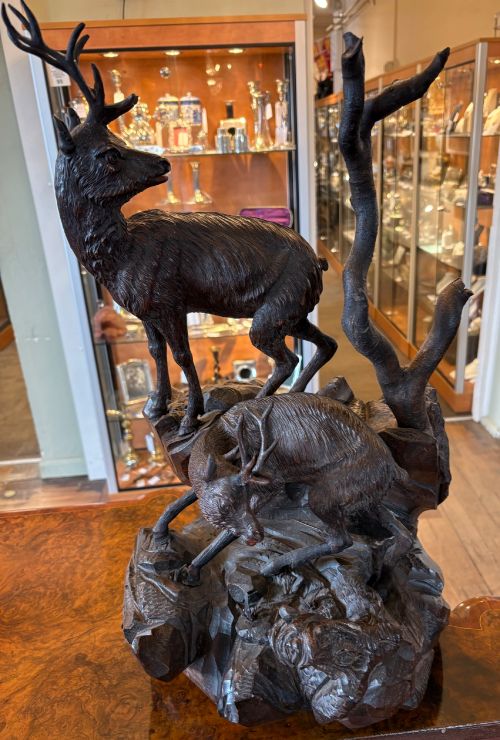
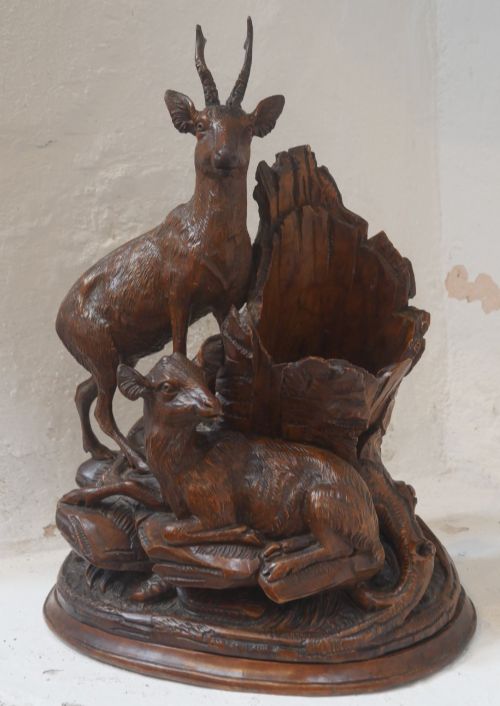
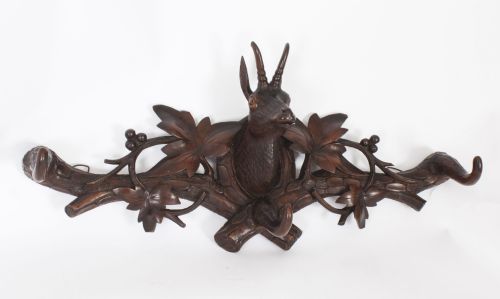
A black forest chamois carving brings the dramatic atmosphere of the nineteenth century alpine regions directly into domestic interiors through skillful animal sculpture. These works depict mountain goats, ibex, and deer with lifelike intensity, often integrated into functional household items like barometers, clocks, wall plaques, and coat racks.
The most common form encountered on this page is the nineteenth century wall plaque or hunting trophy, alongside figural studies of mountain goats and chamois. Pieces date predominantly from the Victorian era, spanning specific decades from eighteen seventy up to nineteen twenty.
Makers utilised familiar regional forms, transforming carved wood into utilitarian objects such as mantel clocks and coat hooks without losing sculptural fidelity. The regional style remains distinct across both decorative sculptures and larger architectural clock sets.
How they were made
Carvers shaped these sculptures from traditional timbers including walnut, linden wood, lime wood, and lindenwood. The choice of soft and hard woods allowed artisans to render complex fur textures, curled horns, and muscular forms with precision.
Makers incorporated functional elements like brass mechanisms for clocks and glass lenses for barometers directly into the carved wooden housings. Horn and inset glass eyes frequently completed the naturalistic appearance of the animals.
What varies in quality
The distinction between ordinary and exceptional carving lies in the anatomical accuracy and depth of relief achieved in the timber. Superior examples capture tension in the musculature and realistic texture in the coat rather than relying on generalized forms.
Integration of the carving with functional objects like clocks and barometers determines the sophistication of the piece. Master carvers ensured that structural housing for instruments enhanced rather than overwhelmed the animal subject.
The Black Forest Chamois Carving Glossary
- Black Forest
- A style of wood carving originating from the European mountain region, known for realistic animal sculptures and rustic furnishings. This tradition flourished during the nineteenth century.
- Chamois
- A species of goat-antelope native to European mountains, frequently depicted in nineteenth century alpine wood carvings. Sculptures often show them perched on rocky outcrops.
- Ibex
- A wild goat species with large recurved horns, commonly rendered in linden wood and walnut by nineteenth century carvers. These figures often appear paired with chamois.
- Linden wood
- A soft, pale timber favoured by carvers for its fine grain and ease of cutting detailed fur and facial expressions. It is frequently referred to in listings as lime wood.
- Mantel clock
- A household timepiece designed to sit on a fireplace shelf, often housed within elaborate carved wooden architectural cases depicting wildlife.
Black Forest Chamois Carving: Frequently Asked Questions
What is a black forest chamois carving?
These are nineteenth century wooden sculptures depicting alpine animals, often carved from walnut or linden wood.
Many pieces double as functional items like coat hooks, barometers, and clocks.
How do I identify a nineteenth century piece?
Look for traditional nineteenth century styling, Victorian period characteristics, and the use of authentic timbers such as lime wood and walnut.
Fittings like brass clock movements and glass barometers also help indicate the era.
Where were these carvings made?
They originated in the European mountain regions associated with the traditional Black Forest wood carving industry.
Craftsmen produced these animal studies and functional plaques during the Victorian period.
How were these wooden items used?
They served as decorative sculptures, wall plaques, and hunting trophies to bring an alpine aesthetic into homes.
Many combined art with utility, functioning as hat racks, coat hooks, and mantel clocks.
What materials appear in these carvings?
Carvers utilised woods such as walnut, linden wood, lime wood, and Lindenwood for the main animal figures.
Details often incorporated natural horn, glass, and brass hardware for clocks and barometers.