





Black Forest Carved Clock
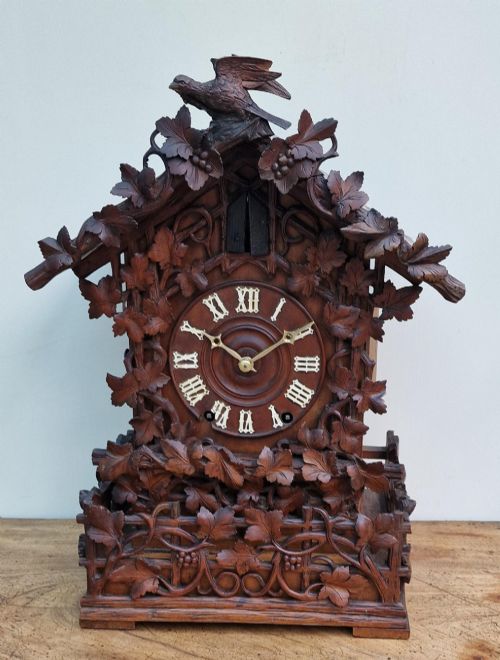
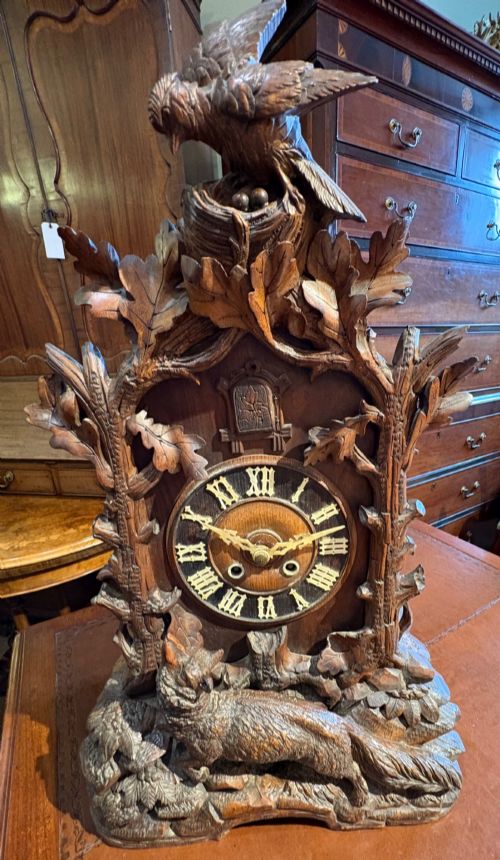
A black forest carved clock brings woodland life into the home through deep carving, swinging birds and rich walnut timber.
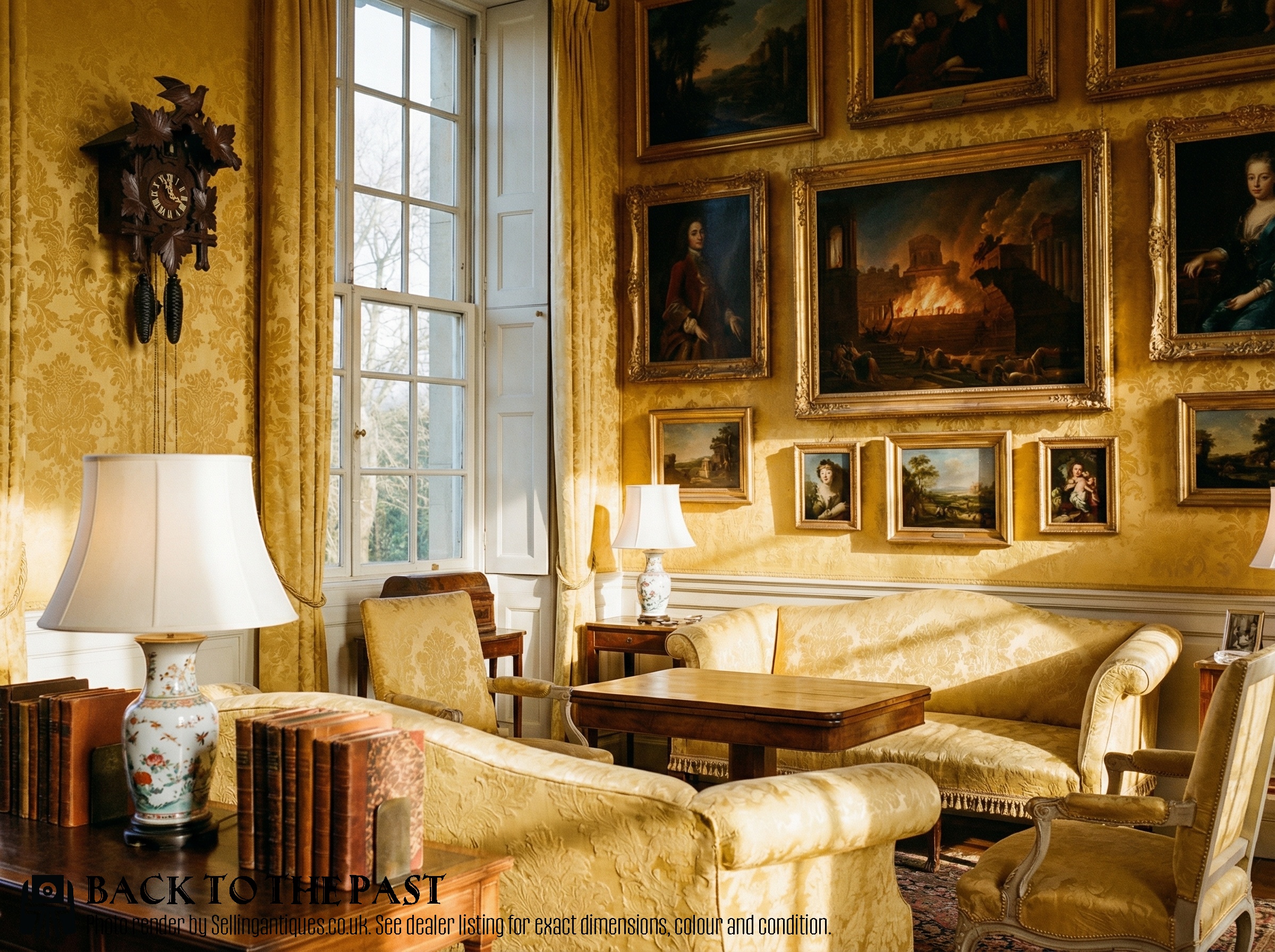
Black Forest Carved Clock
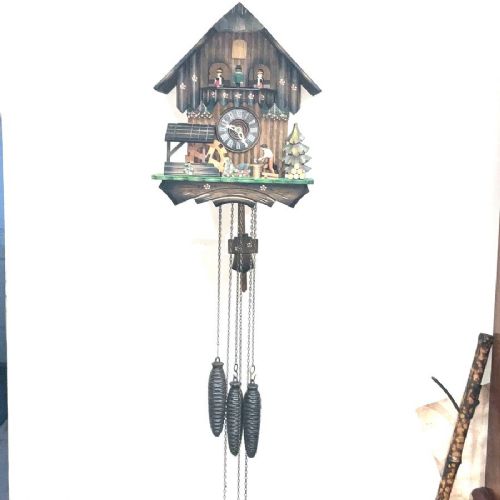
A black forest carved clock is a mechanical timepiece shaped by Swiss and German regional woodworkers, taking the form of wall clocks, mantel clocks and longcase clocks. You will most frequently encounter nineteenth-century wall-hanging cuckoo clocks featuring rich foliage and animal motifs.
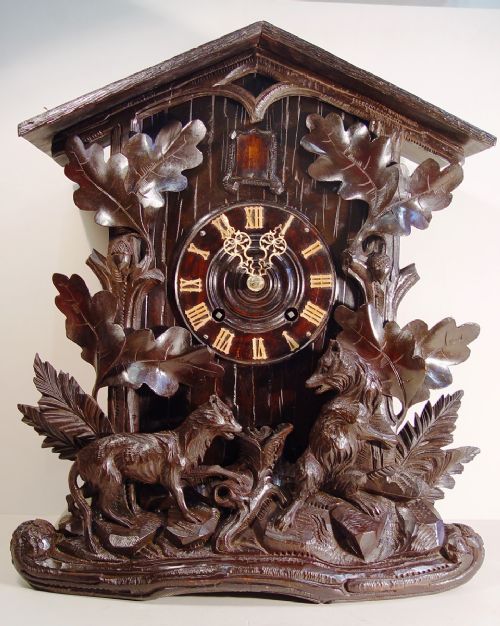
The objects span varied nineteenth-century decades as well as later interpretations, drawing upon French Rococo, Art Nouveau and Art Deco styles alongside traditional woodland iconography. Makers rendered birds, mountain goats and bears in deep relief around white enamel or ceramic dials.
Beyond standard timekeepers, the selection encompasses mechanical musical automata and aneroid barometers housed within the same carved wooden architecture. These items range from domestic wall pieces to monumental mantel clock sets.
Distinctions in craftsmanship and design
The depth and animation of the carving separate standard production from superior examples, with finer pieces displaying expressive animals and intricate undercut foliage rather than shallow stamping. The complexity of the movement, such as twin fusee mechanisms or added musical automata, elevates the engineering standard.
Material selection also dictates overall merit, as dense walnut and pale linden wood retain sharp detail better than softer pines. The cohesion between the carved case and the dial determines the visual harmony of the finished object.
Black Forest Carved Clock Retail Price Guide 2026
Typical asking prices for black forest carved clock among the pieces listed under this phrase on Sellingantiques today, from the lower quarter to the upper quarter. They describe what is for sale here now, not the wider market.
Listings feature clocks spanning the nineteenth century through to the 1950s, constructed from walnut, oak, brass and linden wood.
Johann Baptist Beha·Bergen & Co·Lenzkirch
The Black Forest Carved Clock Glossary
- Automaton
- A mechanical figure that moves automatically during a musical sequence or the striking of the hour. These figures often include cuckoo birds or carved animals.
- Aneroid Barometer
- An instrument that measures atmospheric pressure without using liquid mercury, frequently mounted in carved wooden frames matching the clock styles.
- Twin Fusee
- A clock movement mechanism using cones and chains or cords to equalise the pull of the mainspring as it unwinds, ensuring accurate timekeeping.
- Carillon
- A set of tuned bells or metal rods played by a mechanical cylinder to produce multiple melodies inside the clock case.
- Linden Wood
- A pale, fine-grained timber favoured by carvers for its uniform texture and responsiveness to intricate hand tools.
Black Forest Carved Clock: Frequently Asked Questions
How do I wind a cuckoo clock?
Wind the clock by gently pulling down the chains to lift the hanging weights back towards the base of the case. Take care not to pull the chains off their internal sprockets while doing so.
For spring-driven models, use the designated winding key in the dial holes, turning slowly until resistance is felt. Avoid over-winding to protect the internal brass mechanics.
What wood was used for these clocks?
Carvers primarily utilised walnut, linden wood, oak and pine depending on the workshop and period. Linden wood offered a soft, uniform grain for deep relief, whilst walnut provided a darker, durable finish.
Some pine pieces received dark stains to mimic richer timbers. The choice of material dictated the sharpness of the carved foliage and animal details.
How do I date a black forest clock?
Examine the movement style, dial materials and case design to narrow down the decade of production. Nineteenth-century examples often feature hand-carved walnut cases with ceramic or enamel dials and mechanical brass movements.
Later pieces from the twentieth century occasionally incorporate Art Deco or Art Nouveau geometric lines alongside traditional woodland motifs. Maker signatures stamped on the back plates also help establish chronology.
Where should I hang a wall clock?
Mount the clock on a sturdy interior wall capable of supporting the weight of the timber case and hanging metal weights. Avoid spaces subject to dampness or direct sunlight to protect the wooden finish and internal brass.
Ensure the wall is flat so the pendulum swings freely without catching against the back panel. Proper plumb alignment is essential for reliable timekeeping and consistent cuckoo operation.