

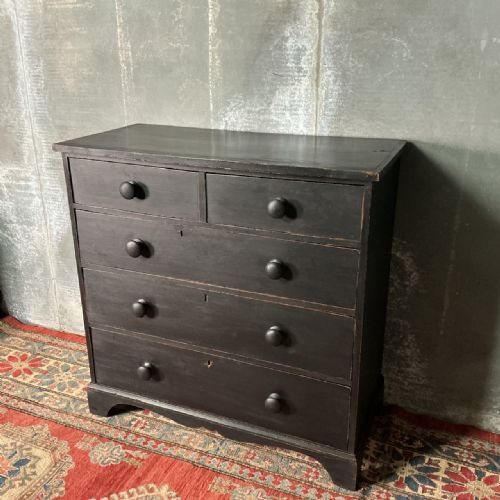
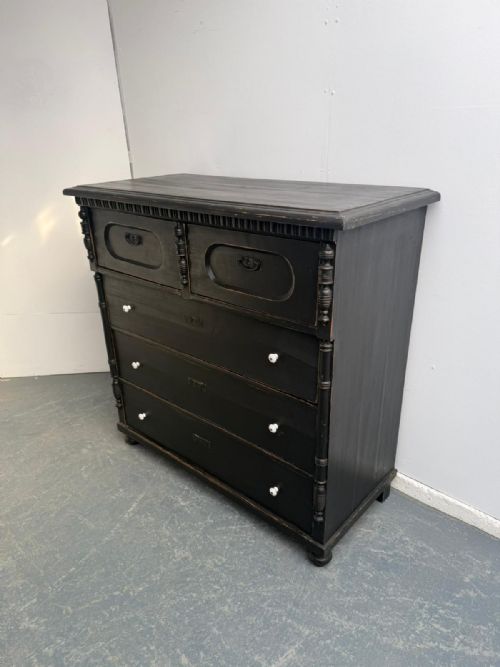
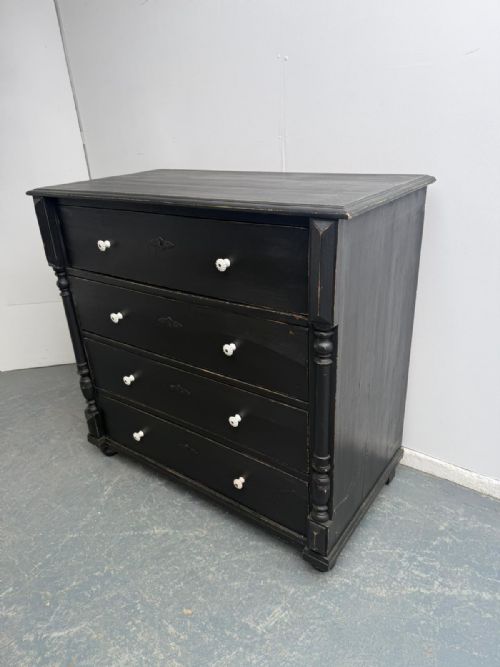


Black Commode Chest
A black commode chest brings striking presence and practical storage to a room through dark finishes and classic proportions.
Black Commode Chest
A black commode chest represents a versatile category of storage furniture encompassing continental commodes, English chests of drawers, and regional painted pieces. When exploring a black commode chest, buyers encounter items spanning from the Georgian and Regency eras through the Victorian period and into the twentieth century.
Materials and construction methods
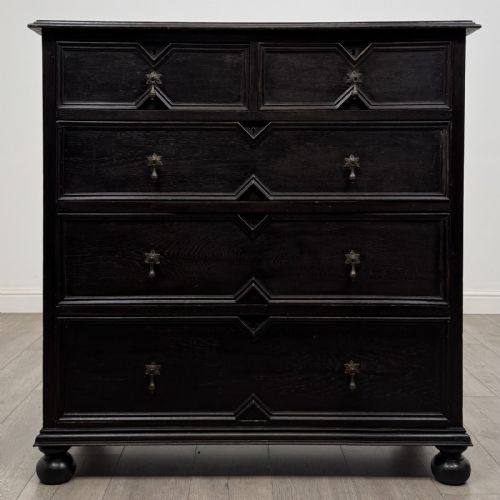
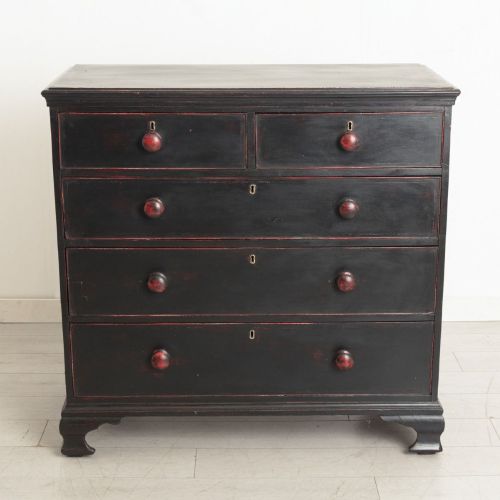
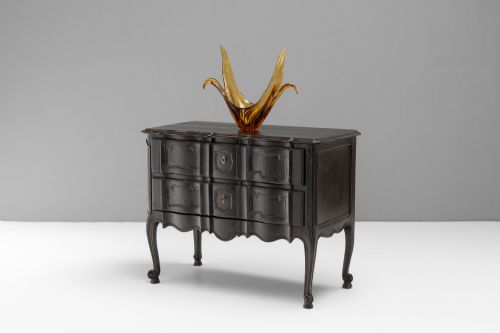
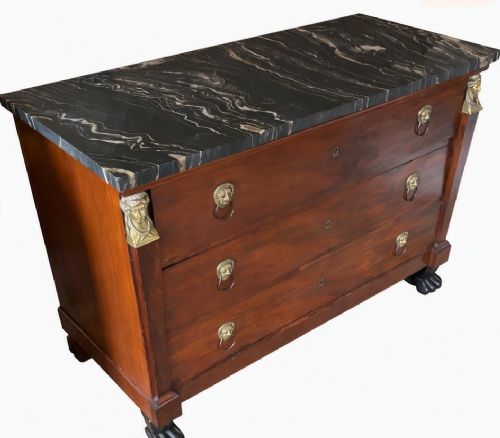
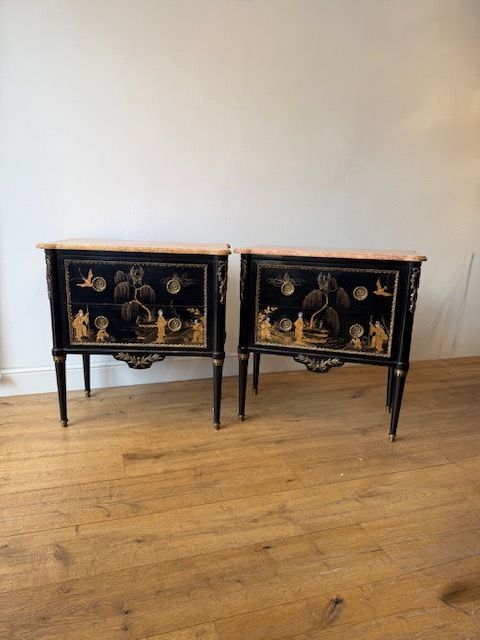
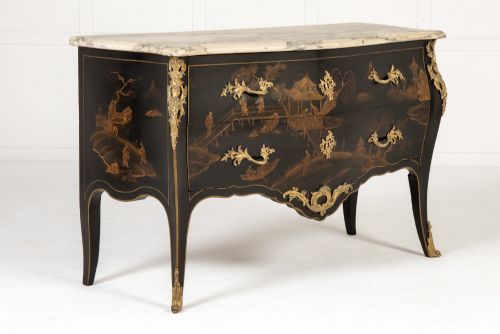
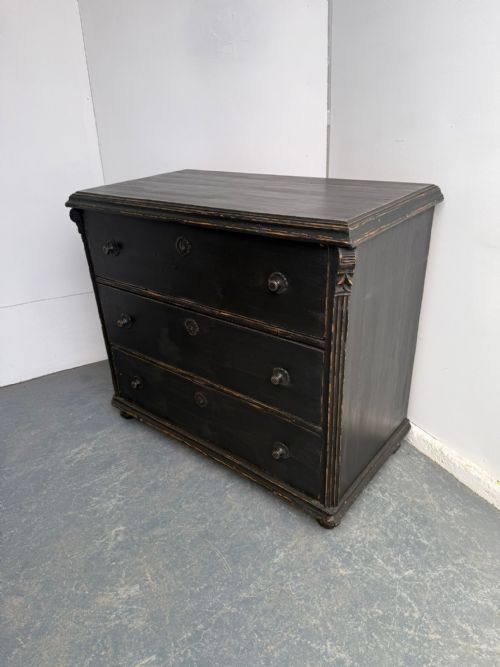
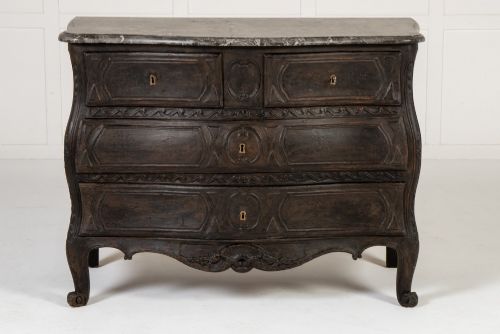
Construction relies upon traditional timber foundations such as oak, pine, and mahogany, shaped into serpentine, bow, or bombe profiles. Surfaces receive dark finishes including ebonisation, black paint, or Japanned lacquer, sometimes complemented by marble tops.
Mounts and hardware incorporate brass and ormolu details to accent the dark woodwork. Joinery follows period standards, utilising solid timbers and carcase construction suited to heavy storage use.
Black Commode Chest Retail Price Guide 2026
Typical asking prices for black commode chest among the pieces listed under this phrase on Sellingantiques today, from the lower quarter to the upper quarter. They describe what is for sale here now, not the wider market.
Listings feature pieces utilising pine, oak, mahogany, marble, brass, and ormolu across several centuries.
Distinctions in craftsmanship
Quality reveals itself in the harmony of the proportions and the crispness of carved or applied details on the carcase. Superior pieces display refined surface finishes, whether through deep ebonisation or well-preserved historical paint.
The execution of curved forms, such as serpentine fronts and bombe sides, demonstrates the maker's skill. Finer examples integrate quality metal mounts and well-fitted drawers that operate smoothly within the frame.
The Black Commode Chest Glossary
- Bombe
- A bulging, outward-curving chest profile popular in continental furniture design. This swelling shape requires advanced woodworking skill to construct successfully.
- Ebonisation
- The process of treating timber, often fruitwood or mahogany, to imitate solid ebony. It creates a deep, uniform dark surface finish.
- Japanned lacquer
- European imitation of East Asian lacquerwork using layered varnishes and decorative motifs. It appears frequently on decorative commodes.
- Serpentine
- A furniture front featuring a gentle undulating curve with a convex centre flanked by concave sides. This shape adds movement to case pieces.
- Ormolu
- Gilt-bronze mounts applied as decorative highlights on period furniture. These metallic elements punctuate the dark wooden surfaces.
Black Commode Chest: Frequently Asked Questions
Where should I place a black commode chest?
A black commode chest suits living areas, bedrooms, or hallways where strong visual contrast is desired. Its dark finish anchors a room while providing functional surface space and drawer storage.
Ensure adequate clearance for drawers and doors, particularly with bombe or serpentine profiles that project further into the room than standard flat-fronted chests.
How do I care for painted or ebonised wood?
Dust surfaces regularly with a soft, dry cloth to prevent accumulation. Avoid harsh chemical cleaners that can degrade historical paint finishes or ebonised treatments.
Keep wooden furniture away from direct heat sources and strong sunlight to protect the finish from drying, fading, or cracking over time.
What is the difference between a commode and a chest of drawers?
The term commode typically denotes a low, decorative French or continental cabinet with drawers or doors, often featuring elaborate shaping. A chest of drawers more broadly describes British and regional case furniture designed primarily for vertical storage.
In practice, overlapping terminology means both types function effectively for household storage while offering distinct aesthetic profiles.
How can I tell the period of a black commode chest?
Examine the structural timbers, construction joints, and hardware style to establish a baseline era. Georgian and Regency pieces show distinct linear or classical proportions, whereas Victorian examples often utilise pine foundations with heavy painted finishes.
Surface treatments like ebonisation or Japanned lacquer also provide clues to the manufacturing decade, aligning with revival movements or specific regional traditions.