

Black Cast Iron Furniture
Black cast iron furniture brings heavy Victorian utility and garden elegance together, offering sturdy metalwork built to endure.
Black Cast Iron Furniture
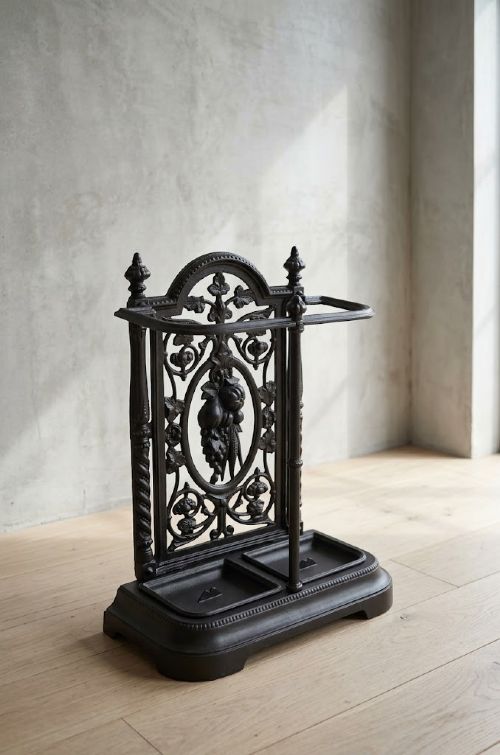
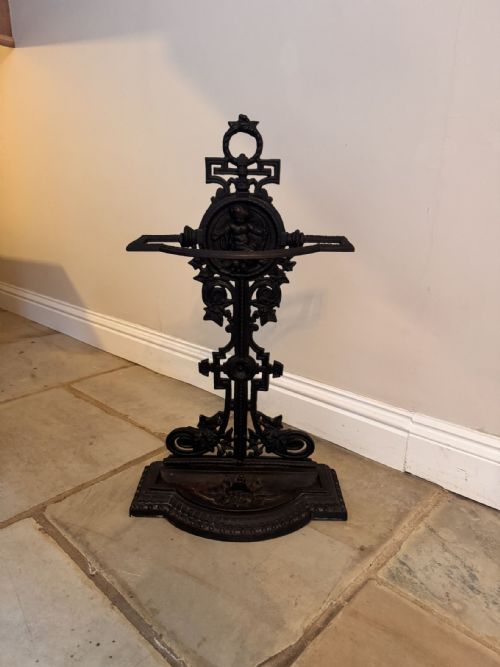
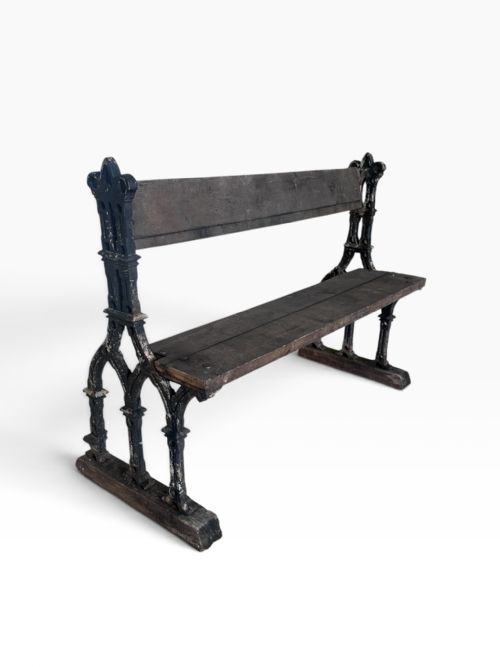
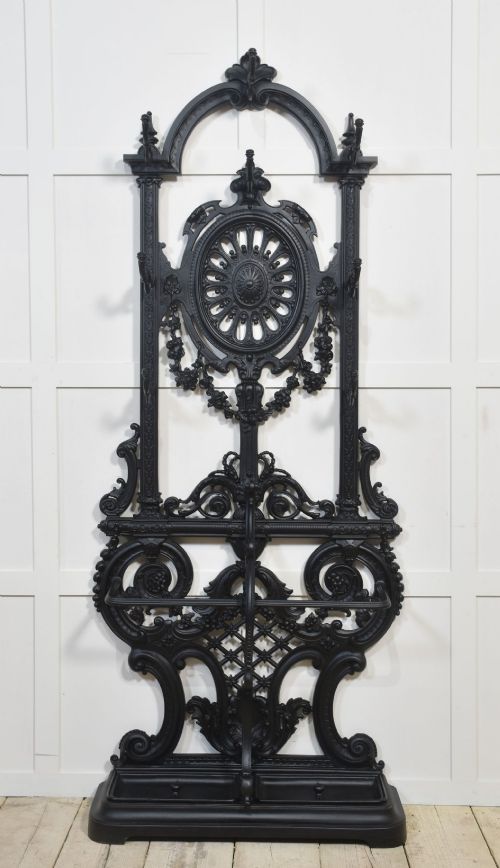
When you search for black cast iron furniture, you encounter robust items shaped primarily in the nineteenth century, including garden benches, umbrella stands, hall stands, and fire grates. The Victorian period dominates these selections, often bringing heavy metal frames combined with marble, brass, or timber.
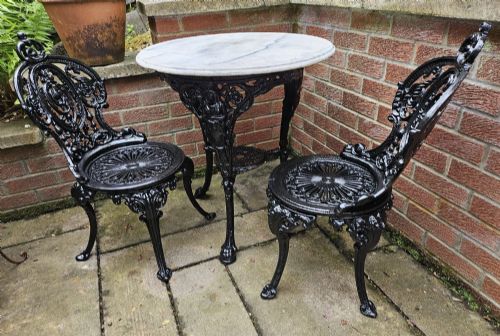
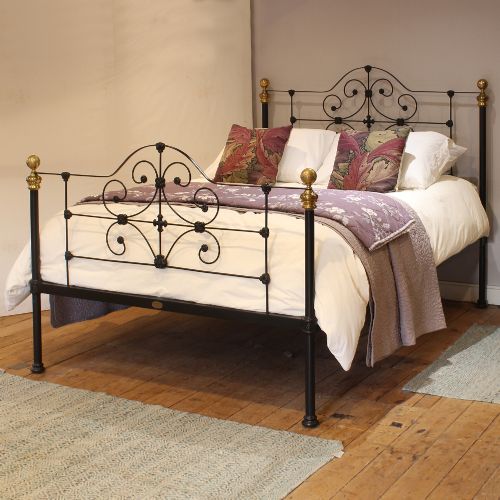
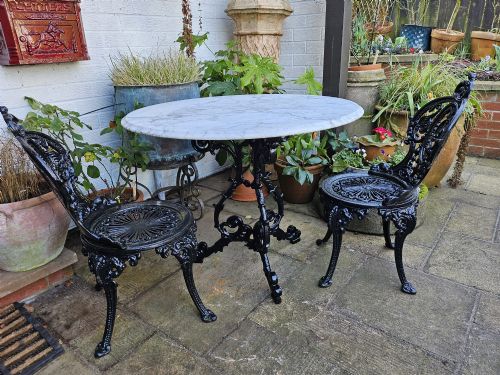
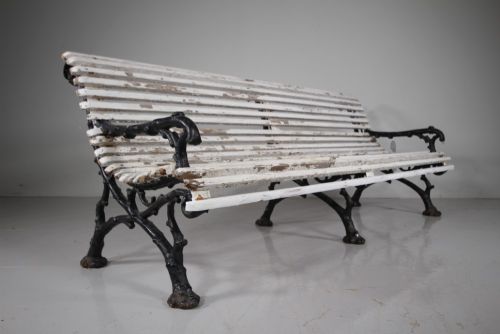
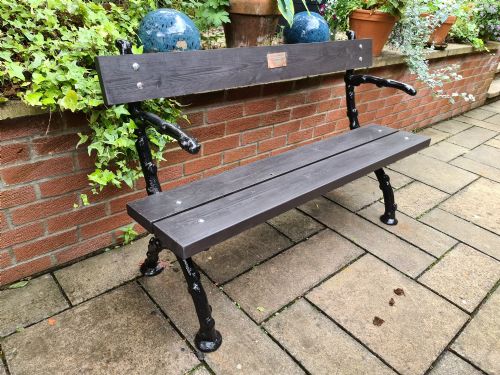
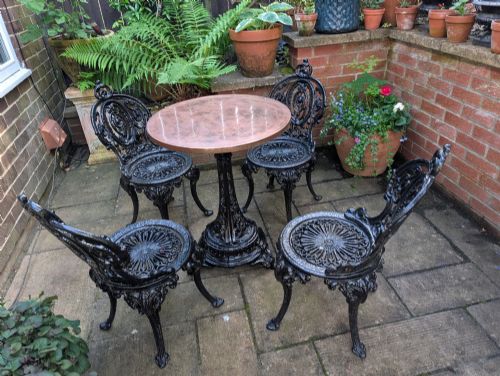
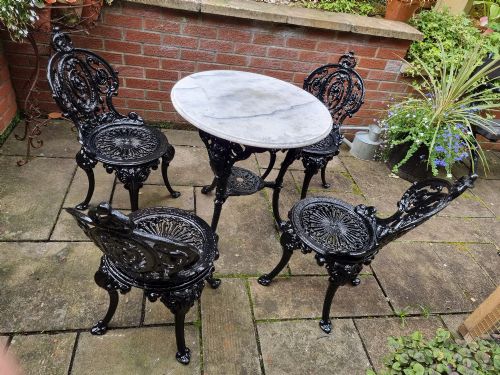
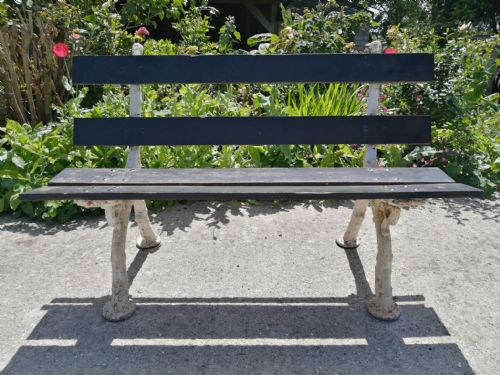
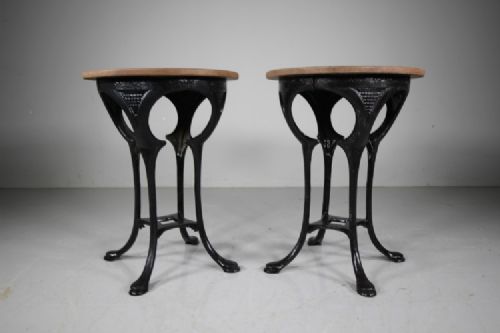
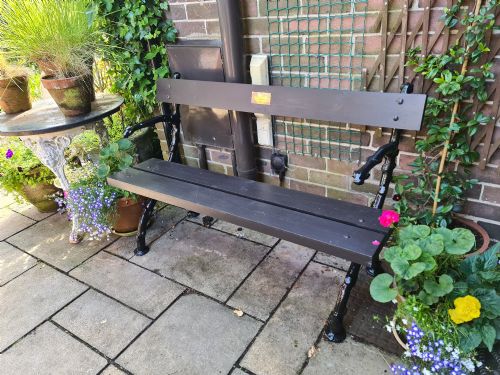
Garden seating appears frequently on this page, ranging from rustic patterns and faux bois designs to complete bistro sets with marble tops. Interior pieces also surface, such as hall stands, beds, and fire grates utilising cast iron alongside wrought iron and copper.
How they were made
Foundries poured molten iron into sand moulds to create intricate patterns, structural frames, and decorative panels for benches and umbrella stands. Manufacturers frequently combined this cast metal with wrought iron supports, brass details, timber tops, and marble slabs.
Makers applied dark surface coatings to protect the metal and create the characteristic finish seen on nineteenth-century grates, furniture bases, and hall stands.
Black Cast Iron Furniture Retail Price Guide 2026
Typical asking prices for black cast iron furniture among the pieces listed under this phrase on Sellingantiques today, from the lower quarter to the upper quarter. They describe what is for sale here now, not the wider market.
Some nineteenth-century makers cast solid iron lion paws to support heavy coffee tables, ensuring even fierce beasts held up tea.
What varies in quality
The crispness of the cast ornamentation dictates the standard of the piece, separating finely detailed Victorian moulding from softer, later reproductions. Superior examples display sharply defined patterns, such as faux bois bark or Gothic tracery, without distortion in the heavy iron.
The integrity of the structural components and associated materials also determines value, particularly where cast iron frames join with marble tops, timber slats, or brass fittings.
Coalbrookdale·Archibald Knox·Maple & Co.·Chubb·Waring & Sons
The Black Cast Iron Furniture Glossary
- Cast iron
- Iron alloy poured into a mould while molten to produce rigid furniture components and decorative grates. This material forms the durable backbone of Victorian garden benches and hall stands.
- Faux bois
- Imitation of wood grain moulded directly into the iron surface. Makers utilised this technique extensively on nineteenth-century garden seats to mimic natural timber.
- Fire grate
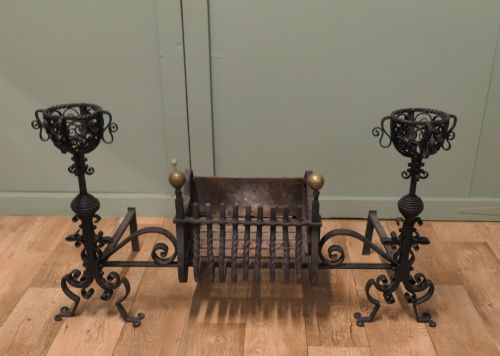
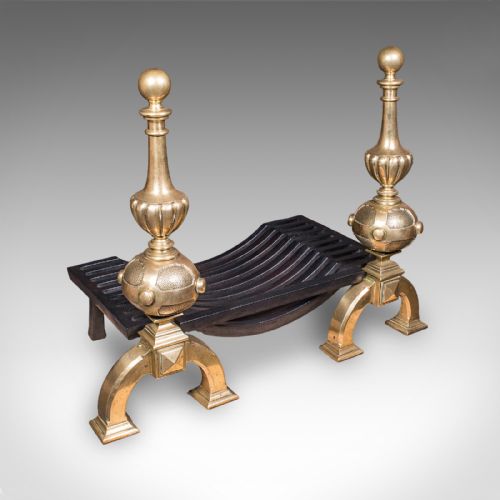
- Metal basket designed to hold fuel within a fireplace. These utilitarian items often incorporate cast iron frames and brass andirons.
- Hall stand
- Tall piece of furniture placed in an entrance hallway for coats, hats, and umbrellas. Examples in this category employ heavy cast iron structures.
- Andirons
- Horizontal metal supports raised on legs, placed in a hearth to hold logs. They frequently accompany large nineteenth-century fire grates.
Black Cast Iron Furniture: Frequently Asked Questions
How do I clean black cast iron furniture?
Maintenance involves dusting the metal surface regularly and applying protective oils to prevent oxidation. Keeping the pieces away from excessive moisture preserves the dark finish.
For items kept outdoors, seasonal storage or protective covers help maintain the condition of both the iron frame and any integrated timber components.
Can I leave cast iron garden benches outside?
Victorian garden benches tolerate outdoor placement well due to the inherent durability of the metal. However, prolonged exposure to damp conditions can affect integrated wood or painted surfaces.
Positioning them on dry paving rather than directly on soil prevents moisture retention around the base of the legs.
What styles are common in cast iron furniture?
Victorian, Gothic Revival, and rustic styles dominate the available pieces, reflecting nineteenth-century design preferences. These range from heavy architectural hall stands to intricate garden seating.
Later items from the twentieth century often maintain industrial simplicity through straightforward bistro sets and table bases.
How do I date a cast iron piece?
Dating relies on stylistic markers such as Victorian registration marks, Gothic architectural motifs, and associated materials like early timber or marble tops. Comparing the crispness of the casting helps distinguish nineteenth-century production from later revivals.
Maker attribution stamps or specific foundry patterns also provide reliable chronological indicators.