

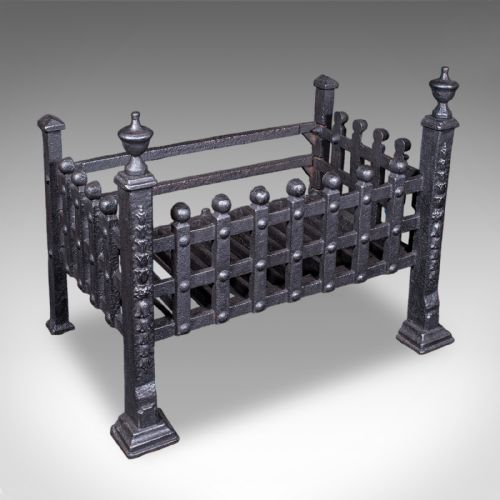


Black Cast Iron Basket
These pieces known as a black cast iron basket bring sturdy hearth utility and period form to an open chimney.
Black Cast Iron Basket
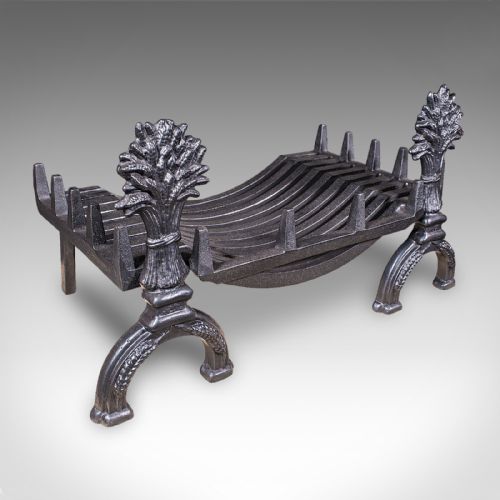
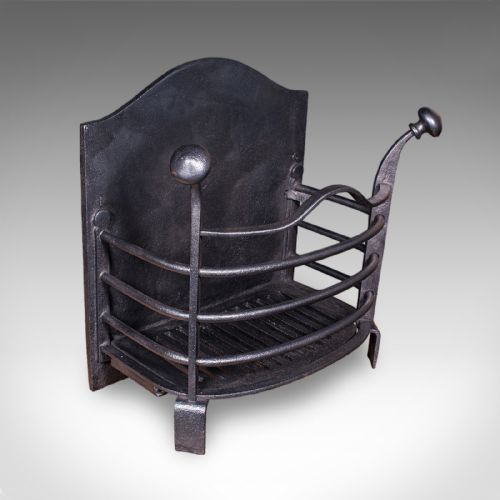
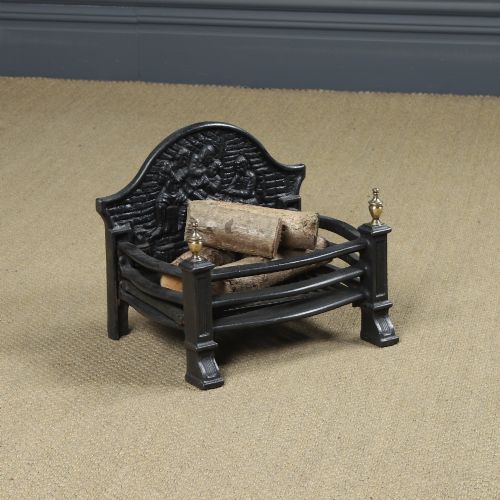
A black cast iron basket serves as a solid fuel holder within an open fireplace, designed to contain burning logs or coal safely above the hearth floor. When searching for a black cast iron basket, buyers encounter substantial metal grates originating from periods spanning the Georgian era through to the 1930s.
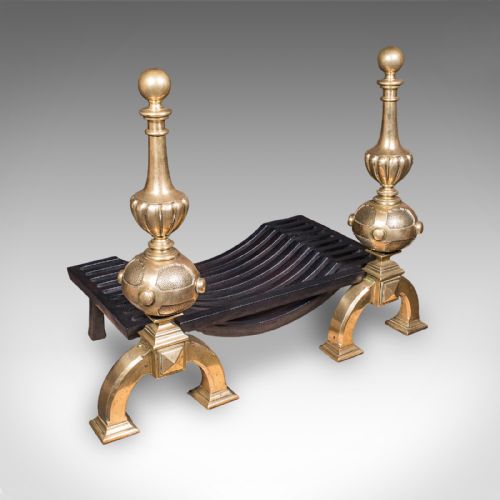
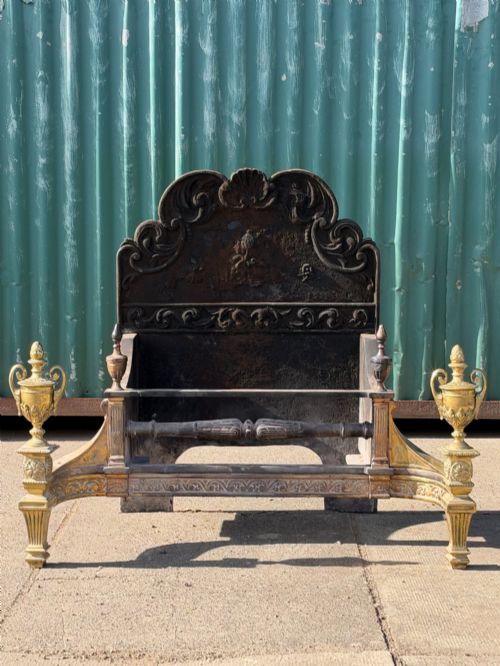
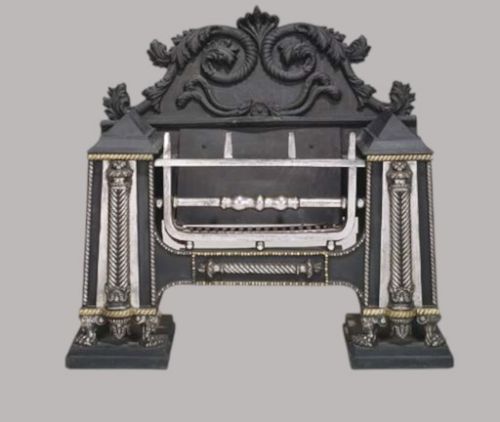
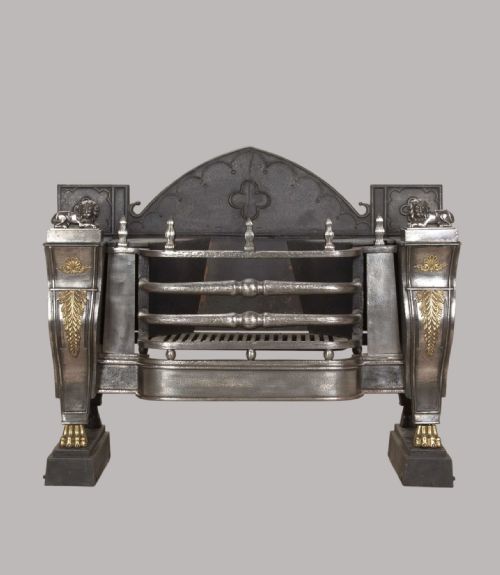
The selections on this page encompass various configurations, from simple fire grates and log baskets to comprehensive fireplace sets complete with andirons and fire backs. Victorian and 1920s reproductions of earlier styles appear frequently alongside genuine 19th-century examples.
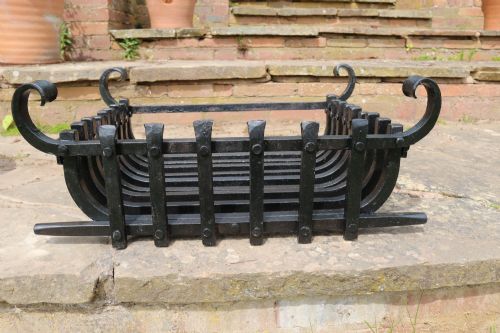
Forms range from compact grates suited for smaller proportions to very heavy, large inglenook fire baskets designed for deep hearths. Buyers also find related hearth accessories such as register grates, fender sets, and wall racks integrated into the available inventory.
Materials and construction
Construction relies heavily upon cast iron for the main grates and fire backs, valued for its ability to withstand intense hearth temperatures. Wrought iron frequently complements the cast components, appearing in structural bars, decorative scrollwork, and freestanding andirons.
Brass details occasionally accent the ironwork, adding visual contrast through finials or mounts, while firebrick lines specific internal fire baskets to retain heat. Metal components are forged, cast, and assembled to create rigid units capable of supporting heavy fuel loads.
Black Cast Iron Basket Retail Price Guide 2026
Typical asking prices for black cast iron basket among the pieces listed under this phrase on Sellingantiques today, from the lower quarter to the upper quarter. They describe what is for sale here now, not the wider market.
Some heavy iron inglenook grates include mulling andirons designed to warm spiced ale directly by the flames.
Evaluating quality and proportion
Quality in these hearth pieces rests upon metal thickness, casting definition, and structural integrity. Superior examples display crisp architectural or ornamental detailing without warping or excessive pitting from heavy use.
The relationship between the basket, andirons, and any accompanying fire backs indicates the original design coherence. Heavier gauge metals and integrated structural bracing separate robust utilitarian pieces from lighter decorative alternatives.
The Black Cast Iron Basket Glossary
- Cast Iron
- An iron-carbon alloy poured into moulds to create rigid, intricate fireplace components. It forms the primary structure of most grates and fire backs.
- Wrought Iron
- Iron heated and hammered into shape by hand, frequently utilised for the structural bars and decorative elements of fire baskets. This material offers superior tensile strength compared to cast metal.
- Andirons
- Supporting metal fire dogs placed on either side of the hearth to hold logs or support a fire basket. They often accompany larger grates in inglenook settings.
- Hob Grate
- A fireplace grate featuring flat side shelves or hobs used for warming kettles or food. These units date predominantly from the Georgian and Regency periods.
- Register Grate
- A fireplace insert featuring a built-in damper flap to regulate the draught. This style became common during the 19th century to improve heating efficiency.
Black Cast Iron Basket: Frequently Asked Questions
How do I choose the right size fire basket?
Measure the width, depth, and height of your fireplace opening carefully before selecting a grate. Ensure adequate clearance around the basket for proper airflow and safety.
Consider the scale of your hearth, as very heavy or large inglenook baskets require substantial depth to sit properly without crowding the opening.
Can these baskets burn real wood and coal?
Most of these cast iron and wrought iron baskets are designed for solid fuel combustion. Traditional grates accommodate both wood logs and coal depending on the bar spacing.
Check whether firebrick or a solid iron base is present to protect the metal floor of the hearth from direct, intense heat.
How do I clean and maintain cast iron?
Remove ash and debris regularly to prevent moisture retention and subsequent corrosion. A dry brush clears loose soot from the surface.
Apply traditional grate polish or blacking periodically to maintain the dark finish and protect the metal from oxidation in damp environments.
What is the difference between cast iron and wrought iron?
Cast iron is poured into moulds, resulting in rigid, heavier forms with detailed decorative casting. It resists high heat well but can fracture under severe thermal shock.
Wrought iron is hammered and bent into shape, providing fibrous strength and flexibility. It appears in the structural frames and handles of baskets.