




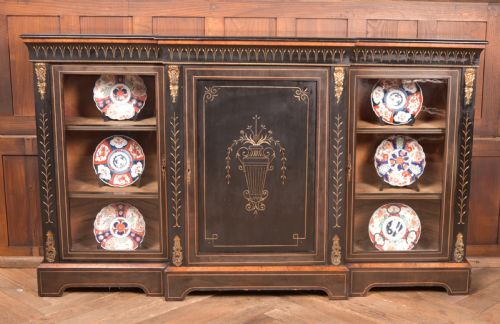

Black Breakfront Cabinet
A black breakfront cabinet brings dramatic presence to a room, combining architectural stepped facades with dark timber finishes.
Black Breakfront Cabinet
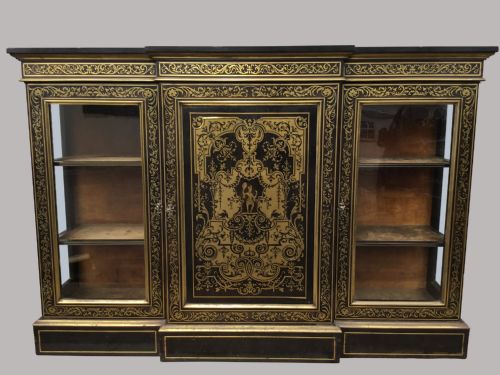
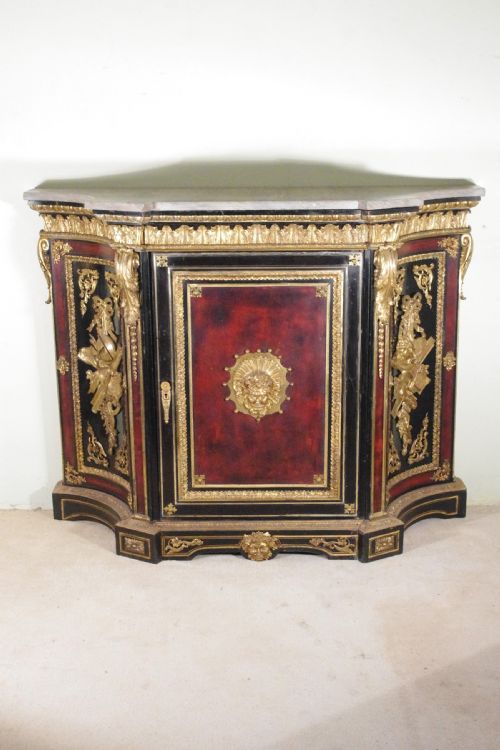
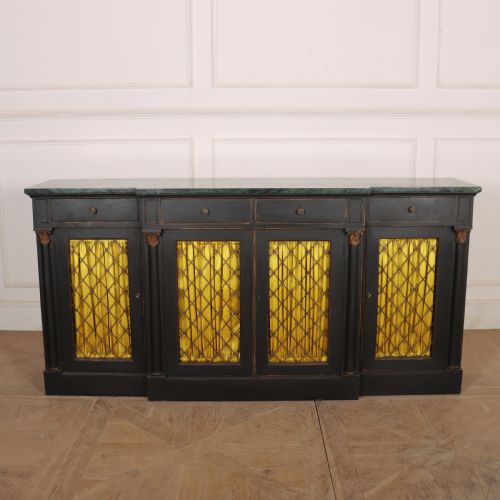
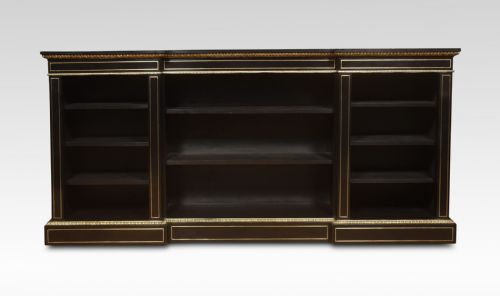
The selection here encompasses various functional forms, ranging from glazed display cabinets and credenzas to open bookcases and sideboard bases. Many examples hail from English and French workshops, utilising classical revival styles alongside regional vernacular designs.
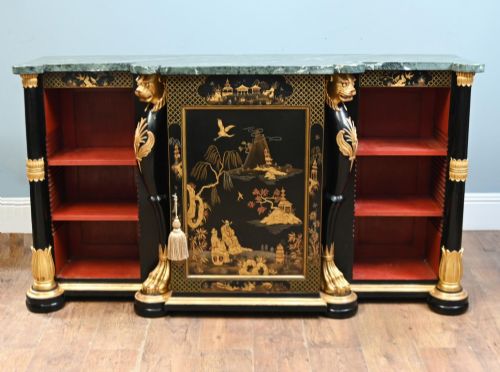
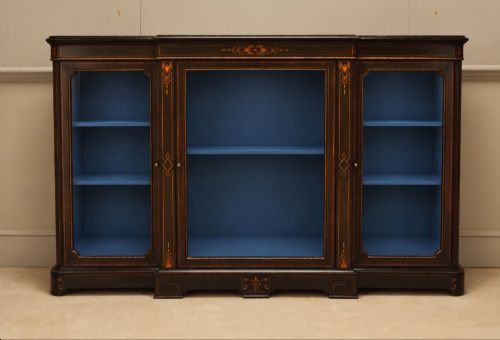
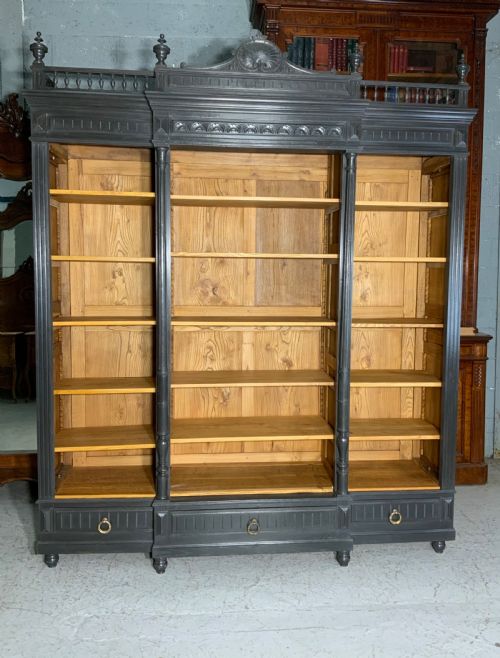
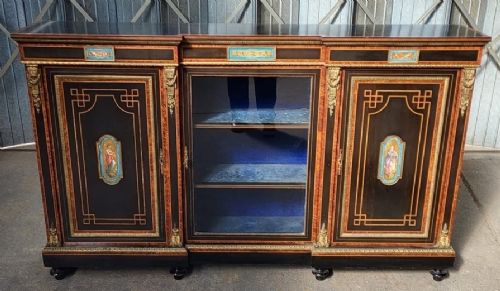
Buyers seeking a black breakfront cabinet encounter diverse decorative treatments, including marquetry, hand-painted Chinoiserie lacquer, and inlaid panels. The internal arrangements typically serve to display porcelain and silver or to house substantial libraries.
How they were made
The construction relies on solid timber foundations such as pine or mahogany, transformed through ebonising processes to achieve a dense black finish that mimics costly ebony. Makers applied layers of stain and polish to produce a uniform sheen across the flat surfaces and moulded cornices.
Decorative hardware and mounts formed from ormolu, brass, and gilt metal punctuate the dark timber, bolted or pinned to the exterior doors and friezes. Glazed panels are fitted within timber frames to protect the contents while offering clear views into the interior.
Black Breakfront Cabinet Retail Price Guide 2026
Typical asking prices for black breakfront cabinet among the pieces listed under this phrase on Sellingantiques today, from the lower quarter to the upper quarter. They describe what is for sale here now, not the wider market.
Some nineteenth-century makers ebonised plain pine so convincingly that only a peek behind the backboards reveals the humble timber underneath.
What varies in quality
The distinction between standard production and exceptional craftsmanship rests in the execution of the surface details, such as the precision of the marquetry and the crispness of the gilt metal mounts. Superior cabinets demonstrate careful matching of veneers and meticulous inlay work that remains stable across the seasons.
Hardware weight and structural joinery define the upper tier of pieces, where doors align squarely within their frames and heavy marble tops sit securely on robust carcases. Lesser examples rely on painted surface decoration to mask simpler timber construction beneath.
The Black Breakfront Cabinet Glossary
- Breakfront
- A cabinet design where the central section projects forward from the flanking wings, creating a stepped architectural profile. This configuration breaks up the flatness of a long wall.
- Ebonised
- Timber treated with stain, dye, or paint to resemble expensive ebony wood. This technique gained immense popularity during the Victorian period.
- Ormolu
- Gilded bronze or brass mounts applied to furniture as decorative ornament. The term derives from the French for milled gold.
- Marquetry
- Decorative patterns formed by fitting contrasting veneers into a wooden background. Artisans use fine woods and other materials to create pictorial or geometric designs.
- Credenza
- A sideboard or display cabinet originating in Italy, often featuring enclosed cupboards and glass doors. Victorian iterations frequently used ebonised finishes and gilt mounts.
- Vitrine
- A glass-fronted cabinet designed specifically for the display of curiosities and porcelain. These pieces prioritize visibility through large glazed door panels.
Black Breakfront Cabinet: Frequently Asked Questions
Where should I place a black breakfront cabinet?
These imposing pieces anchor a formal dining room or a spacious drawing room, where their architectural proportions can be properly appreciated against a neutral wall.
Ensure there is sufficient clearance for the projecting central section and the doors to swing open fully without obstruction.
How do I care for ebonised wood surfaces?
Dust the timber regularly with a soft, dry cloth to prevent accumulation in the carved details and around the gilt mounts.
Avoid commercial polishes containing silicone, choosing instead a quality beeswax applied sparingly to maintain the deep black lustre.
What is the difference between a credenza and a side cabinet?
A credenza traditionally refers to a low cabinet with cupboards, often heavily ornamented with marquetry or ormolu mounts, designed for display and serving.
Side cabinets encompass a broader category that includes taller bookcase formats and multi-door storage units without the specific low proportions of a credenza.
How can I tell a Victorian ebonised cabinet from a later revival piece?
Examine the interior secondary woods, backboards, and construction methods, as nineteenth-century pieces typically employ hand-cut dovetails and older fastening techniques.
Wear patterns on the ebonised finish and the ageing of the brass or gilt metal mounts provide further clues to the true age of the cabinet.