


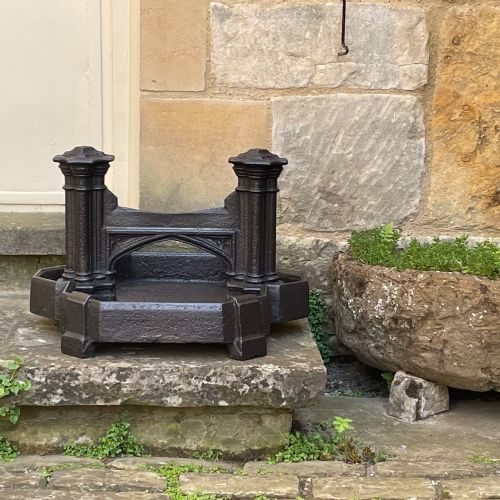
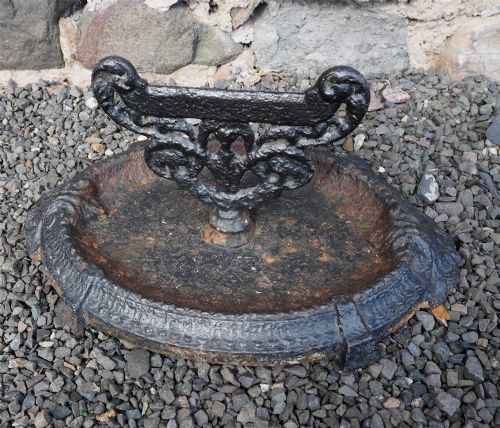
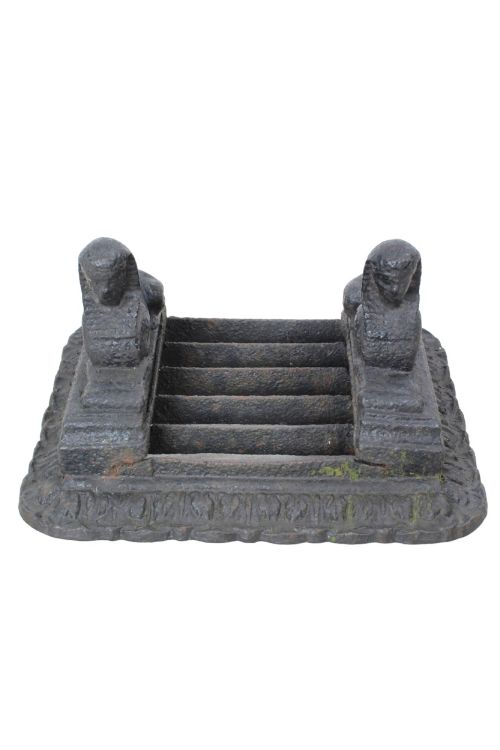
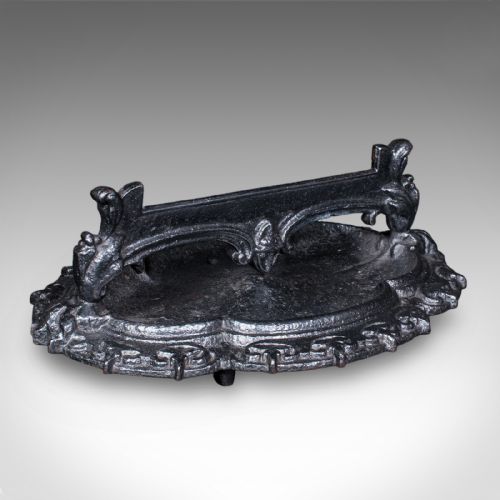

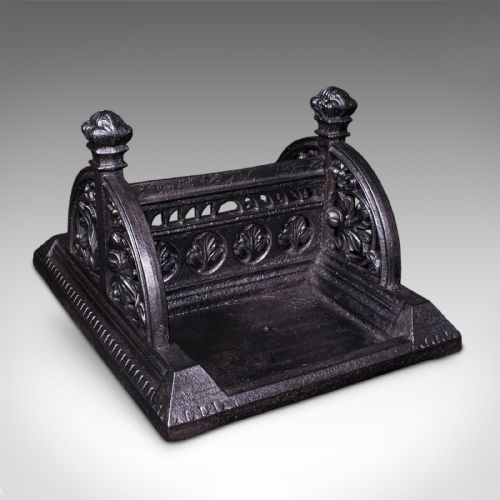
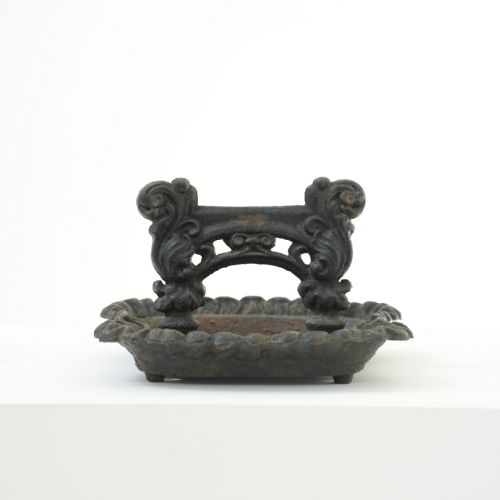


Black Boot Scraper
A black boot scraper clears mud from heavy footwear before entering the house, combining sturdy utility with classic period design.
Black Boot Scraper
A black boot scraper stands outside doorways to remove mud and dirt from footwear. These utilitarian pieces protect interior floors from heavy outdoor soil.
The black boot scraper takes several historical forms, ranging from simple Victorian designs to ornate Georgian models. Most examples on this page date from the nineteenth century.
A black boot scraper often includes an integrated shoe pull for removing muddy boots. Townhouse and country house variants appear frequently across the inventory.
Materials and construction
Each black boot scraper relies on durable cast iron to withstand constant outdoor use and heavy footwear. Metal founders shaped these pieces using traditional moulding techniques.
The heavy cast iron construction prevents movement when users scrape their shoes against the blade. Ironwork receives a protective dark finish to resist weathering at the entrance.
Black Boot Scraper Retail Price Guide 2026
Typical asking prices for black boot scraper among the pieces listed under this phrase on Sellingantiques today, from the lower quarter to the upper quarter. They describe what is for sale here now, not the wider market.
The listings span the Georgian, Victorian, and nineteenth-century periods, all constructed from cast iron.
Assessing quality in cast iron
Quality in a black boot scraper rests upon the crispness of the casting and the complexity of the style. Plain utilitarian models differ significantly from decorative revival pieces.
Earlier Georgian examples and specific revival styles such as Egyptian Revival or Victorian Gothic display more ambitious sculptural detailing than standard iterations.
The Black Boot Scraper Glossary
- Cast iron
- A strong, hard iron alloy produced by pouring molten metal into a mould. This material forms the primary structure of every boot scraper.
- Shoe pull
- A vertical loop or handle attached to the scraper frame. Users hold this component for balance while pulling off muddy boots.
- Victorian Gothic Revival
- An architectural and decorative style drawing inspiration from medieval forms during the nineteenth century. This aesthetic influences ornamentation on certain scrapers.
- Egyptian Revival
- A nineteenth-century design style incorporating motifs from ancient Egyptian art. Scrapers featuring this style display distinctive classical ornamentation.
Black Boot Scraper: Frequently Asked Questions
Where should a boot scraper go?
Place the scraper directly outside the main entrance door on a solid stone or paved surface. This positioning allows visitors and residents to clean footwear before stepping inside.
Ensure the piece sits firmly on the ground so it does not wobble during use.
How do I use the pull?
Grip the integrated loop with one hand while steadying the scraper with your foot. This leverage helps pull off tight boots without losing balance.
The adjoining blade simultaneously scrapes mud from the soles.
How do I maintain cast iron?
Brush away loose dirt and dry mud regularly to prevent moisture retention against the metal. Apply a protective coating periodically to guard against rust in damp weather.
Keep the base clear of standing water where the iron meets the ground.
How old is my scraper?
Examine the casting quality, ornamentation style, and fastener types to estimate the period. Victorian and Georgian examples often show distinct decorative motifs like Gothic revival arches or Egyptian revival patterns.
Heavier cast iron and hand-finished surfaces typically indicate older nineteenth-century manufacture.