



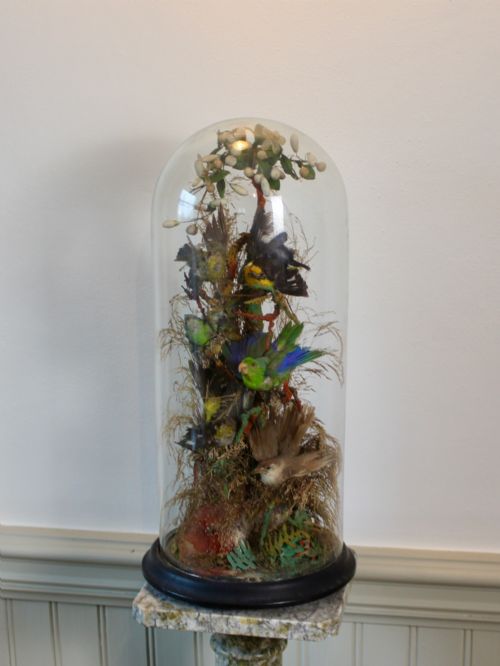

Bird Mount in Case
A bird mount in case brings nineteenth-century natural history indoors, preserving birds behind glass within wooden frames and domes.
Bird Mount in Case
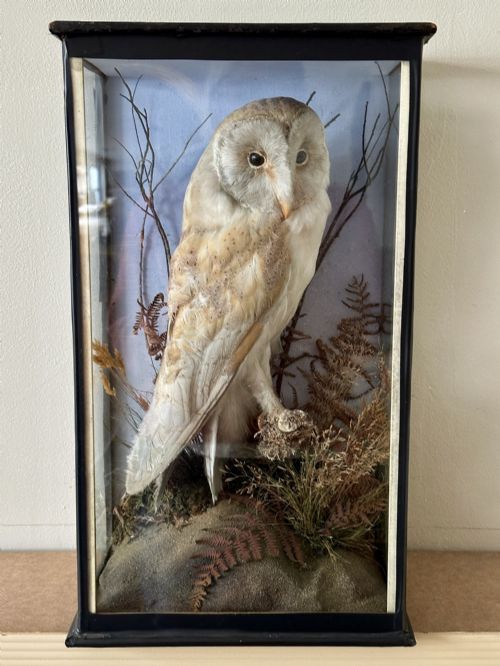
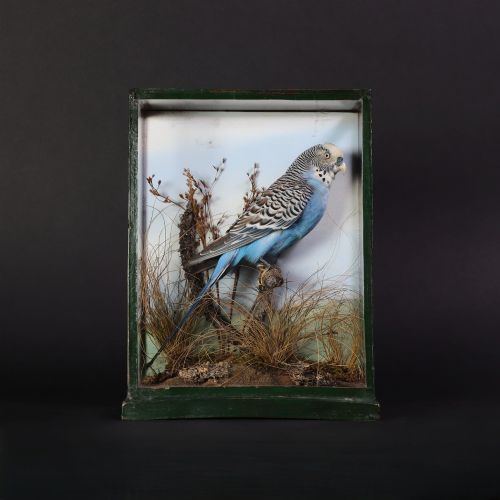
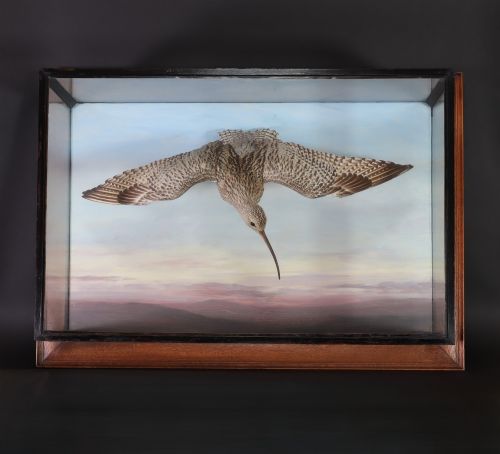
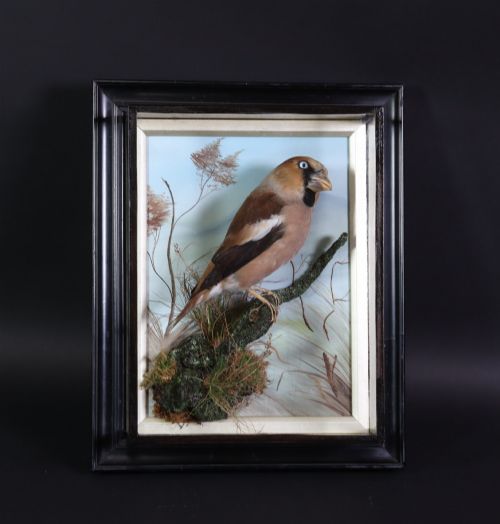
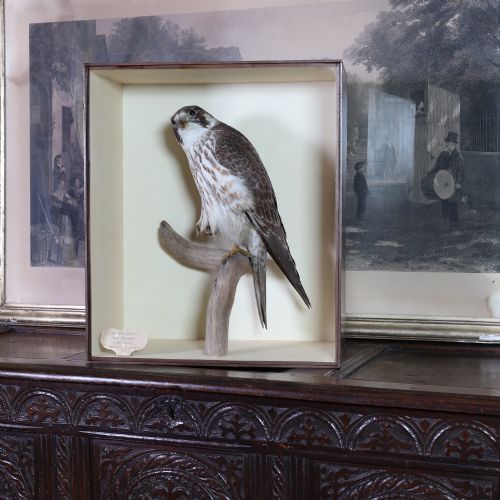
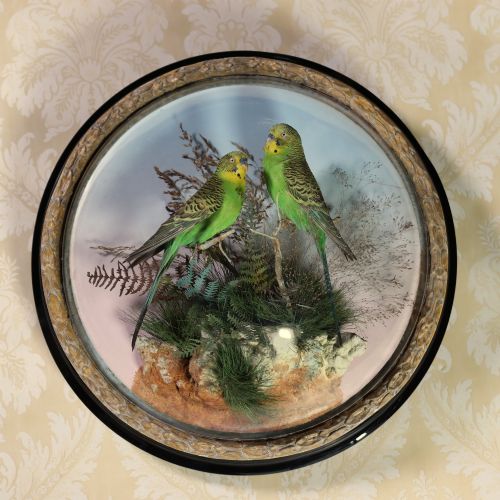
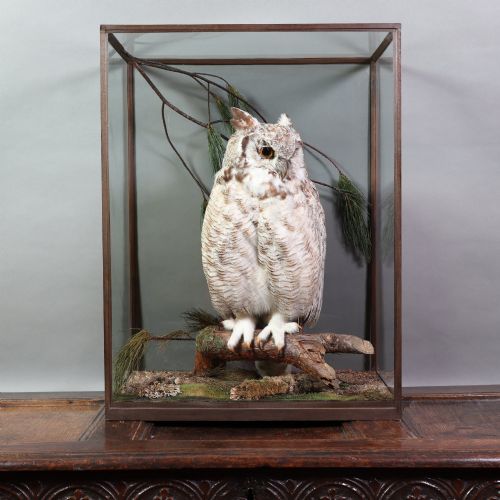
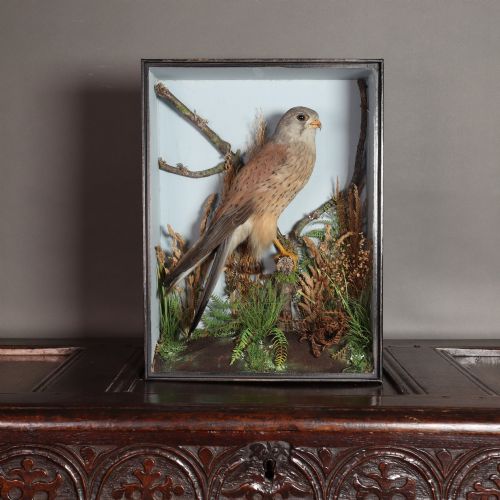
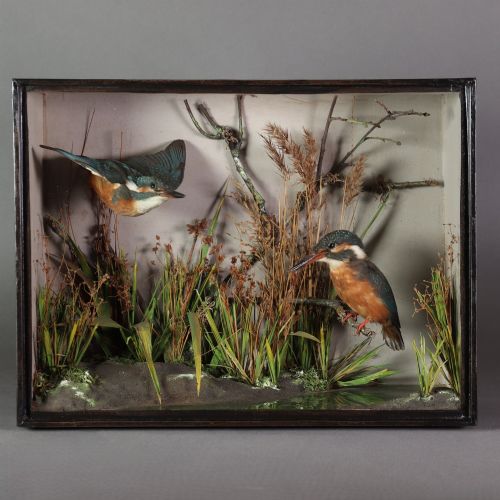
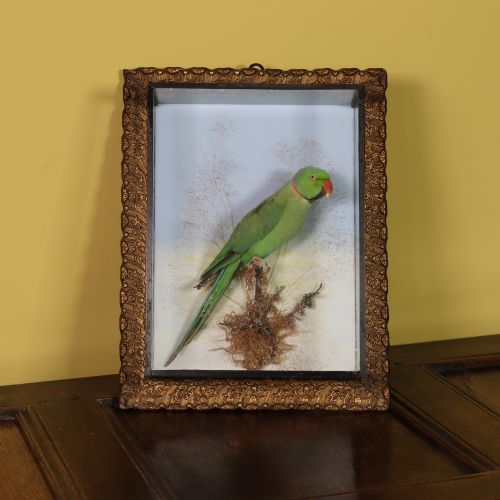
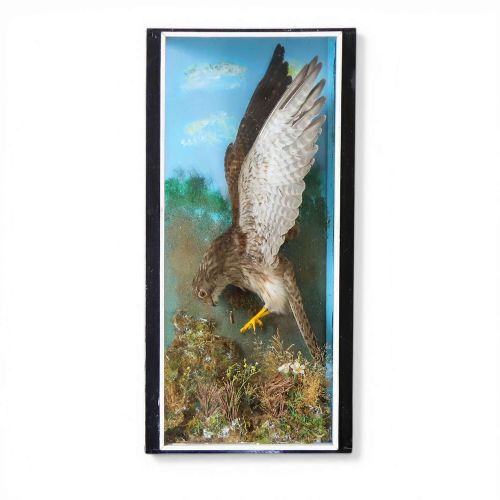
A bird mount in case gathers preserved specimens behind glass for domestic display, capturing species from British woodlands, exotic regions, and domestic yards. These items range from single specimens like kestrels and owls to complex multi-bird compositions involving parrots, kingfishers, and waxwings.
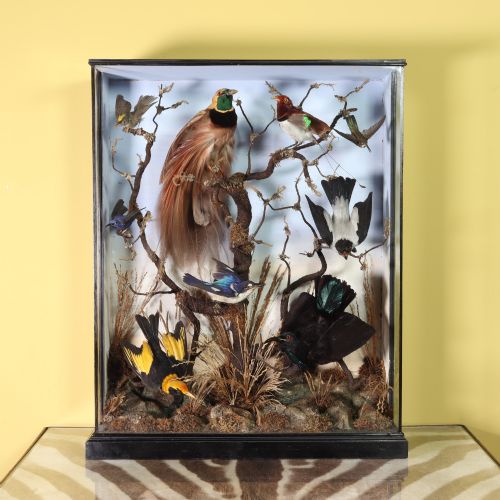
Most examples originate from the Victorian and Edwardian eras, spanning the nineteenth and early twentieth centuries. Pieces take the form of wall-hanging picture frame cases, tabletop wooden cabinets, and glass domes enclosing naturalistic internal settings.
Makers often arranged specimens alongside dried vegetation, moss, and painted backgrounds to simulate natural habitats. Buyers encounter single birds, pairs, trios, and elaborate dioramas containing mixed species from diverse global locations.
Materials and construction methods
Taxidermists constructed enclosures using timber frames and wooden bases paired with transparent glass panels or blown glass domes to protect delicate plumage. Internal elements incorporate preserved specimens combined with dried vegetation, moss, and paper components.
Makers mounted birds over internal wire and body armatures, arranging feathers by hand before sealing the finished composition against dust and insects. Painted backgrounds frequently feature behind the specimens to create depth and imitate outdoor scenes.
Bird Mount in Case Retail Price Guide 2026
Typical asking prices for bird mount in case among the pieces listed under this phrase on Sellingantiques today, from the lower quarter to the upper quarter. They describe what is for sale here now, not the wider market.
Several Victorian snow scenes capture permanent winter weather inside glass boxes.
Factors influencing quality
Quality rests upon the lifelike posture of the preserved specimen and the skill involved in arranging feathers and anatomical proportions. Superior examples retain vibrant plumage colours and natural stances without visible distortion or awkward positioning.
The sophistication of the internal habitat display distinguishes finer compositions from simpler mounts. Expert practitioners constructed detailed painted backgrounds and integrated moss and vegetation to anchor the specimens convincingly within the wooden case or glass dome.
J Griffiths of Burford·Rowland Ward Ltd·T E Gunn·William Bazeley & Sons·James Gardner·W F Homer London
The Bird Mount in Case Glossary
- Taxidermy
- The art of preparing, stuffing, and mounting the skins of animals for display. Practitioners shape internal armatures to recreate realistic animal forms.
- Diorama
- A three-dimensional scene depicting wildlife within a recreated natural environment. These installations utilise painted backgrounds alongside physical botanical elements.
- Dome
- A convex glass cover placed over a circular wooden base to enclose specimens. This method protects delicate mounts from ambient dust and handling.
- Specimen
- An individual animal preserved for scientific study or decorative display. These subjects form the central focus of natural history cabinets.
- Drier vegetation
- Plant material dehydrated for permanent use inside enclosed displays. It provides structural foliage around mounted birds.
Bird Mount in Case: Frequently Asked Questions
Where should I place my bird case?
Display cases and domes belong away from direct sunlight, which fades delicate plumage over time. Stable indoor humidity protects both the taxidermy materials and the timber structures.
Position items on sturdy tables, sideboards, or dedicated wall brackets capable of supporting the weight of glass and wood. Keep displays out of damp rooms and away from direct heat sources.
How are different periods identified?
Stylistic clues within the interior arrangement often indicate the era of manufacture, such as snow scenes popular around nineteen hundred or simpler perches from the mid-nineteenth century. Trade labels pasted to the reverse or base provide direct evidence of the maker and active dates.
Construction details like hand-blown glass, cut nails, and framing timbers also help narrow down the decade of production. Victorian examples frequently exhibit dense botanical arrangements compared to later Edwardian compositions.
Were these animals hunted for display?
Nineteenth-century natural history practices involved collecting specimens for scientific study, museum exhibition, and domestic decoration. Many birds arrived from overseas expeditions or local observation.
Taxidermists sourced subjects through trade networks, hunters, and agricultural estates. Contemporary attitudes viewed these preserved specimens as educational representations of natural diversity.