



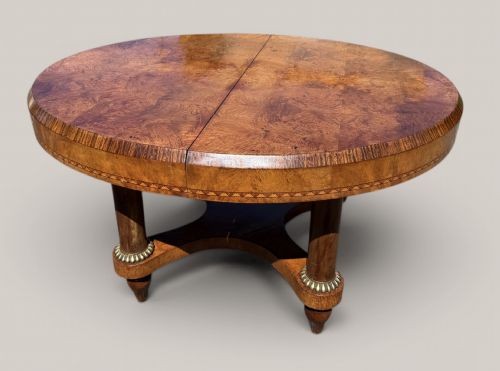
Biedermeier Table
These sculptural wooden surfaces bring warmth and clean lines to a room, embodying the practical elegance of a biedermeier table.
Biedermeier Table
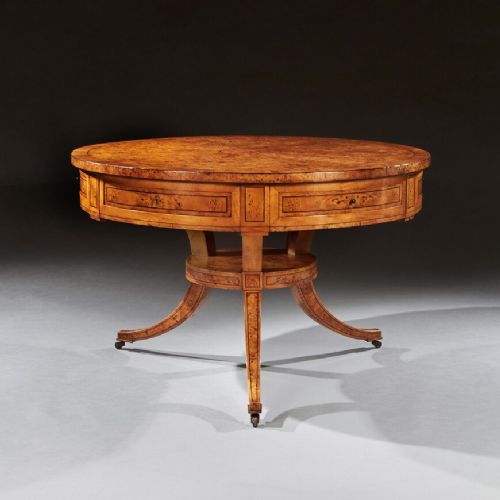
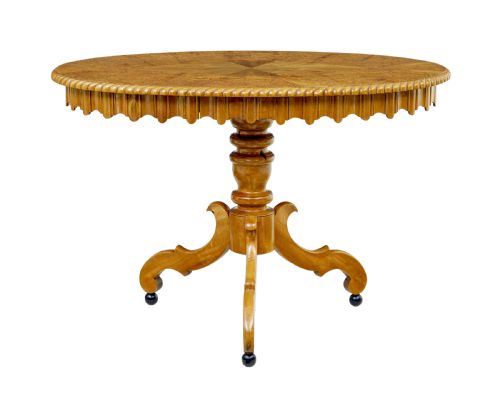
When someone searches for a biedermeier table, they seek pieces defined by restraint, architectural proportion, and rich wood figure rather than heavy ornamentation. These forms span occasional tables, centre tables, and side tables created to serve daily domestic life without cluttering a room.
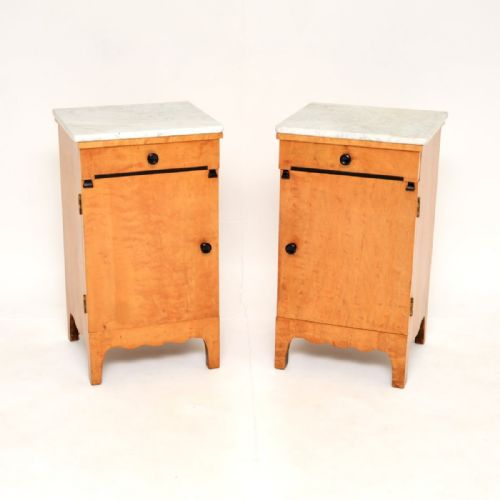
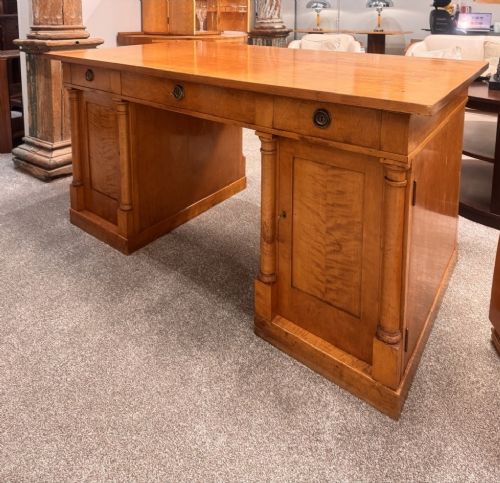
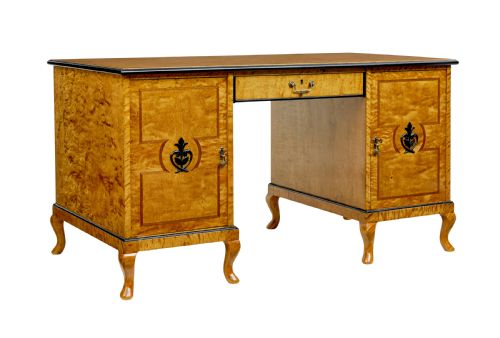
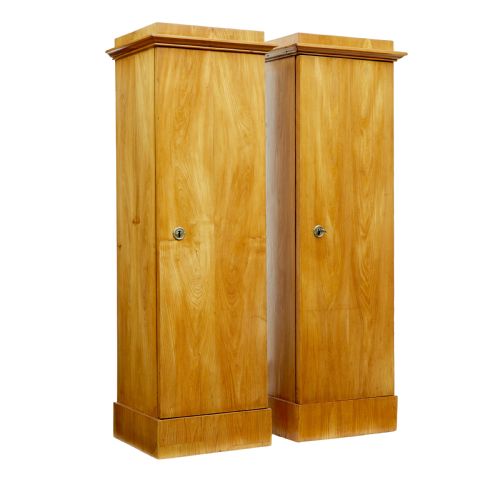
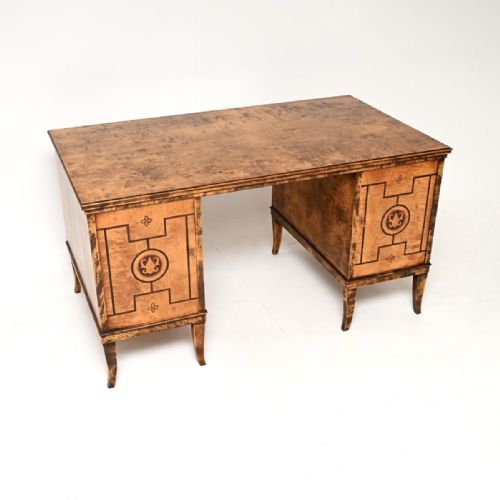
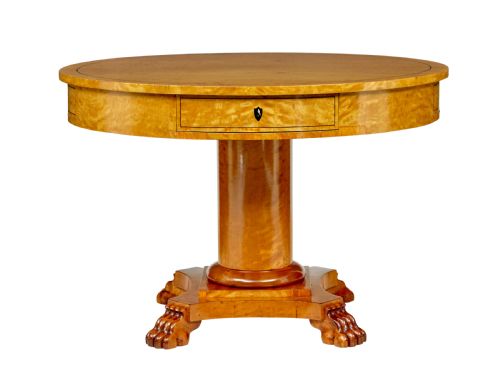
The version most commonly met on this page is the Swedish interpretation, often fashioned from birch or burr birch, dating primarily through the nineteenth century. These northern variants lean into the pale luminosity of native timbers, presenting clean geometric silhouettes that suit both historic interiors and modern spaces.
Beyond simple surfaces, the inventory encompasses specialised forms such as drum tables, tea tables, and sofa tables alongside later revivals stretching into the twentieth century. Each piece relies on the natural pattern of the grain to provide visual interest, keeping carved decoration to a careful minimum.
How they were made
Cabinetmakers relied heavily on birch, satin birch, and burr birch veneers, sliced thin to reveal swirling patterns across table tops and pedestals. These timbers were applied over sturdier secondary woods, creating expansive decorative surfaces that maintained structural stability.
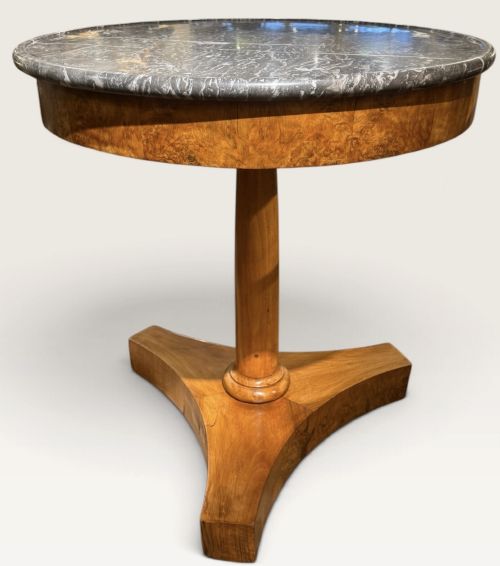
Accents of ebonised wood, brass, or ormolu frequently punctuate the pale veneers, defining structural lines and framing geometric inlays. Occasional pieces also integrate marble tops, introducing a cool, durable surface that contrasts against the warm tones of walnut and cherrywood.
Biedermeier Table Retail Price Guide 2026
Typical asking prices for biedermeier table among the pieces listed under this phrase on Sellingantiques today, from the lower quarter to the upper quarter. They describe what is for sale here now, not the wider market.
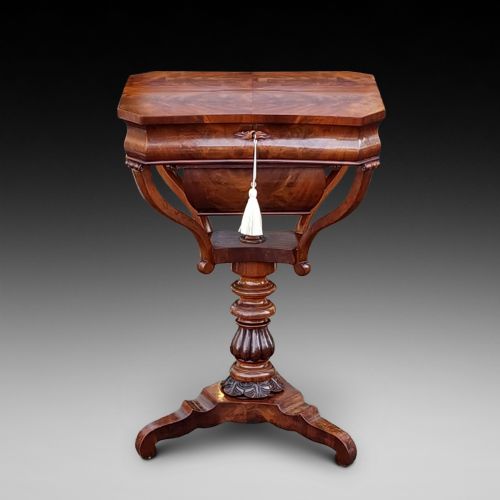
One nineteenth century sewing table arrives complete with its original internal contents.
What varies in quality
Quality rests upon the selection and bookmatching of the veneer, where top tier examples display symmetrical, unbroken grain patterns across the entire surface. Cabinetmakers who spent time aligning burr birch or Karelian birch achieved a rhythmic harmony that lesser pieces lack.
Construction integrity and the crispness of secondary details dictate the upper range of the craft. Fine examples maintain precise joinery, restrained use of contrasting ebonised details, and proportions that balance utility with visual grace.
The Biedermeier Table Glossary
- Burr birch
- A growth on a birch tree that produces dense, swirling knots and patterns when sliced into veneer. Cabinetmakers prize this timber for its rich visual movement on table tops.
- Centre table
- A freestanding table designed to stand in the middle of a room rather than against a wall. These pieces feature finished detail on all sides.
- Ormolu
- Gilded bronze mounted onto furniture as decorative trim or feet. This technique adds metallic contrast to dark or polished wooden surfaces.
- Gueridon
- A small French occasional table supported by a central column or figures. They often feature marble tops and compact footprints.
- Sofa table
- A rectangular table traditionally placed against the back of a sofa. They frequently incorporate drop leaves and pedestal bases.
Biedermeier Table: Frequently Asked Questions
Where should I place a centre table?
A centre table works best in the middle of a room where it can be viewed from all sides. These pieces anchor an open space and provide a practical surface for lighting or objects.
Ensure there is enough clearance around the perimeter to walk comfortably. Their freestanding nature allows them to function as a focal point in hallways or libraries.
How do I care for birch veneer?
Protect birch surfaces from direct sunlight to prevent the pale timber from darkening or yellowing unevenly over time. Dust regularly with a soft, dry cloth.
Avoid using harsh chemical polishes that can degrade nineteenth century finishes. A micro-layer of quality wax applied occasionally will nourish the wood and preserve its lustre.
What is the difference between an occasional table and a side table?
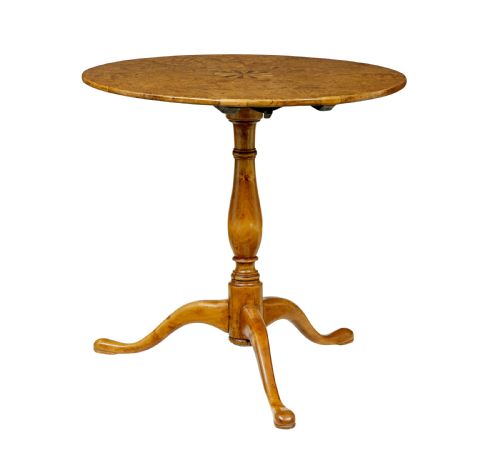
Occasional tables are typically movable pieces brought out as needed for specific tasks such as serving tea or holding books. Their designs often include tilting tops or compact tripod bases.
Side tables generally remain in a fixed position against a wall or beside furniture. They offer stable surfaces for lamps and display items within a room.
How do I identify nineteenth century Scandinavian furniture?
Look for the prominent use of native northern timbers such as birch, satin birch, and burr elm. The aesthetic prioritises clean architectural lines over heavy Victorian carving.
Hardware is often minimal, allowing the natural grain and warm golden tones of the wood to dominate. Structural forms remain functional, elegant, and restrained.