




Bentwood Back Chairs
Bentwood back chairs are steam-bent seating forms offering organic curves and light frames, highly sought after for their enduring utility and expressive silhouettes.
Bentwood Back Chairs
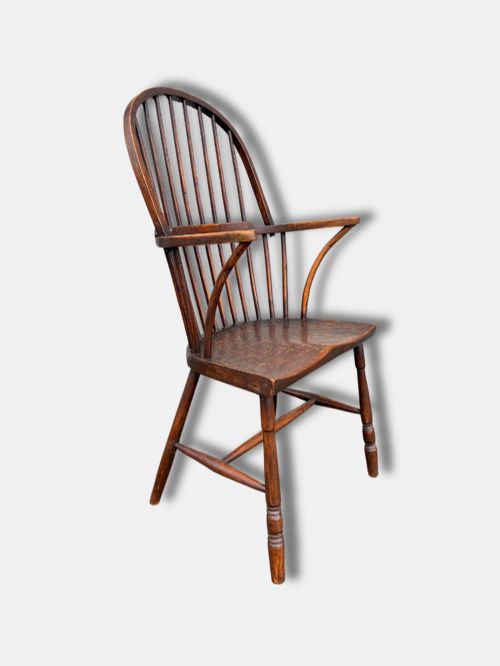
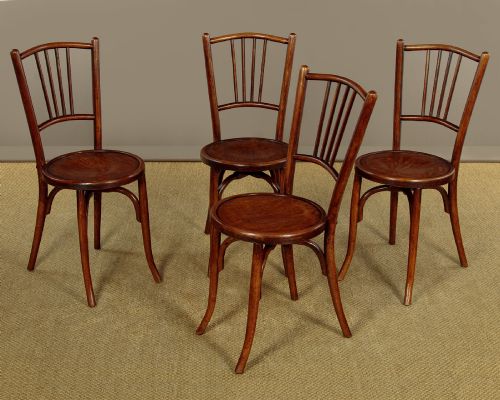
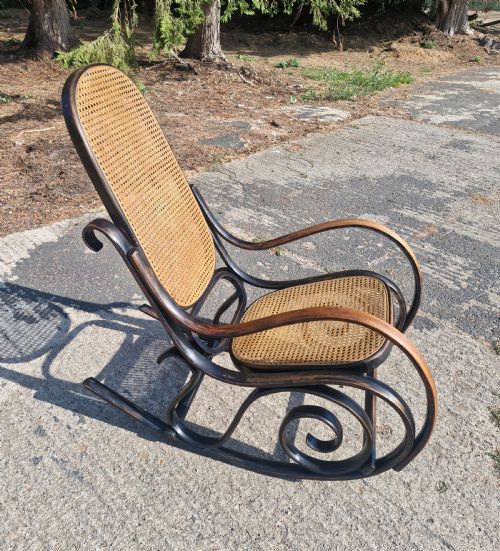
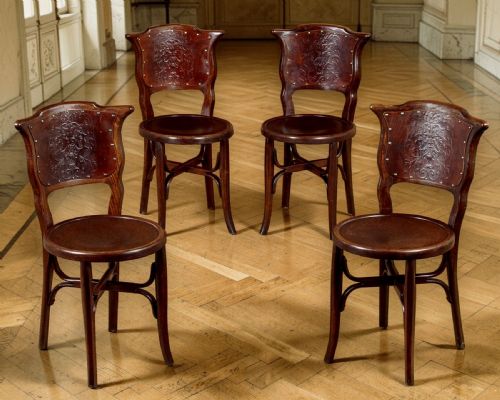
Bentwood back chairs encompass a range of seating forms primarily developed through steam-bending techniques, featuring fluid lines and lightweight construction. When searching for bentwood back chairs, buyers encounter diverse iterations spanning Victorian bistro designs, Edwardian rocking chairs, and Vienna Secession models. The selection ranges from individual dining seats to matched sets originating from notable workshops.
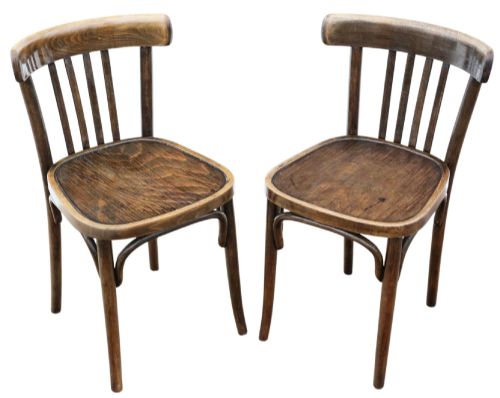
The objects listed here include dining chairs, armchairs, and rocking chairs created across various decades from the nineteenth century into the mid-twentieth century. Bistro dining chairs and rocking armchairs appear frequently, often constructed in sets or pairs suited for domestic interiors and hospitality spaces alike.
How They Were Made
Makers utilised solid timbers such as beech, beechwood, elm, and yew, subjecting the wood to steam until pliable enough to bend into sweeping curves without snapping. Plywood and cane frequently supplement the primary frames, forming supportive seats and decorative backrests.
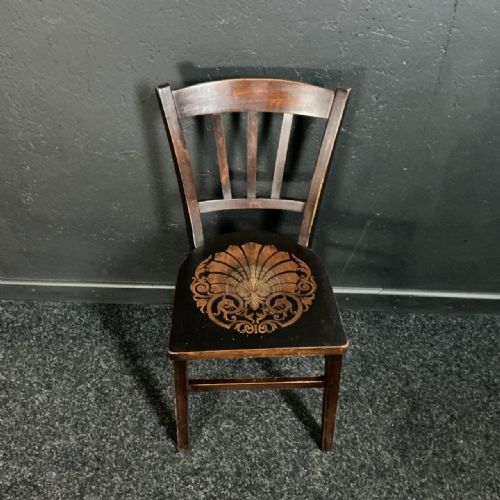
The heated timber was placed into metal forms to dry and retain its distinctive arched profile before being assembled with minimal hardware. Embossed details occasionally adorn the plywood seats, adding decorative texture to the smooth wooden surfaces.
Bentwood Back Chairs Retail Price Guide 2026
Typical asking prices for bentwood back chairs among the pieces listed under this phrase on Sellingantiques today, from the lower quarter to the upper quarter. They describe what is for sale here now, not the wider market.
Listings feature beech, elm, and yew timbers utilised across dining chairs, armchairs, and rocking chairs.
What Varies in Quality
The standard of execution lies in the tension and grace of the curved members, alongside the integrity of the original joints and steam-bent frames. Examples featuring pressed ornamentation on the seat panels demonstrate higher decorative ambition than plain variants.
Attribution to specific makers or workshops elevates the standing of individual pieces, distinguishing standard commercial production from documented output. The preservation of original cane work and authentic surface patination further differentiates exemplary survivals from heavily restored iterations.
Jacob and Josef Kohn·Thonet·Codina
The Bentwood Back Chairs Glossary
- Bentwood
- Wood that has been rendered pliable via steam or boiling water and shaped into curved forms using moulds. This technique allows for continuous, flowing frames without traditional mortise and tenon joints at every junction.
- Cane
- Woven rattan material utilised for chair seats and backs, offering lightweight support and flexibility. It appears frequently on historical seating where breathability and visual lightness are desired.
- Windsor
- A traditional chair construction style featuring a solid wooden seat into which the legs and spindles are wedged directly. These designs often incorporate bent or steam-curved back components.
- Vienna Secession
- An early twentieth-century artistic movement characterised by geometric abstraction and clean lines applied to decorative arts. Furniture from this circle rejects excessive historicism in favour of refined structural honesty.
Bentwood Back Chairs: Frequently Asked Questions
How do I identify a genuine period piece?
Examine the construction methods, materials, and signs of historical wear across the frame. Authentic examples typically display traditional steam-bending characteristics and period-appropriate timber selections.
Look for Maker stamps, labels, or characteristic assembly details associated with known workshops from the nineteenth and early twentieth centuries.
Are these chairs suitable for daily dining?
Many of these seating forms were originally designed for commercial cafes and domestic dining rooms, offering sturdy daily utility. Their lightweight construction makes them practical for movement around a table.
Ensure the joints and cane or plywood seats remain stable and secure before putting them into regular service.
How should I care for steam-bent wood?
Maintain stable indoor humidity levels to prevent the timber from drying out or the steam-bent components from shifting under tension. Avoid placing the furniture near direct heat sources or strong sunlight.
Clean the surface gently with a dry or slightly damp cloth, avoiding harsh chemical polishes that might degrade the original finish.
What is the difference between a bistro chair and a rocking chair?
Bistro chairs are upright, lightweight dining seats designed for commercial hospitality venues and compact domestic spaces. They prioritise easy movement and space efficiency around tables.
Rocking chairs feature curved rockers attached to the base, offering a deep, relaxed sit intended for repose rather than dining.