




Bell and Striker
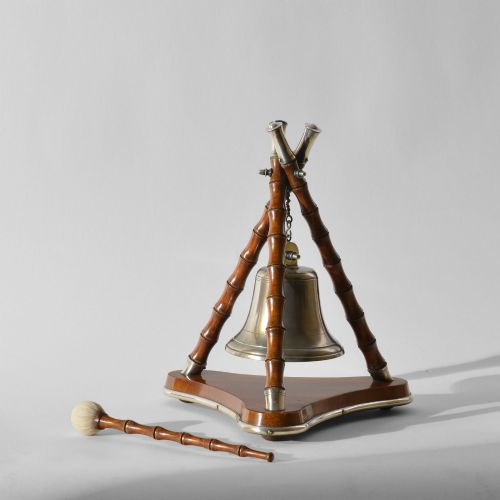
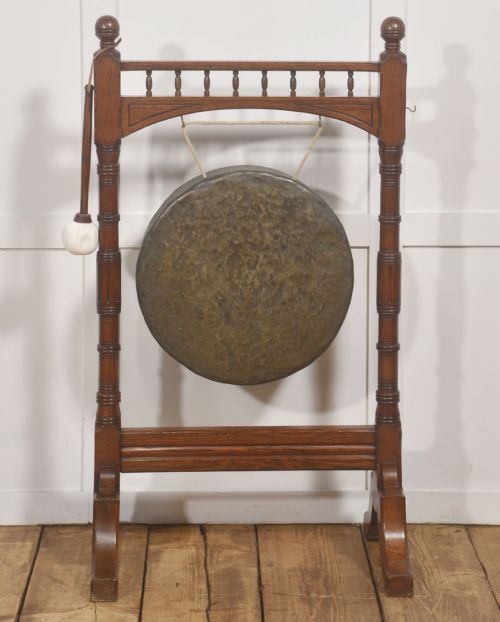
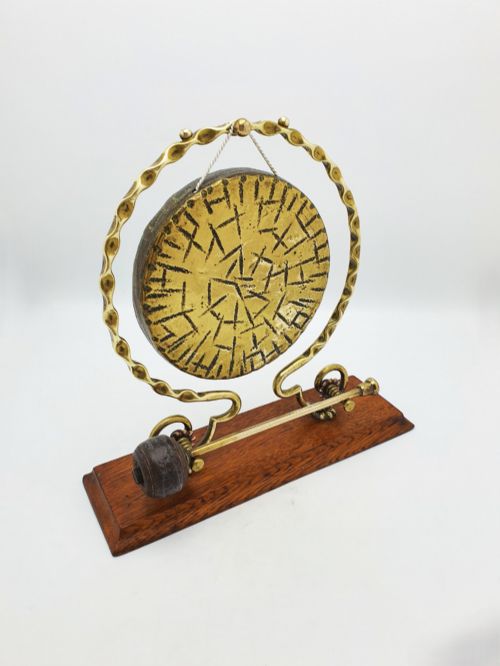
These bell and striker pieces combine brass gongs with wooden or metal mallets, offering a traditional way to summon household attention.
Bell and Striker
A bell and striker assembly typically consists of a suspended metal gong paired with a matching handheld mallet, built for calling guests to meals in a dining room. The examples found here span dinner gongs and wall-mounted striking clocks, originating from various periods including the Victorian era and the early twentieth century.
Most pieces pair a brass gong with an oak, walnut, or carved wooden base or frame. Tabletop formats and wall-mounted chimes appear alongside novelty carved mango wood versions and Chinese export pieces.
Makers utilised different cultural motifs, ranging from Anglo-Indian engraved brass designs to Venetian automation wall clocks and Art Nouveau cast iron frameworks. Buyers will encounter both simple tabletop frames and larger palace-style wall chimes.
How they were made
Craftsmen shaped the gongs from cast iron or brass, often adding detailed surface engraving or intricate carvings to the metal disc. Wooden bases and striking mallets utilised dense timbers such as oak, walnut, mango wood, and general hardwood.
Frames incorporated supporting cords, felt padding to dampen unwanted vibrations, and glass elements in the case of striking wall clocks. Carved wooden frames frequently featured regional decorative styles, including Chinese export carving and Anglo-Indian patterns.
Bell and Striker Retail Price Guide 2026
Typical asking prices for bell and striker among the pieces listed under this phrase on Sellingantiques today, from the lower quarter to the upper quarter. They describe what is for sale here now, not the wider market.
Some Victorian households apparently needed a gong loud enough to wake the dead, judging by the hefty cast iron plates.
What varies in quality
The resonance of the metal gong depends on the purity of the brass or iron alloy and the precision of its casting, which determines the clarity and sustain of the tone. Superior examples feature well-balanced frames where the hanging mechanism allows the metal to vibrate freely without deadening the sound.
Cabinetwork and carving define the standard of the supporting structure, distinguishing mass-produced items from finely hand-carved wooden mounts and signed clock mechanisms. The integration of materials, such as fitted oak bases and complementary handheld strikers, indicates the original completeness of the piece.
The Bell and Striker Glossary
- Dinner gong
- A suspended metal disc or bowl struck with a mallet to announce meals. They became popular in large nineteenth-century houses.
- Striker
- The handheld mallet, hammer, or attached mechanical arm used to hit the bell. These are often made of wood or metal with a striking head.
- Automation
- Mechanical movement in a clock or device that produces animated motion when the strike occurs. Venetian examples frequently incorporate this feature.
- Anglo-Indian
- A style reflecting British influence on Indian craftsmanship, often seen in densely engraved brass work. This aesthetic appears on several gongs from the turn of the twentieth century.
- Palazzo
- A term applied to large, ornate Italian wall chimes and architectural fittings. These pieces usually feature substantial brass and oak construction.
Bell and Striker: Frequently Asked Questions
What is a bell and striker used for?
These assemblies served primarily as dinner gongs to gather residents and guests for meals in large homes. Striking wall clocks also used internal bells and strikers to mark the hours.
Today, they function as decorative interior objects with a working acoustic element. Many owners continue to use them to announce dinner or as distinctive door chimes.
How do I date a brass dinner gong?
Dating relies on stylistic clues in the wooden frame, such as Art Nouveau curves or Victorian oak carving. The manufacturing methods of the brass disc and any maker marks also provide chronological context.
Periods represented range from late nineteenth-century Victorian designs to mid-twentieth-century folk art pieces. Comparing the mounting hardware and cordage helps confirm the age of the assembly.
Are the strikers usually original to the gong?
Many surviving gongs retain their original handheld wooden or metal strikers, shaped to match the frame. Replacement strikers do occur when the original mallet has been lost over time.
Collectors look for matched timber and consistent wear between the striker and the gong mount. A cohesive set maintains the decorative and functional integrity of the piece.
What materials are common in these pieces?
Brass and cast iron form the striking gongs and bells across most listings. Supporting frames utilise hardwoods including oak, walnut, and carved mango wood.
Additional materials include glass for clock faces, hanging cords, and felt padding. Regional examples incorporate specific regional carving traditions on the wooden mounts.