




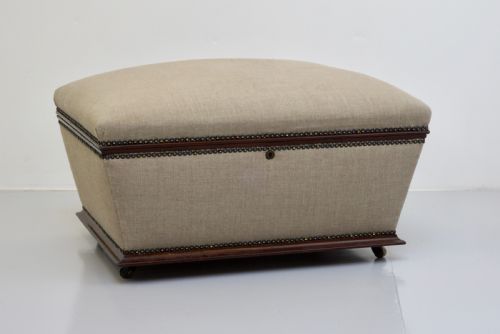


Beige Footstool
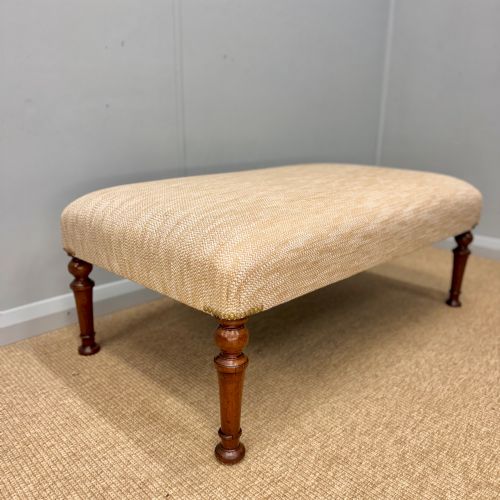
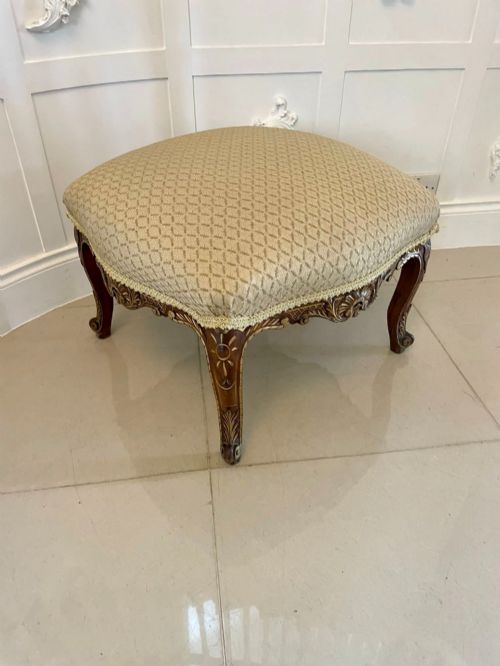
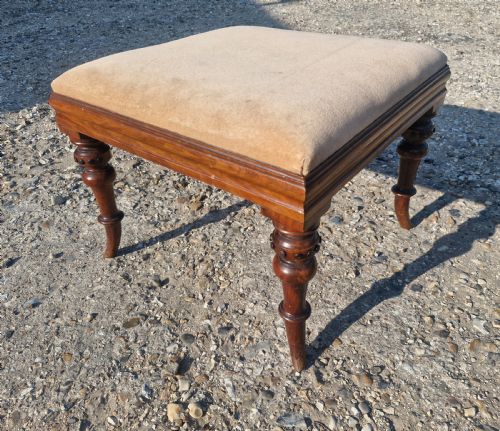
These beige footstool pieces offer understated seating and support, bringing period upholstery and rich timbers into a traditional interior.
Beige Footstool
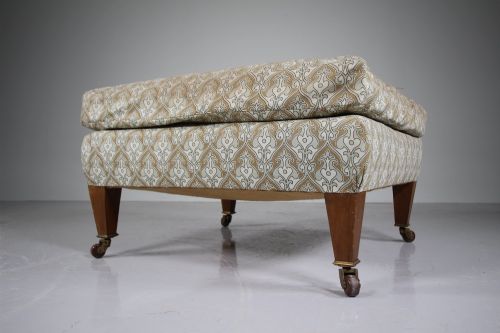
A beige footstool provides low seating or leg support, appearing across various nineteenth century forms including fender stools, box ottomans, and freestanding pieces. Buyers searching for a beige footstool encounter upholstered designs raised on timber frames from periods such as the Regency and Victorian eras.
The materials span mahogany, walnut, rosewood, and giltwood frames paired with fabric, wool, linen, and chenille upholstery. These furnishings range from simple upholstered stools to large centre stools and buttoned matching sets alongside armchairs.
How they were made
Frames rely on traditional timbers like mahogany, walnut, and rosewood, occasionally accented with giltwood carving or brass details. Joinery supports sturdy forms designed for domestic utility.
Upholstery incorporates traditional textiles including wool, linen, and chenille, frequently finished with buttoning or tapestry work over sprung or padded bases.
Beige Footstool Retail Price Guide 2026
Typical asking prices for beige footstool among the pieces listed under this phrase on Sellingantiques today, from the lower quarter to the upper quarter. They describe what is for sale here now, not the wider market.
Some nineteenth century footstools doubled as secret blanket chests, proving our ancestors took both relaxation and hiding spare woollens very seriously.
What varies in quality
The refinement of timber carving and the sophistication of the frame silhouette separate standard examples from finer works. Carved walnut and gilt details or architectural mahogany box forms demonstrate superior cabinetmaking skill.
Textile selection and upholstery execution dictate visual presence, where dense chenille, wool, and detailed buttoning elevate the piece. The integrity of the underlying frame and proportions relative to the room remain central to distinction.
The Beige Footstool Glossary
- Fender stool
- A long, low stool designed to sit in front of a fireplace fender. These pieces typically feature slender proportions to fit hearth spaces.
- Box ottoman
- A storage stool featuring a hinged lid above a hollow base. This form combines seating with concealed compartment utility.
- Chenille
- A textured fabric woven with fuzzy pile threads. It provides a soft, tactile surface frequently utilised in period upholstery.
- Giltwood
- Timber treated with gold leaf or gilt finish. This decorative application adds brightness to carved frame details.
Beige Footstool: Frequently Asked Questions
What is a fender stool?
A fender stool is a long, low seat specifically proportioned to sit along the hearth in front of a fireplace. These pieces allow individuals to warm their feet while seated close to the fire.
They emerged strongly during the nineteenth century in timber frames such as walnut and mahogany. Their elongated shape distinguishes them from standard square or oval stools.
How do I identify a Regency period stool?
Regency pieces often display classical influences with clean architectural lines, specific timber choices like mahogany, and restrained ornamentation. They predate the heavier carved revival styles of the later Victorian era.
Examining the construction methods and wood turning helps determine whether a piece belongs to this earlier neoclassical phase.
What materials are used in these stools?
Frames are constructed from hardwoods including mahogany, walnut, rosewood, and giltwood. These sturdy woods provide structural support for daily use.
Upholstery surfaces utilise tactile textiles such as wool, linen, chenille, and tapestry work, occasionally finished with buttoning details.